Pre-Ride
The plan for Morocco came about in many different ways. My friend Gokul had moved back to India (temporarily, without his family) and was using that time to travel to exotic places in Southeast Asia and Africa. Along those lines, some of us thought it would be a good opportunity to rent motorcycles and ride in Morocco. Morocco appears quite often as a motorcycle travel destination on forums like ADVRider. Anyway, between the various conversations on WhatsApp, one thing led to the next, and soon three of us had bought tickets and committed to travel to Morocco in the spring of 2025. It was going to be Gokul from India, Shobhit from Seattle, and me traveling from the Bay Area. We had to overcome several scheduling obstacles, such as kids’ spring breaks and other school schedules. This year the holy month of Ramadan ran from February 28 to March 29, and because Morocco is predominantly a Muslim country, it felt like it would be best to visit after the holy month was over.
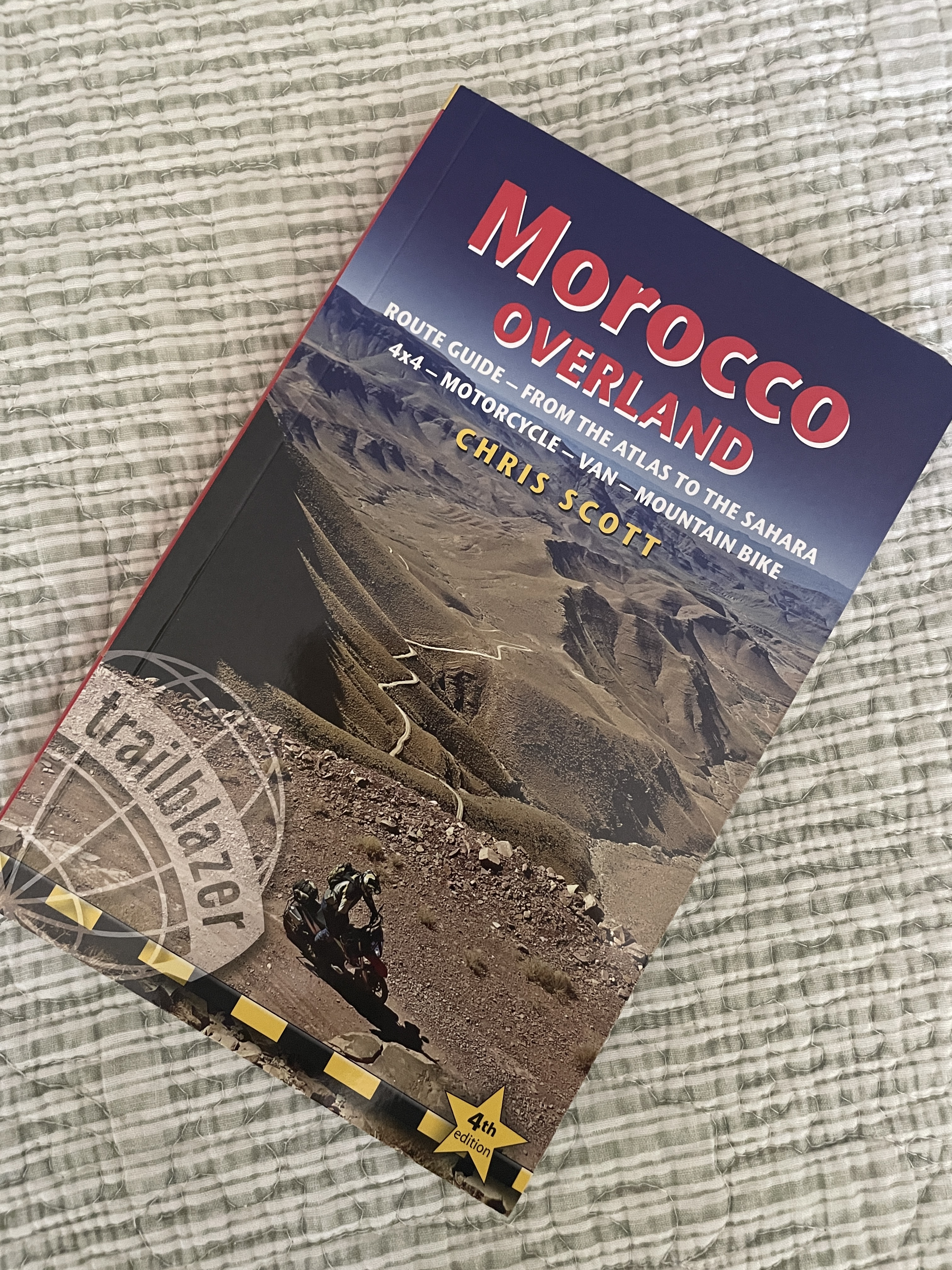
The overland travel authority on Morocco is Chris Scott, whose book we used extensively for trip planning, navigating, and getting a sense of the route. Chris has also helped develop the Trans-Morocco Trail, which is a 2300km-long, mostly off-road route across the country, similar to a BDR or the TAT.
Day 0
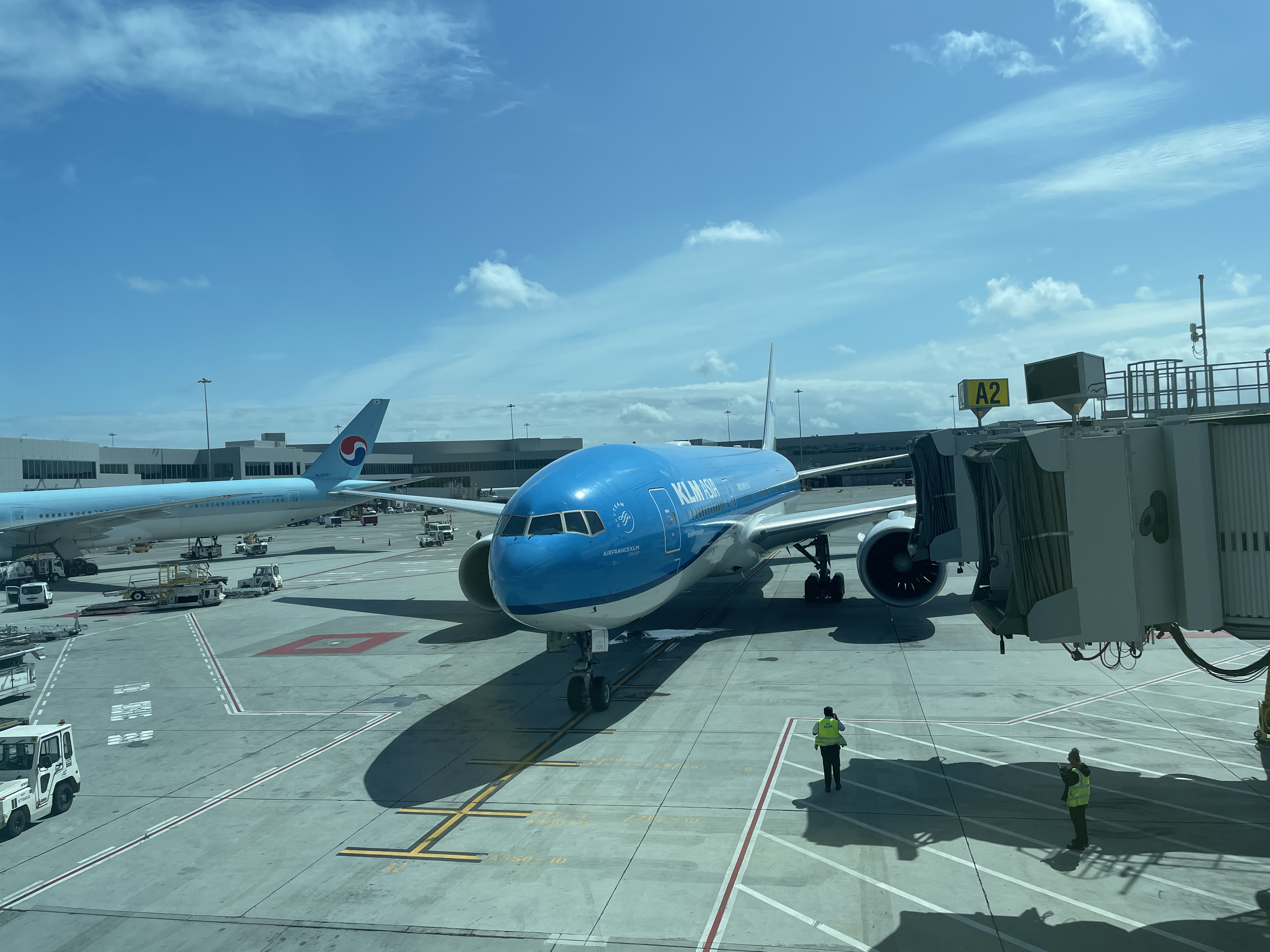
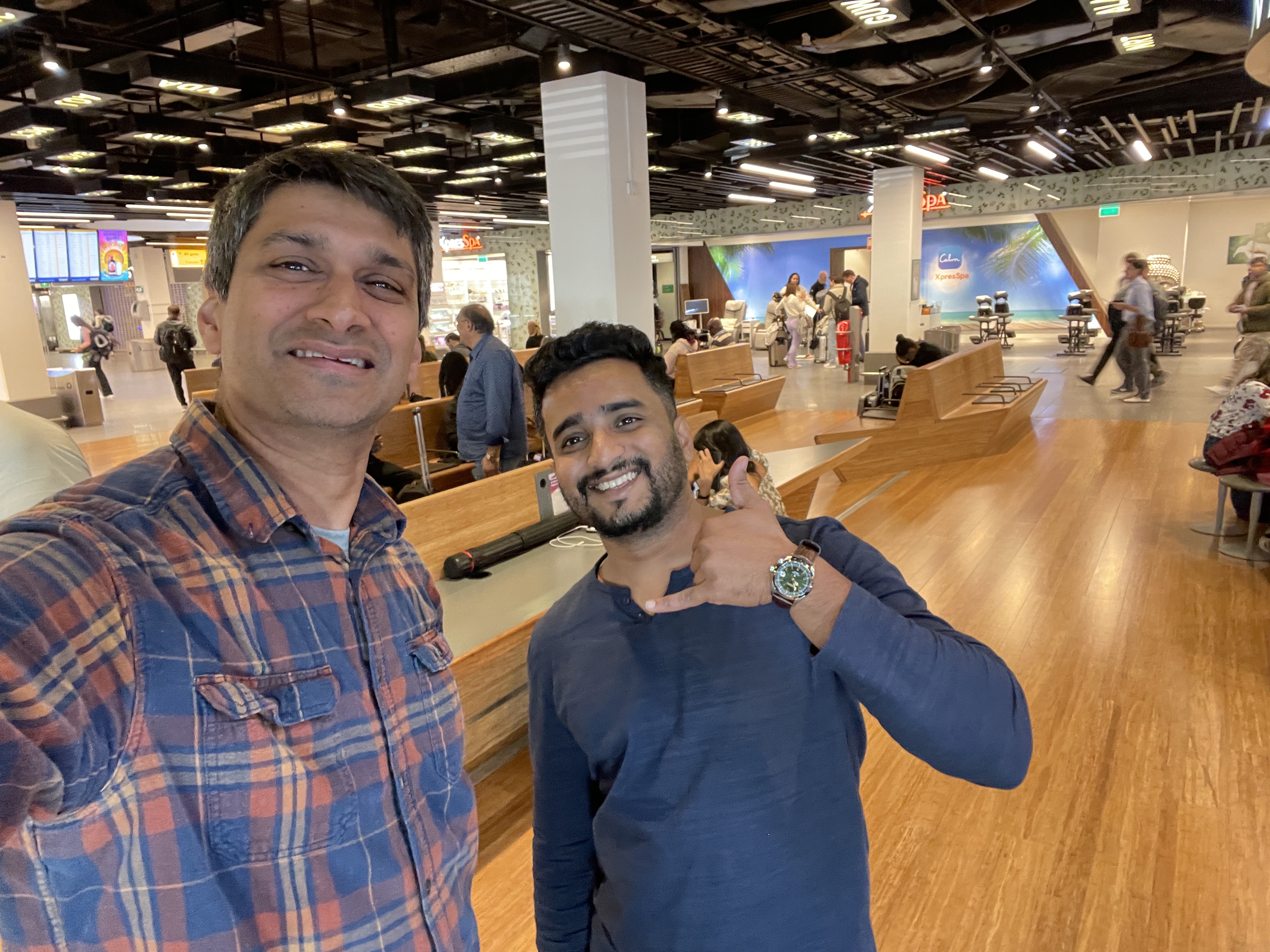
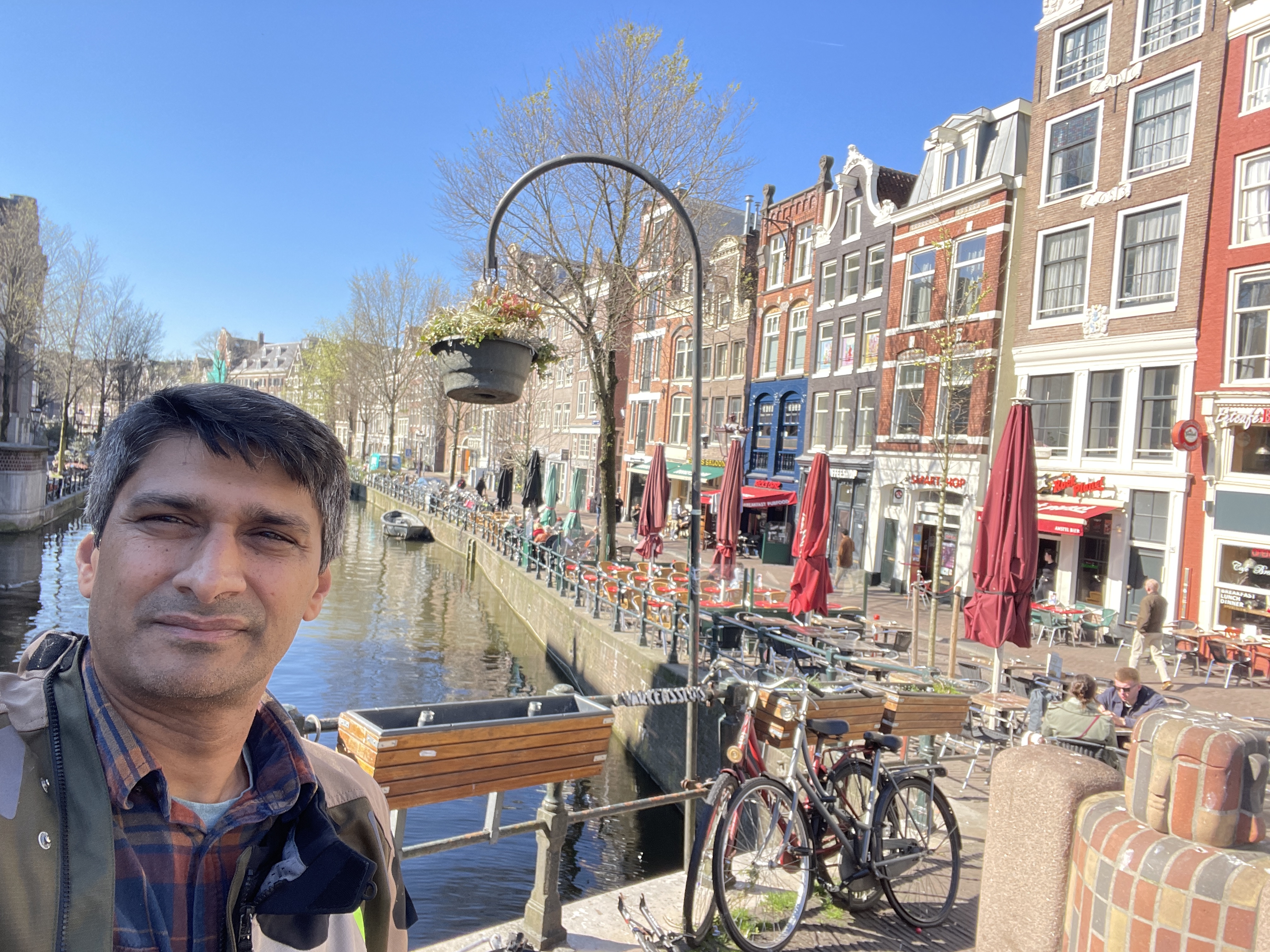
Morocco is relatively easy to get to. There are direct flights to Marrakech from all major airports in Europe. I think I counted maybe 25 flights in a day from Europe. I decided to use KLM, which was the cheapest airline, and fly through Amsterdam. I met up with Gokul at the Amsterdam airport, but since I had about eight hours to spare there, I decided to make a little trip out of it and go into the city for a beer.
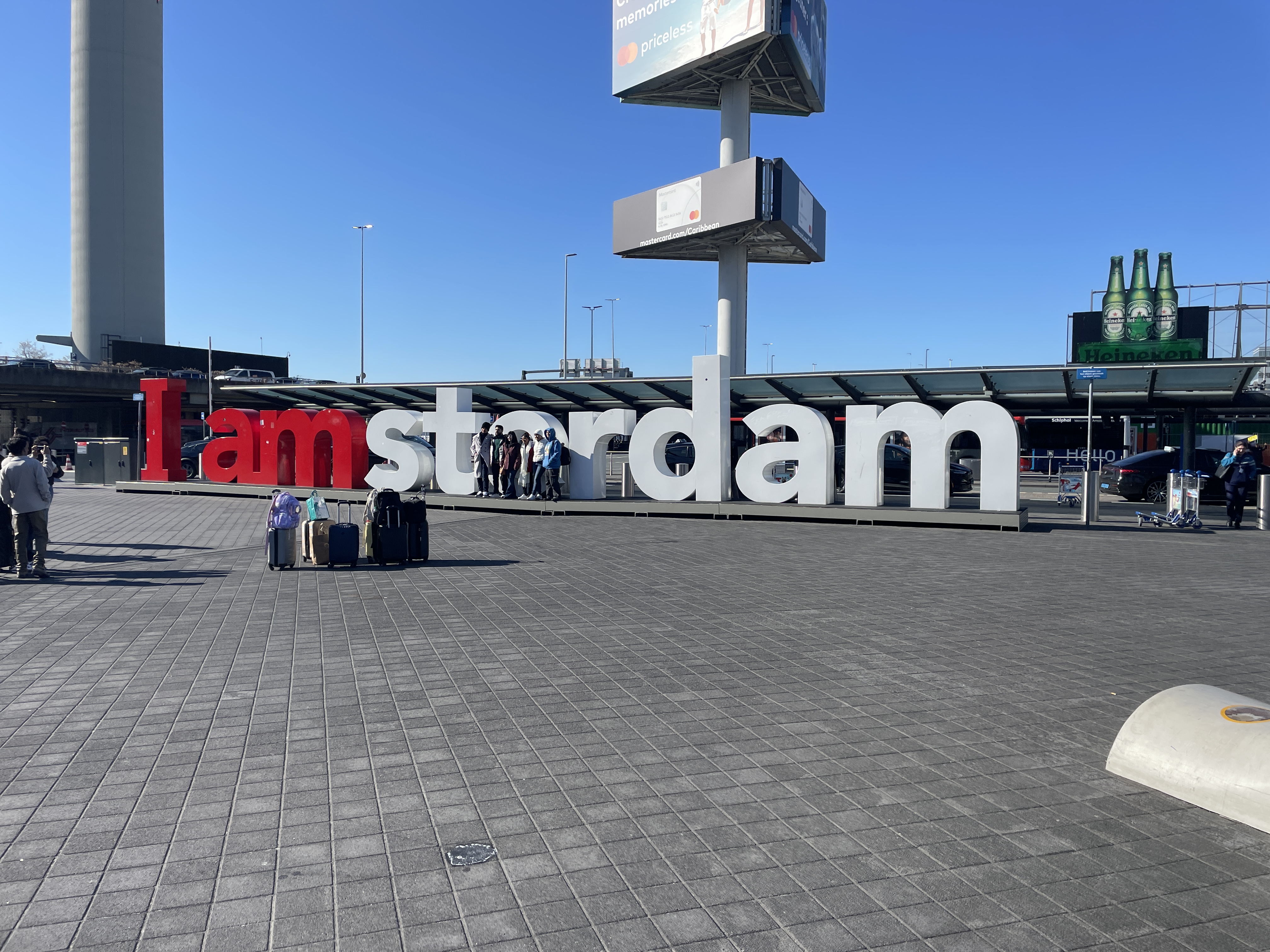
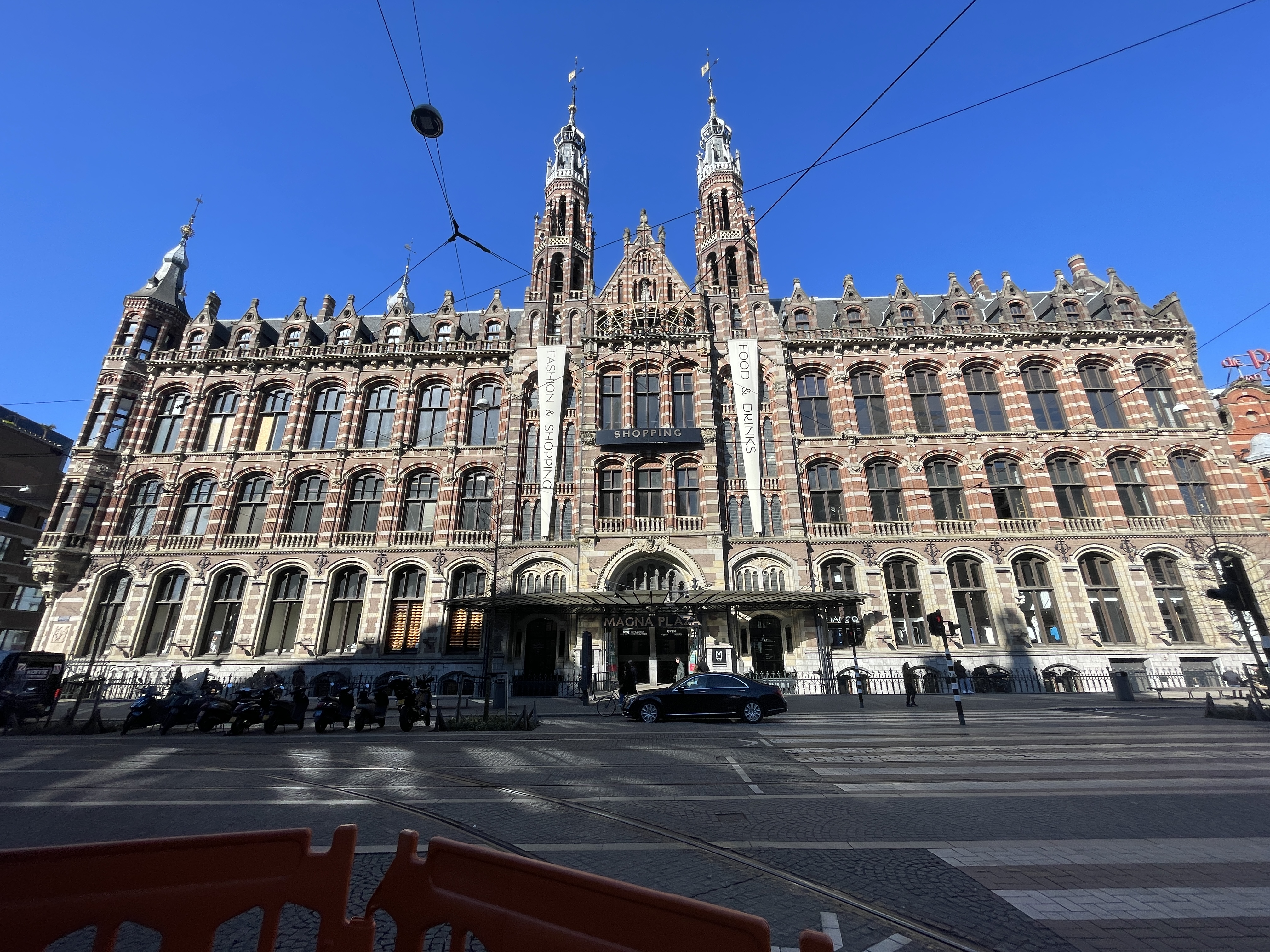
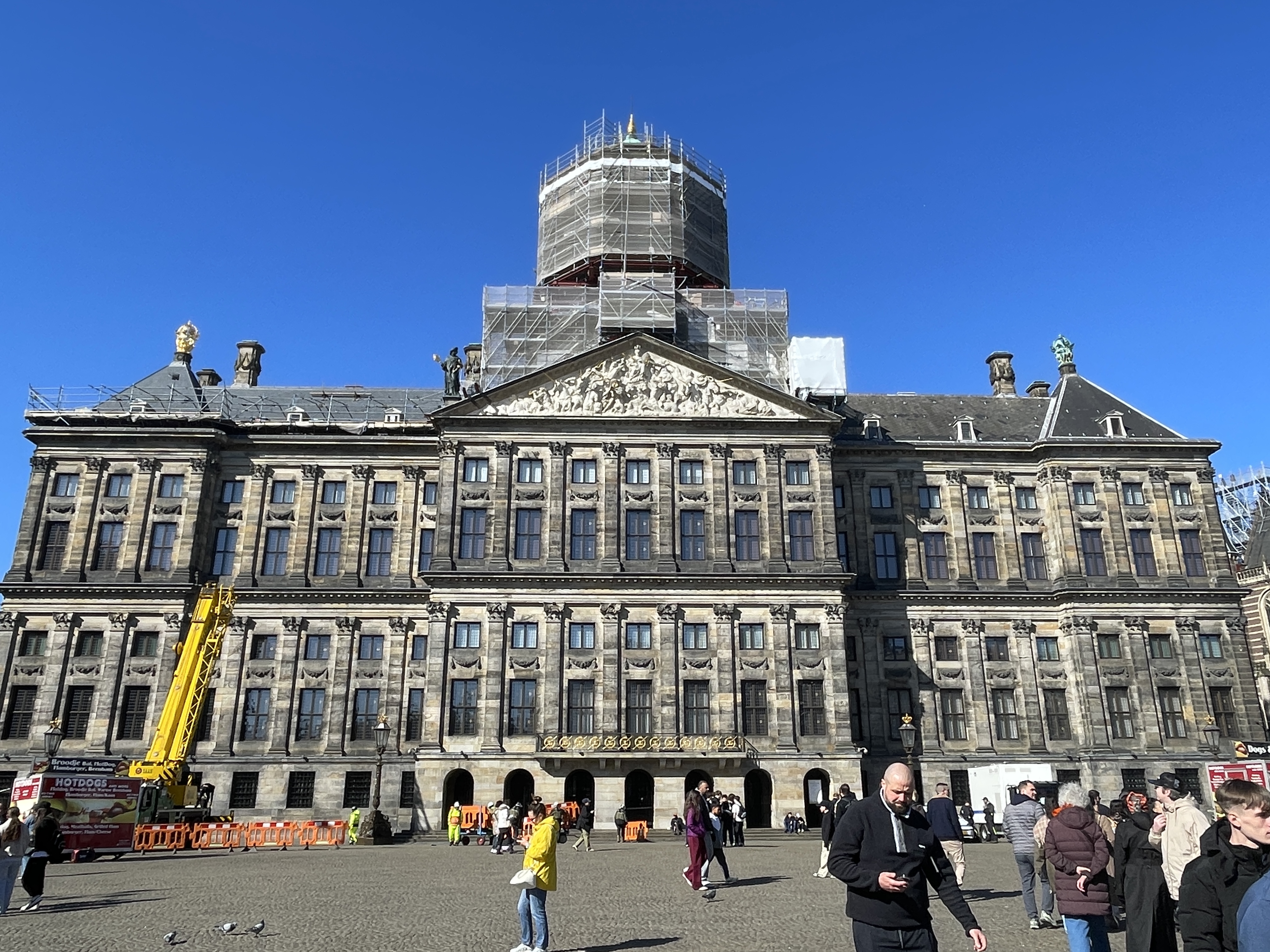
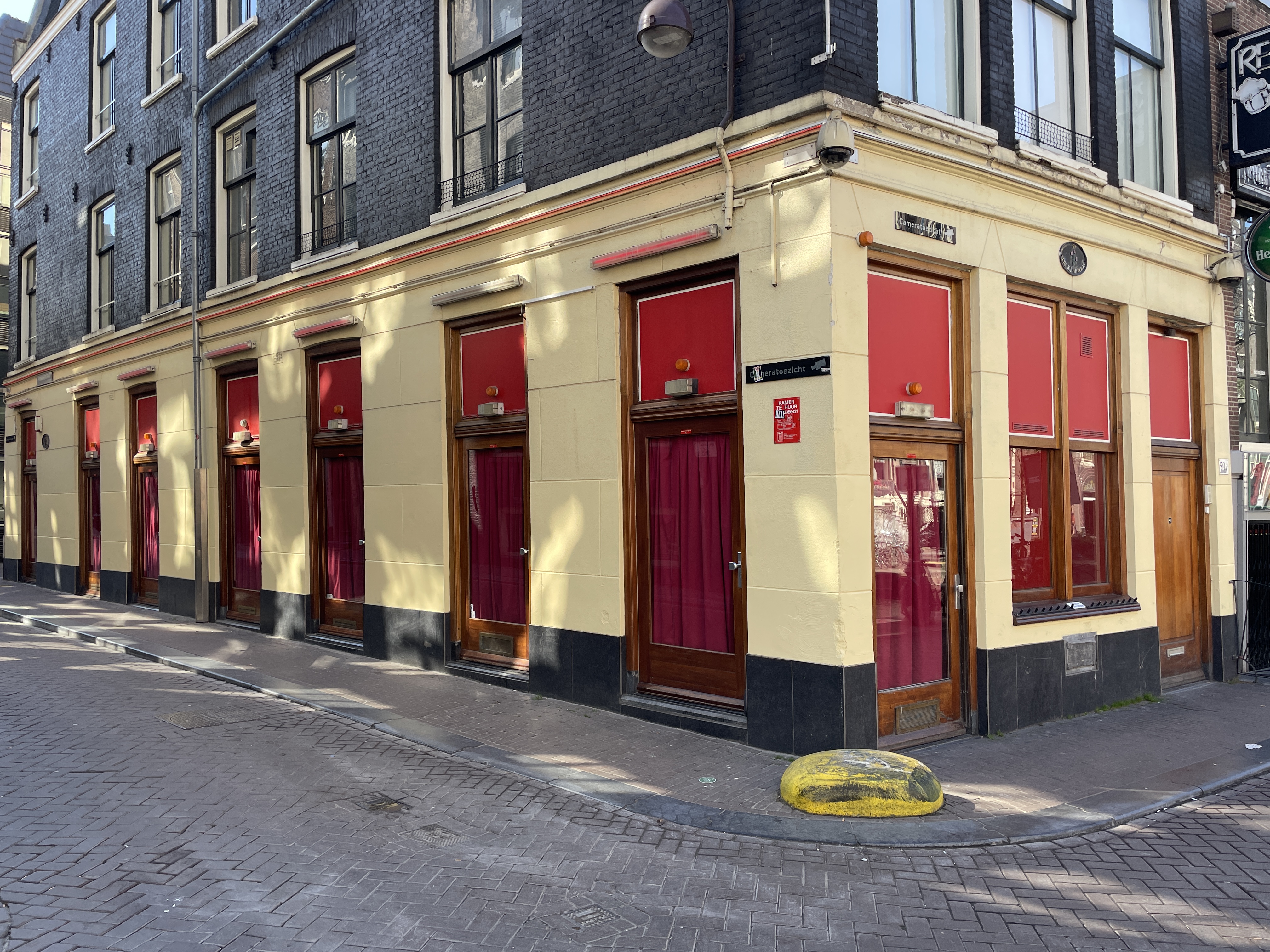
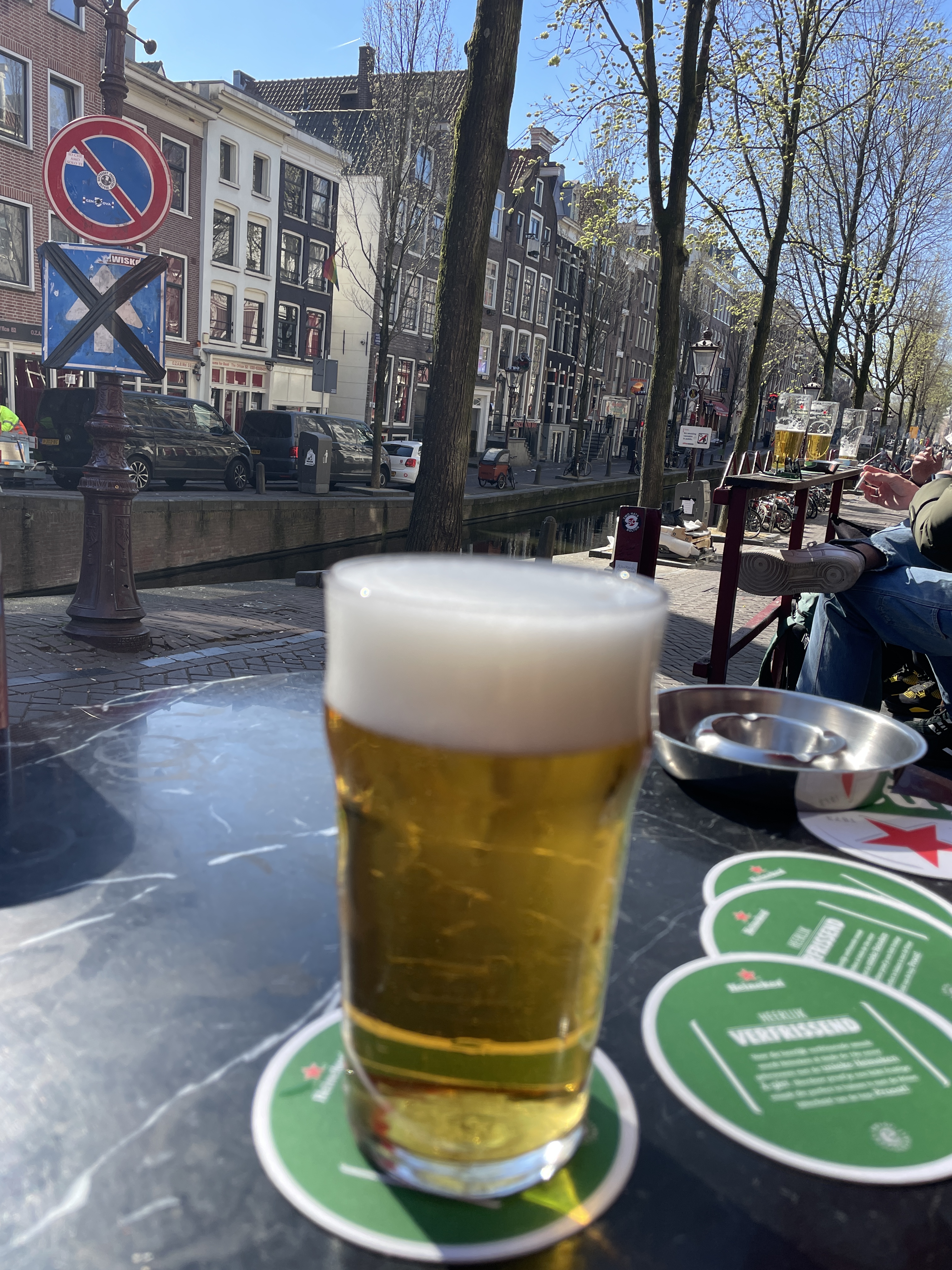
I took an Uber into Amsterdam, wandered around the touristy places like the canals, the Magna Plaza, and the Royal Palace. I stopped by a corner restaurant and had a relaxing beer.
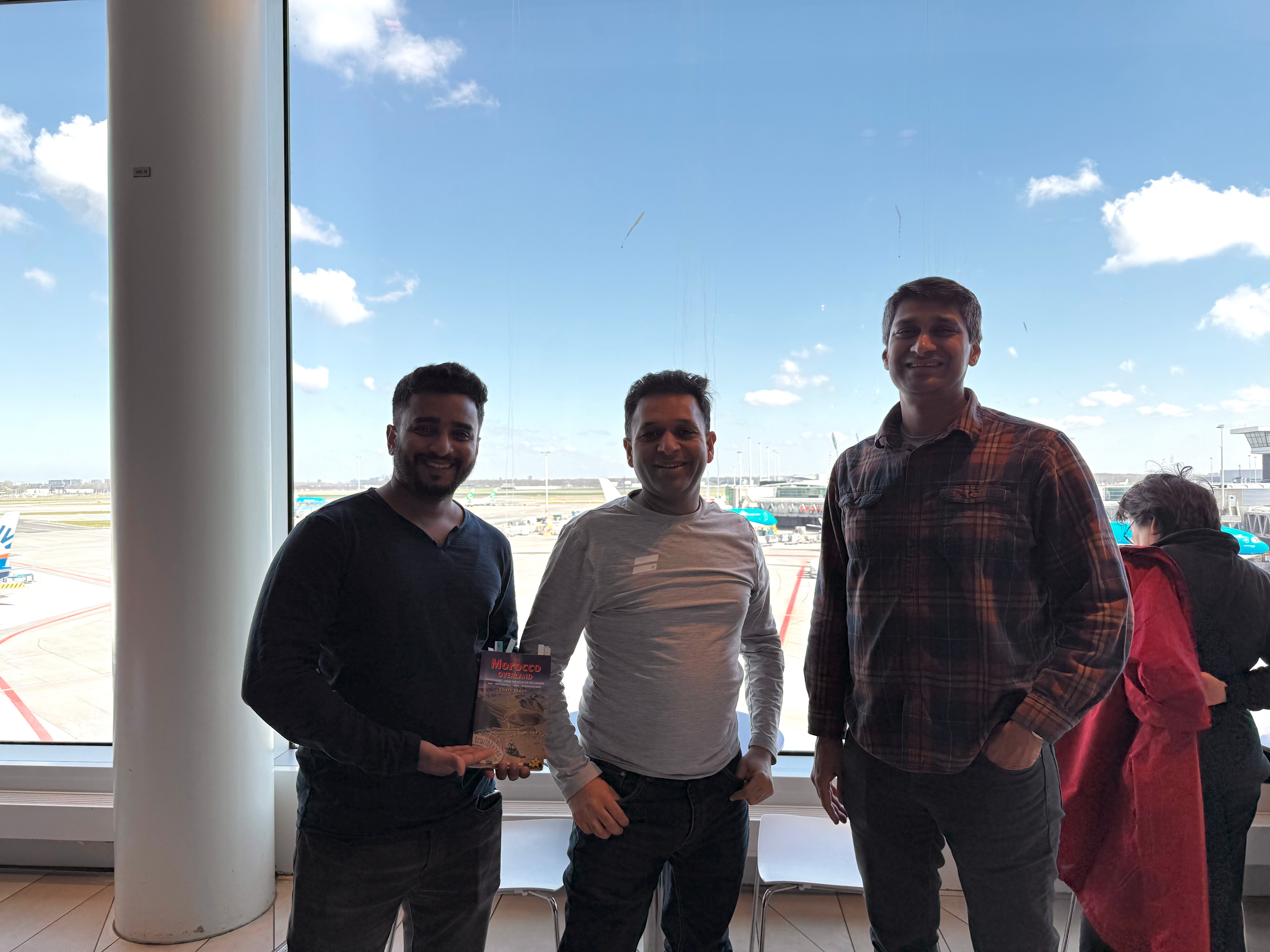
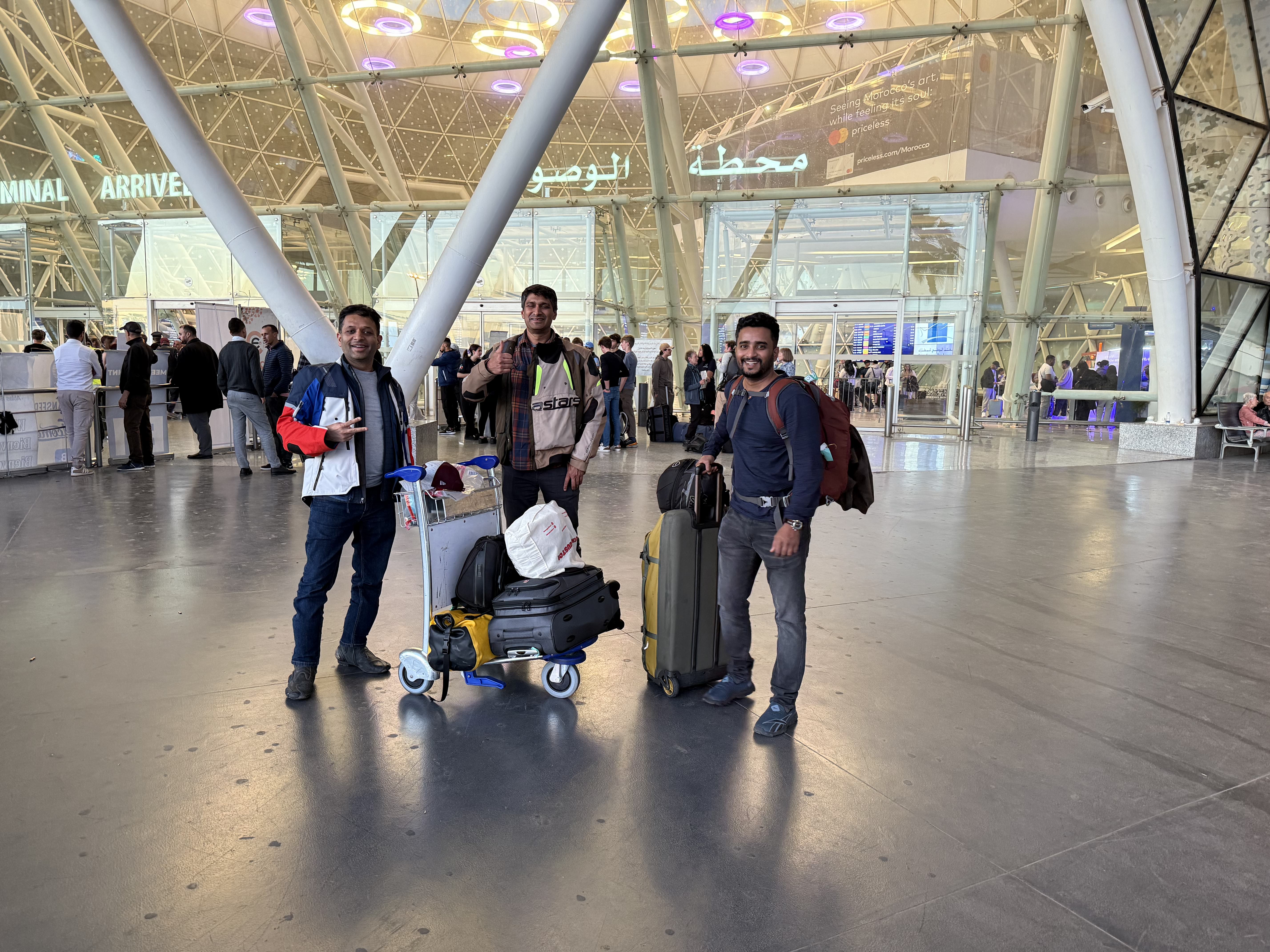
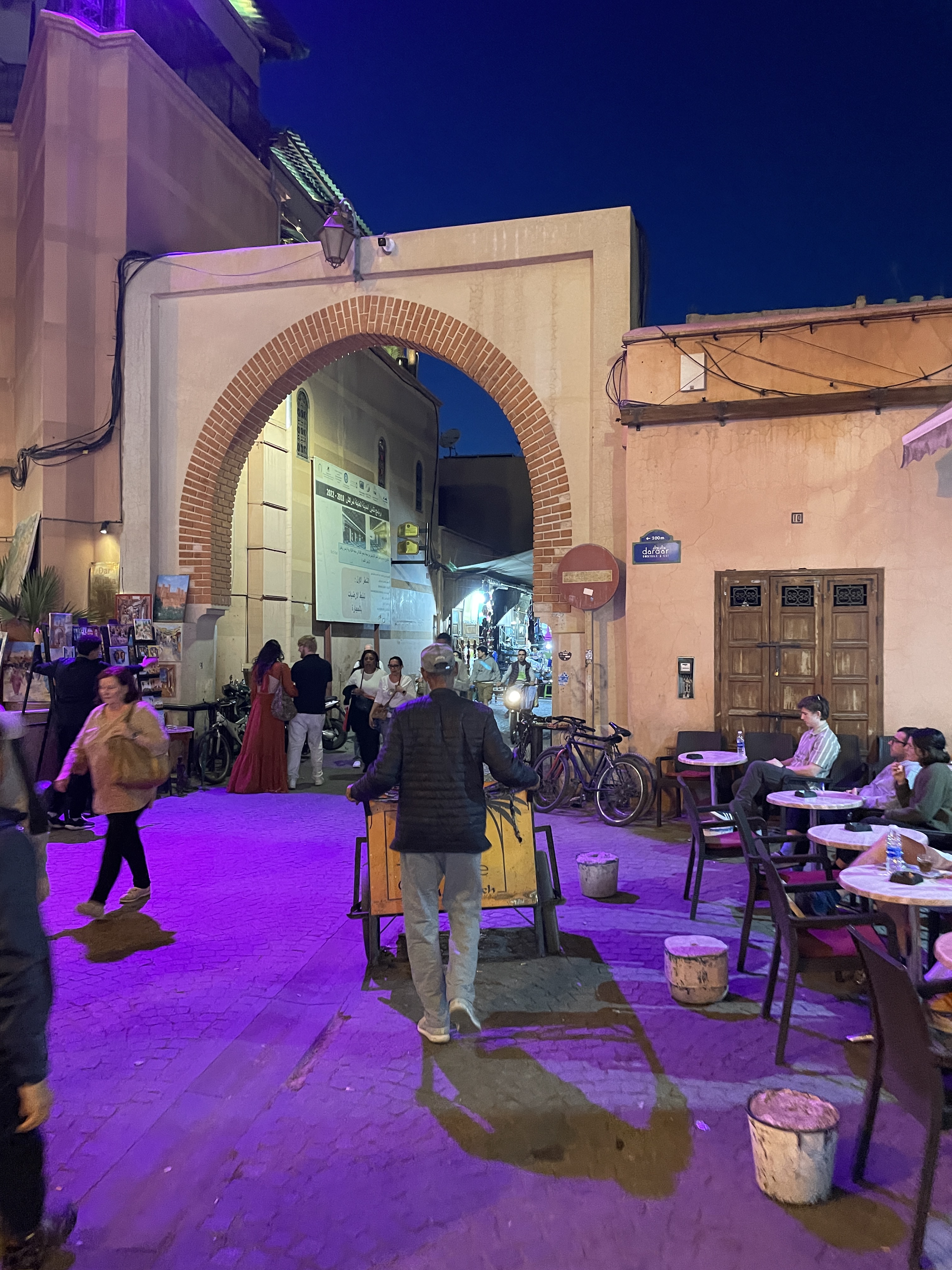
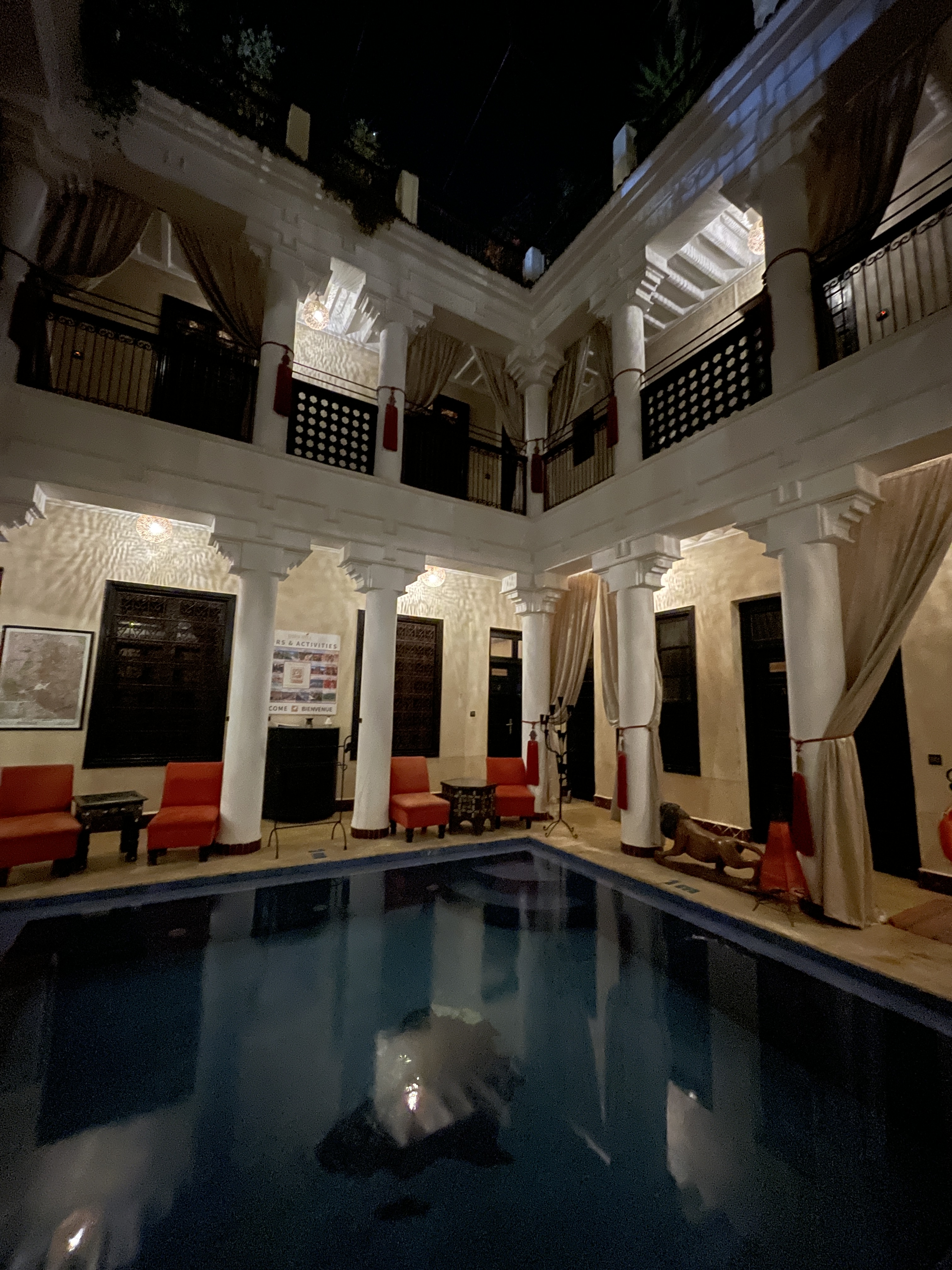
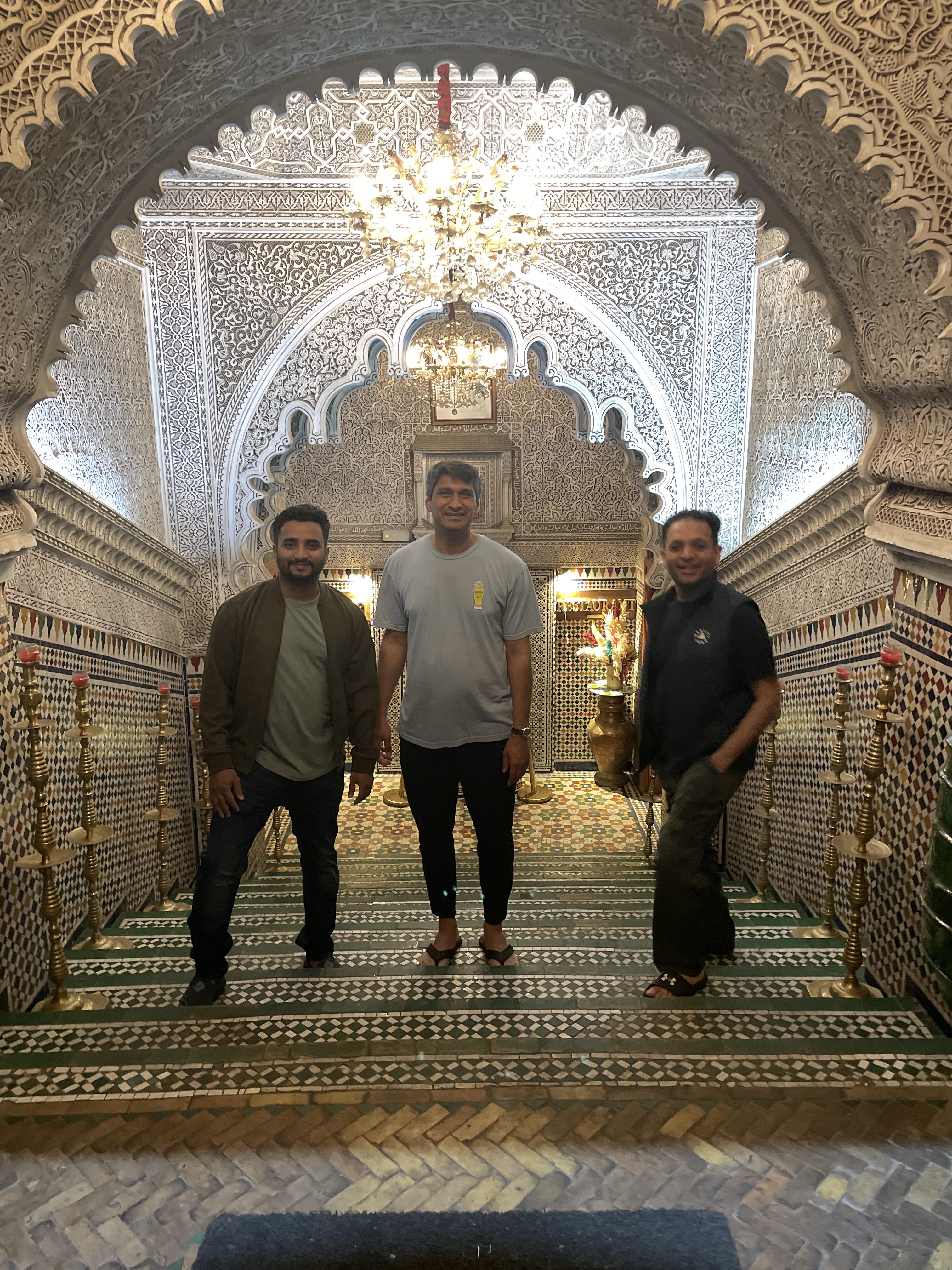
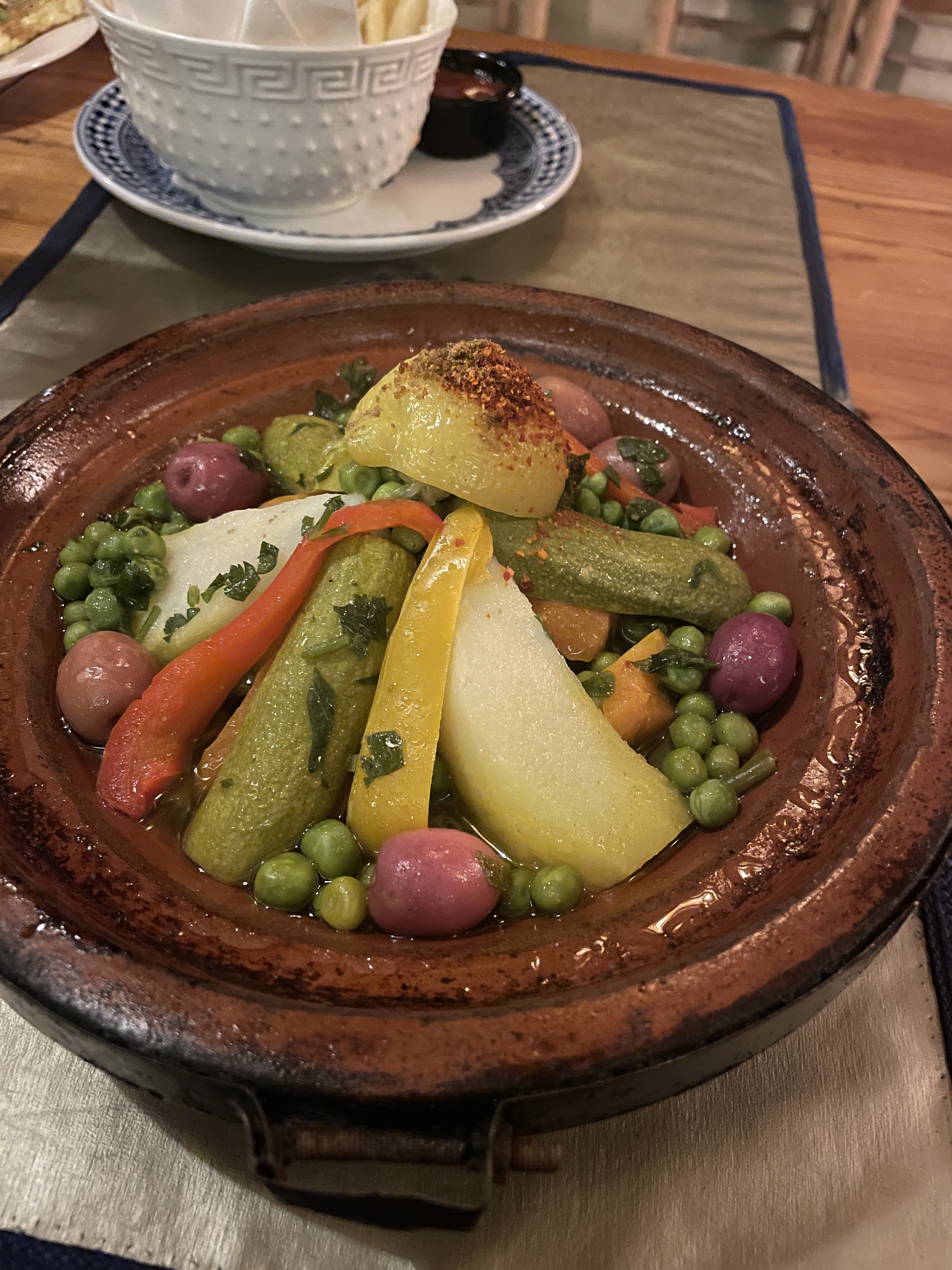
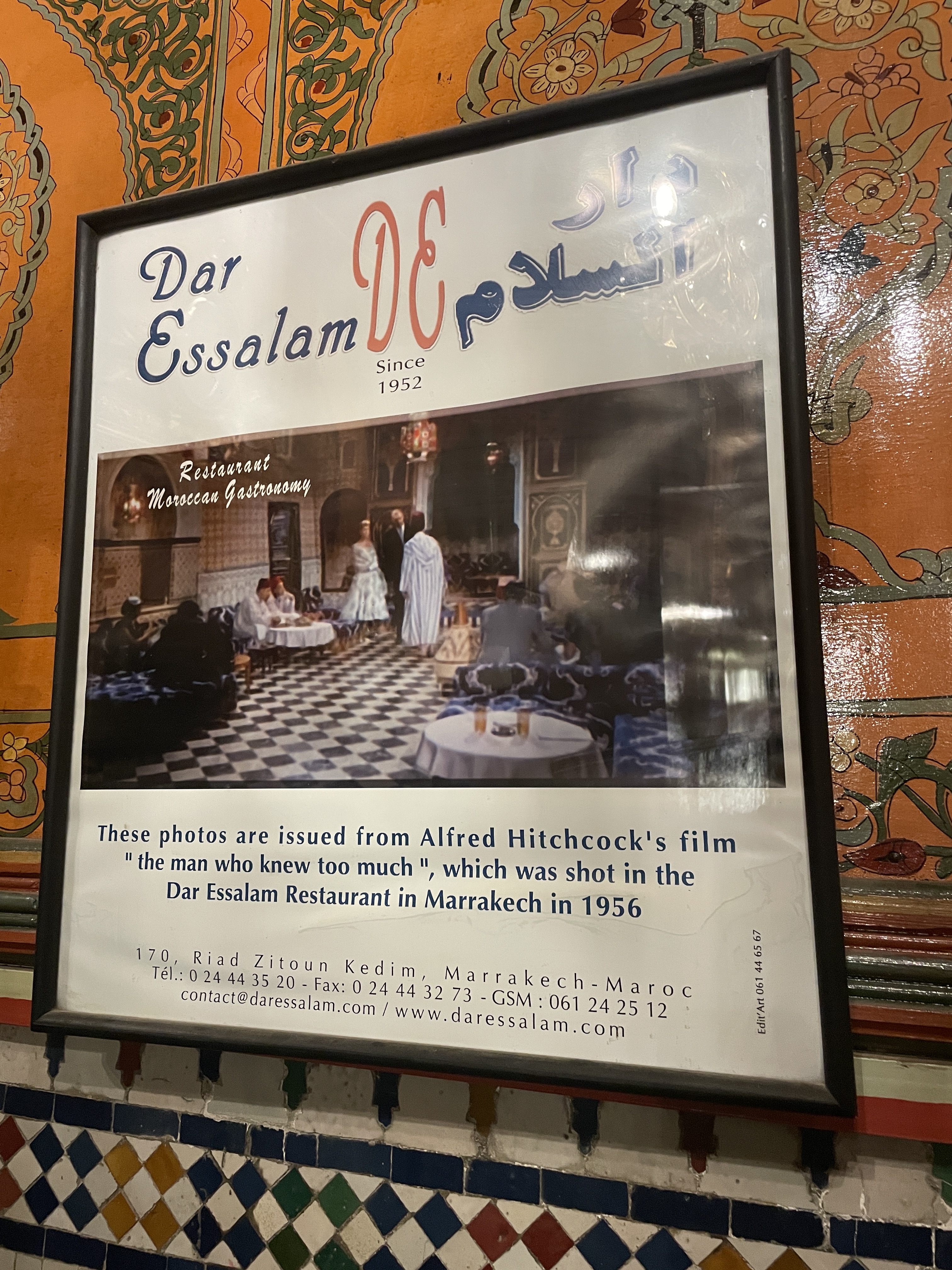
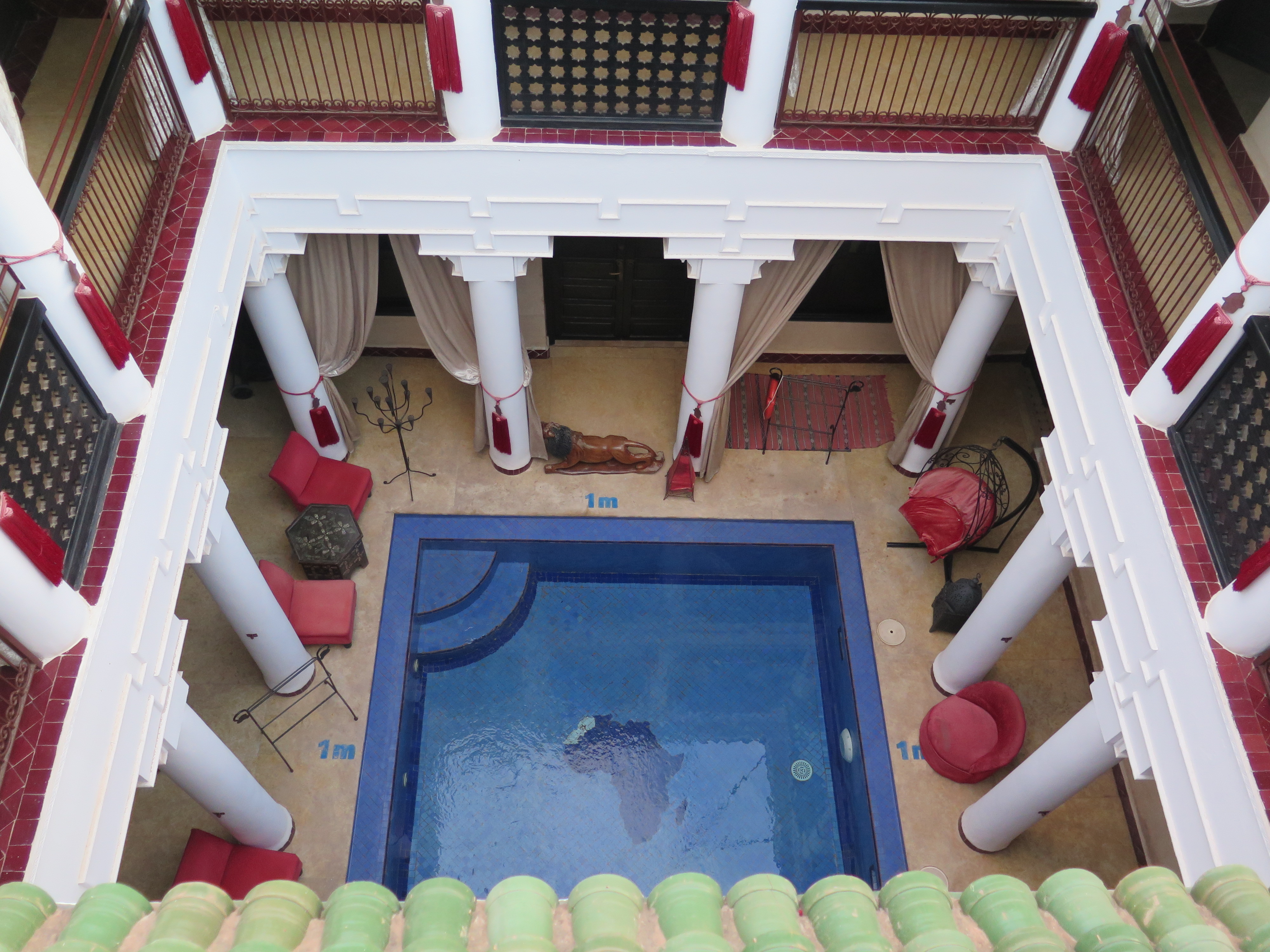
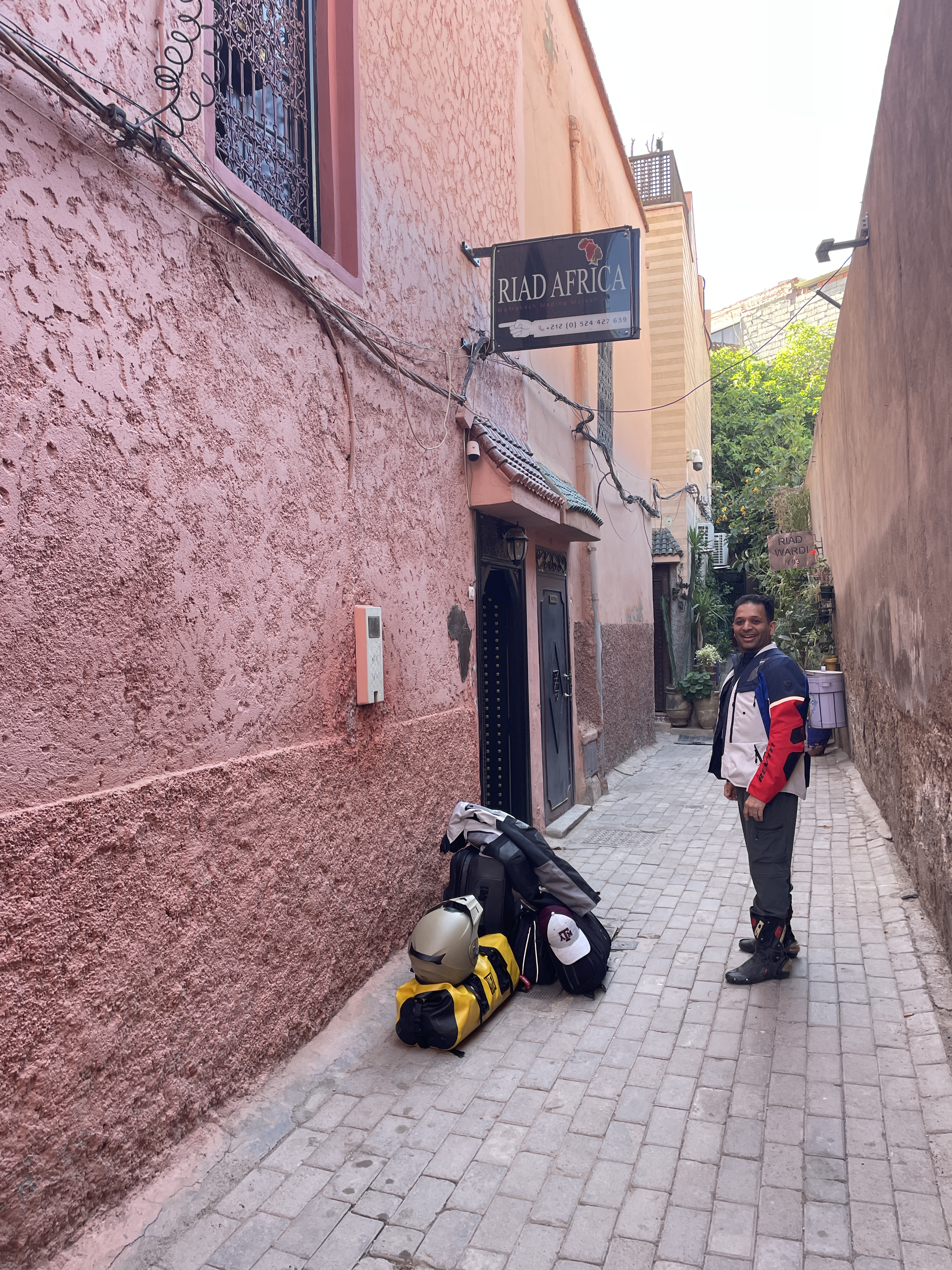
A couple of hours later, we landed in Marrakesh, where our hotel sent a Land Cruiser Prado taxi to pick us up and get us into town. Our hotel for the first night was called Riad Africa, which is a short walk from the main entrance to the Medina. It was a nice, cozy little place with about seven or eight rooms. After we checked in, we wandered around the Medina for a little bit, looking for a place for dinner. We had dinner at a restaurant called Dar-E-Salam, a fancy and ornately decorated place which was used as a shooting location for the Alfred Hitchcock film “The Man Who Knew Too Much” (1956). Dinner was a traditional Moroccan tagine, the first of many that we would eat on this trip.
Day 1
The next day, we had an early breakfast of small breads, jams and cheese. However Gokul was not able to find his passport. He was searching for a good 20 minutes and was starting to get distraught. Luckily we found it deep inside a side pocket of one of his bags and the crisis was averted.
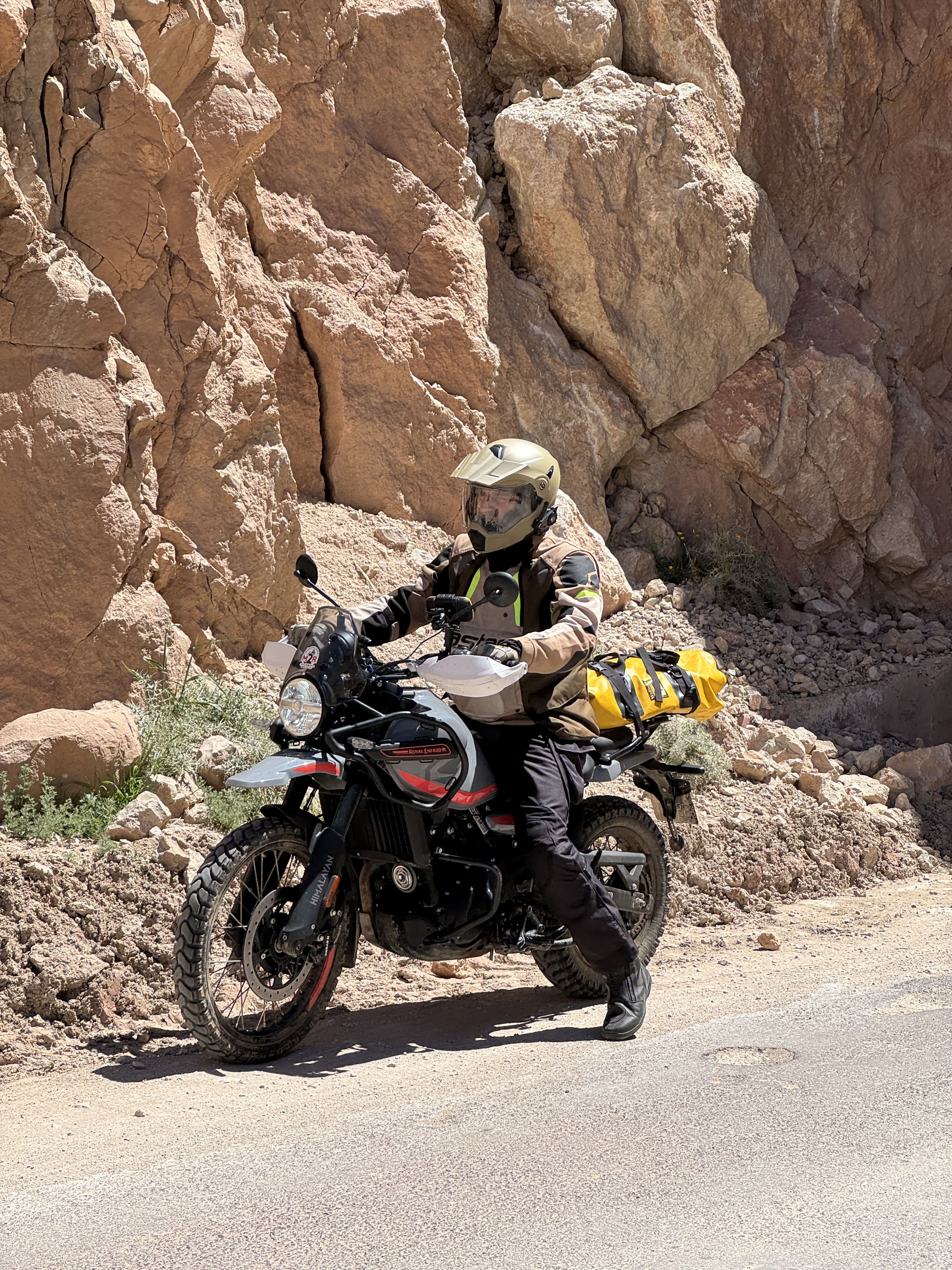
We picked up our bikes from “Bikes 2 Rent” in Marrakesh. Apparently, it was the oldest and most widely used motorcycle rental place. Shobhit got a KTM 390 and I got a Royal Enfield Himalayan 450. Gokul rented a CF Moto 450MT from a different rental company, Tenere Riders.
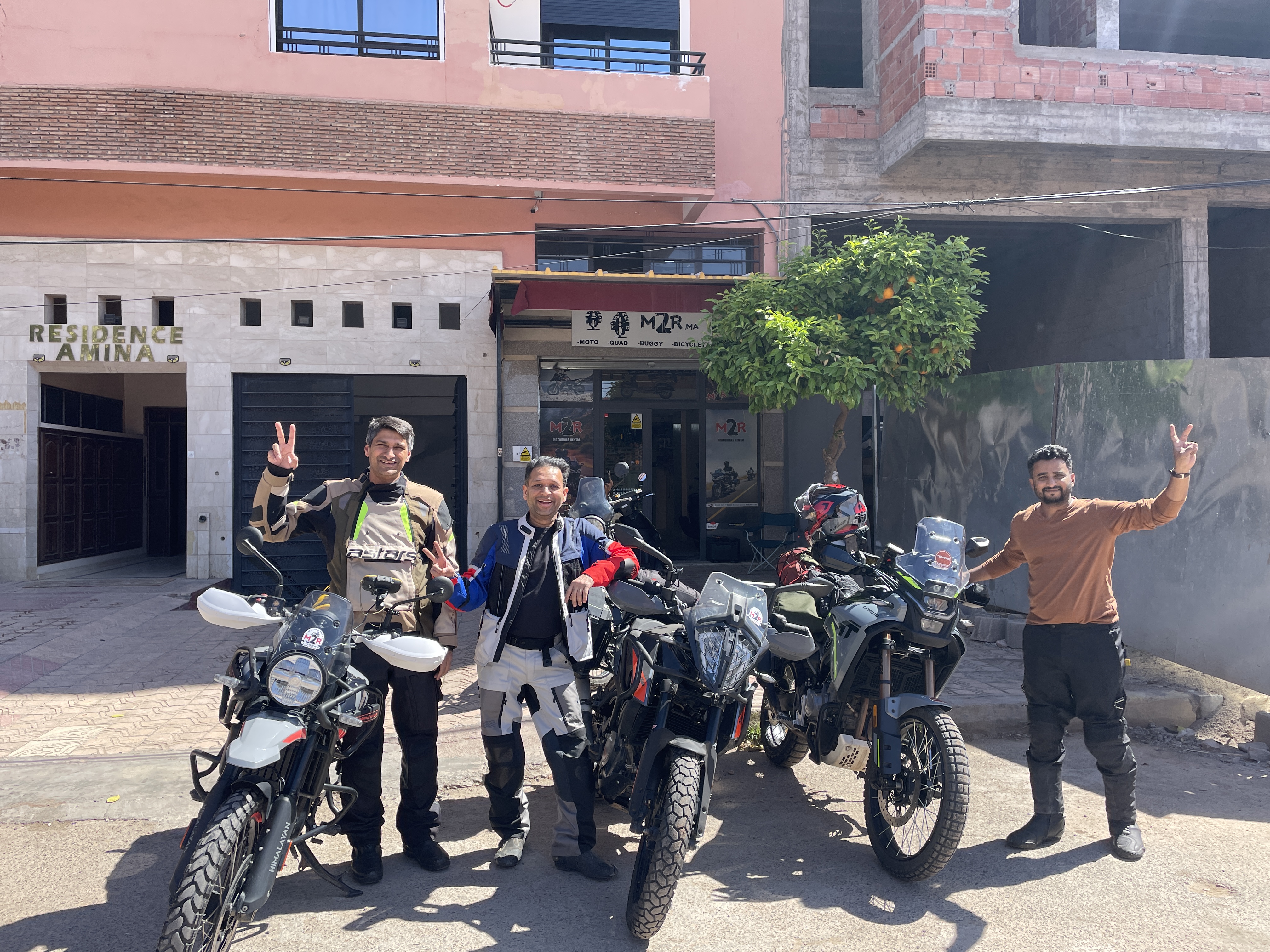
We showed up expecting our bikes to be ready, but they were far from that. The KTM got an oil change, and the Enfield got a new rear tire while we waited. The mechanic overfilled the oil in the KTM, and it leaked through the breather for the next one to two days. The KTM also had a faulty side-stand switch and wouldn’t start even with the kickstand up. So the mechanic took a huge wrench to the kickstand bracket and bent it just enough to engage the switch.
The bikes had no gas in them—zero—so we rode to the nearest gas station to fuel up. We were finally on our way, but at the next roundabout, I lowsided the Enfield. I must have given it too much gas on the greasy new rear tire, and the bike slid out from under me. Thankfully, I managed to jump off the bike. My knee scraped the ground, but my gear did its job. The bike’s crash guards prevented any serious damage, so we continued on our way. It was definitely a rookie mistake—too much throttle while leaned over on brand-new tires. Anyway, not much harm done, but I rode the rest of the day a lot more carefully.
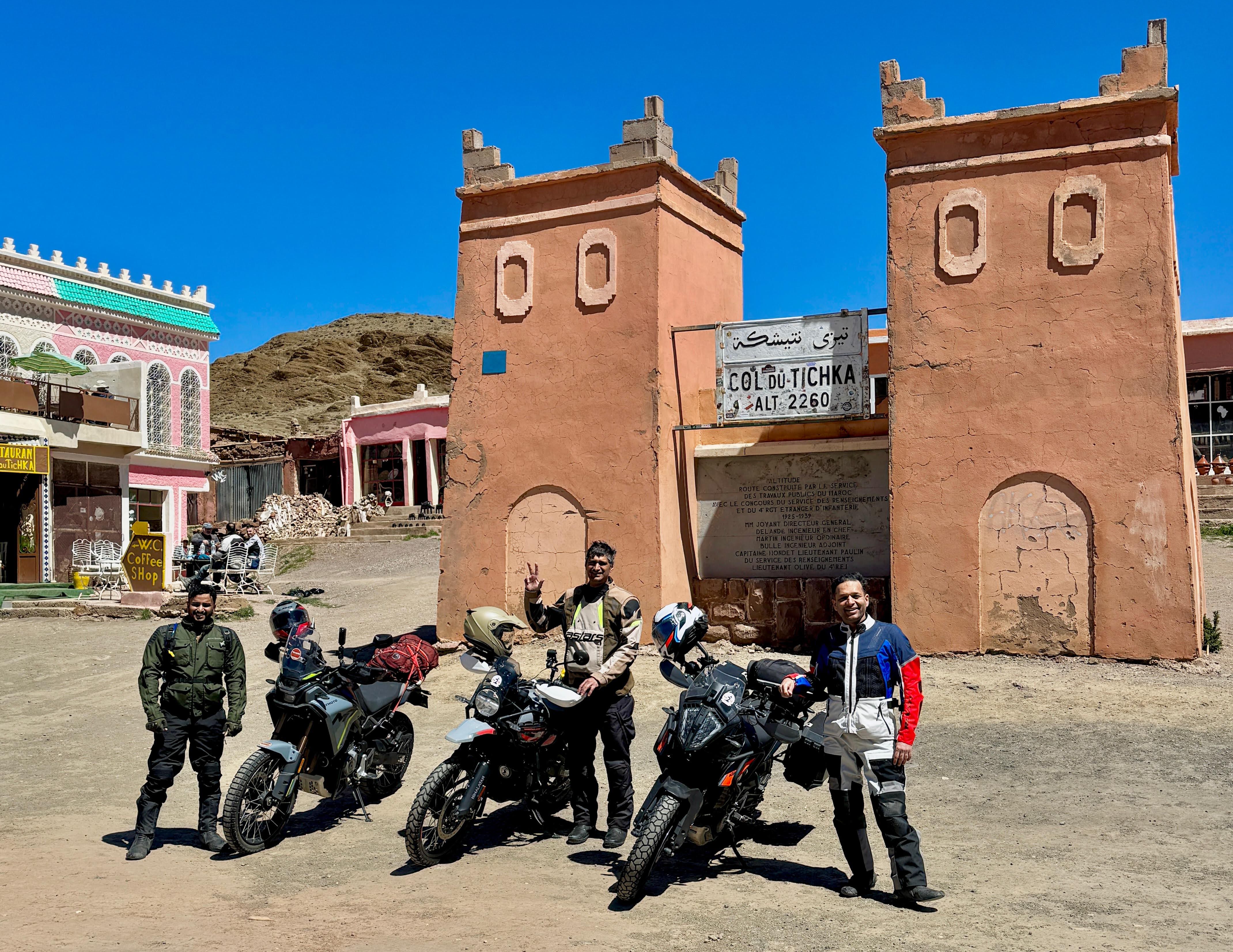
On our way to Ouarzazate, our first stop was at the top of the Tizi N’Tichka pass. This is a picturesque mountain pass through the highest mountains, summiting at approximately 7,300 feet. The twisties were fabulous, but the traffic was a little haphazard and dangerous. In several places along the route, there are three lanes, two of them traveling in one direction and the third one in the opposite direction. The center lane is designated for one direction of traffic flow, but that is merely a suggestion and pretty much everyone will get into the center lane and use it to pass other vehicles either going up or down the mountain. We were careful passing other vehicles and quickly got used to a random truck or SUV crossing over illegally into our lane.

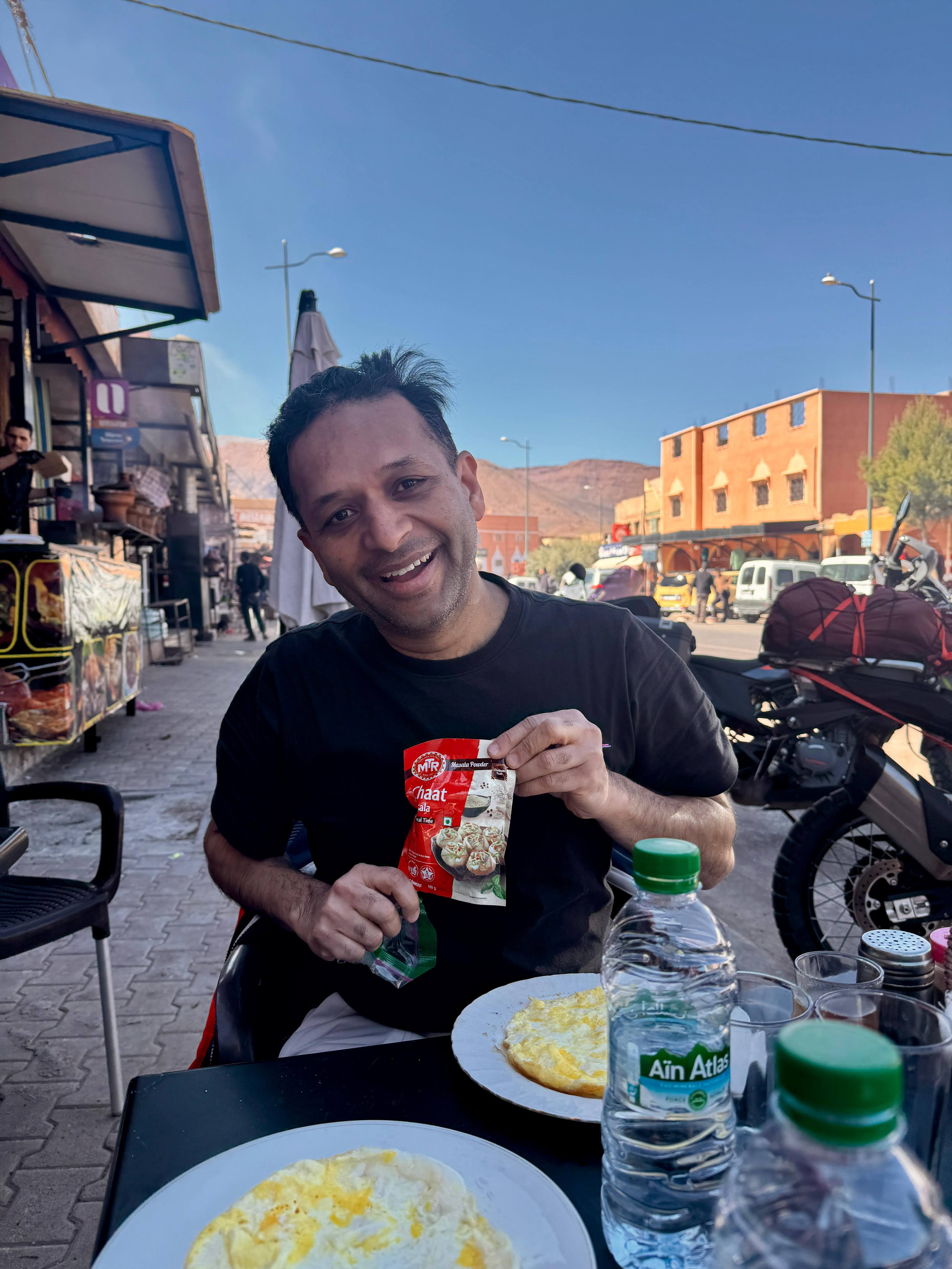
We descended down the pass into the town of Agouim where we had lunch. Lunch was very basic: a few pieces of chicken and an omelette. Shobhit had got some chaat masala with him and he would season his food during most meals.
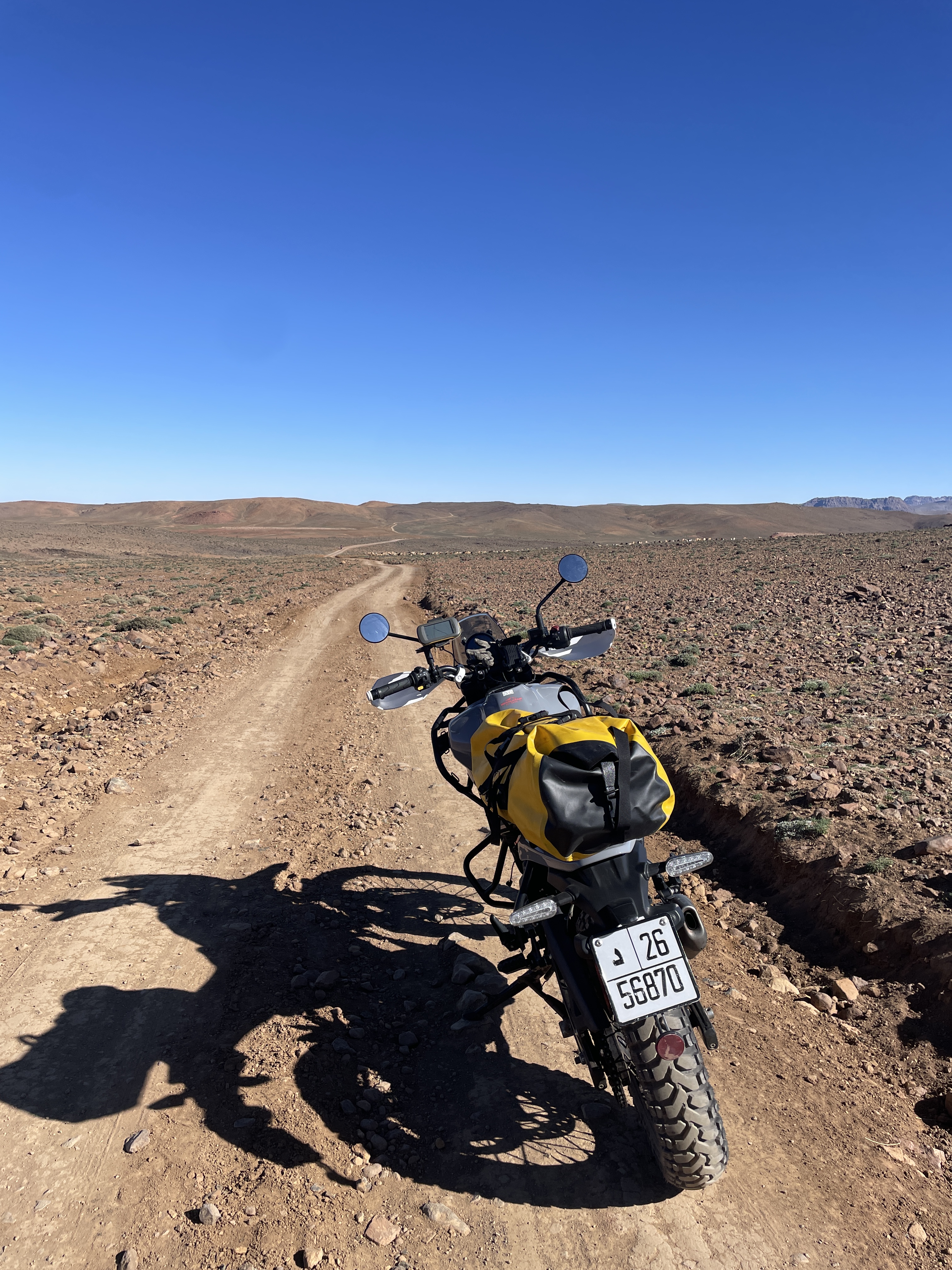
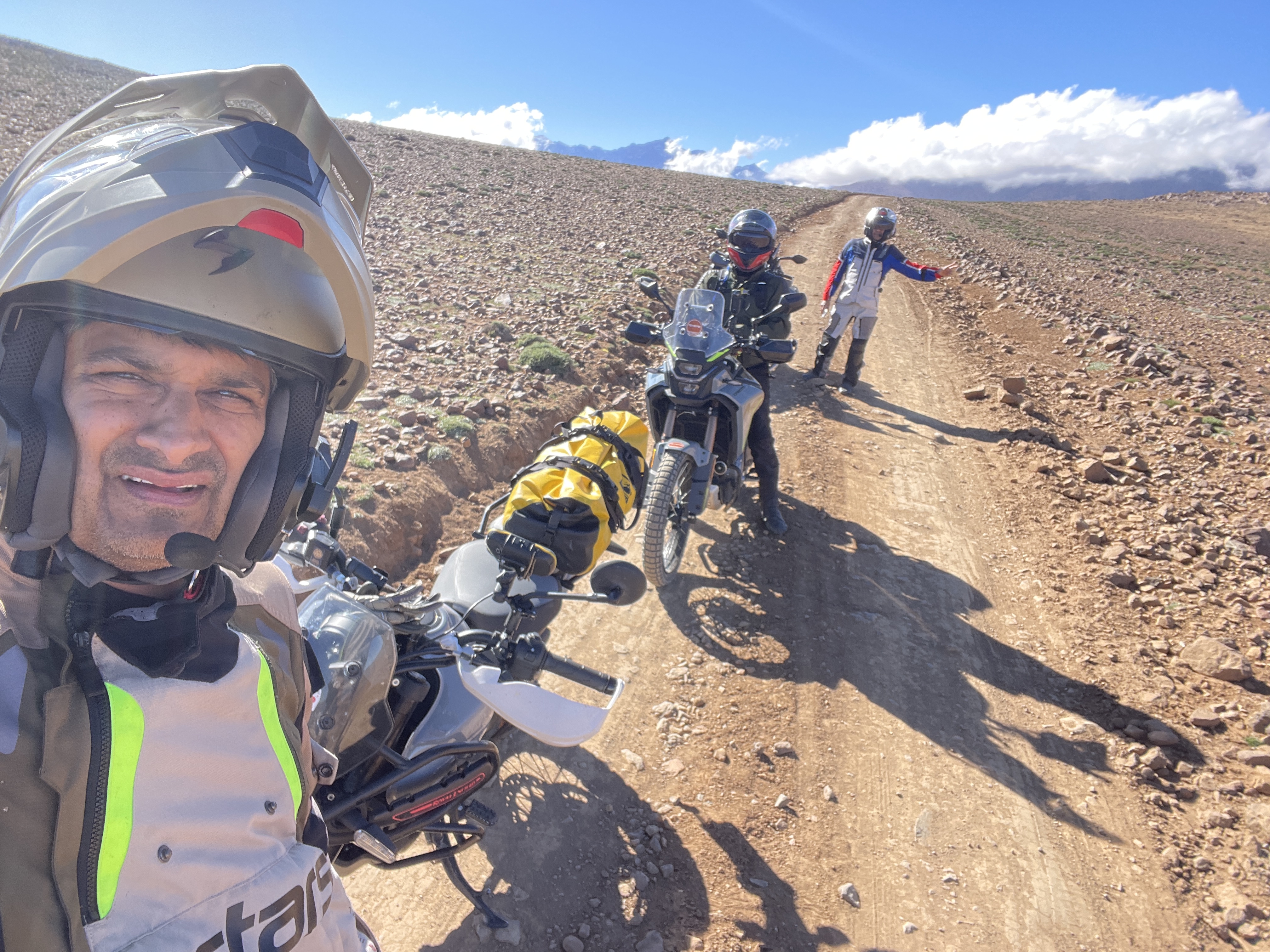
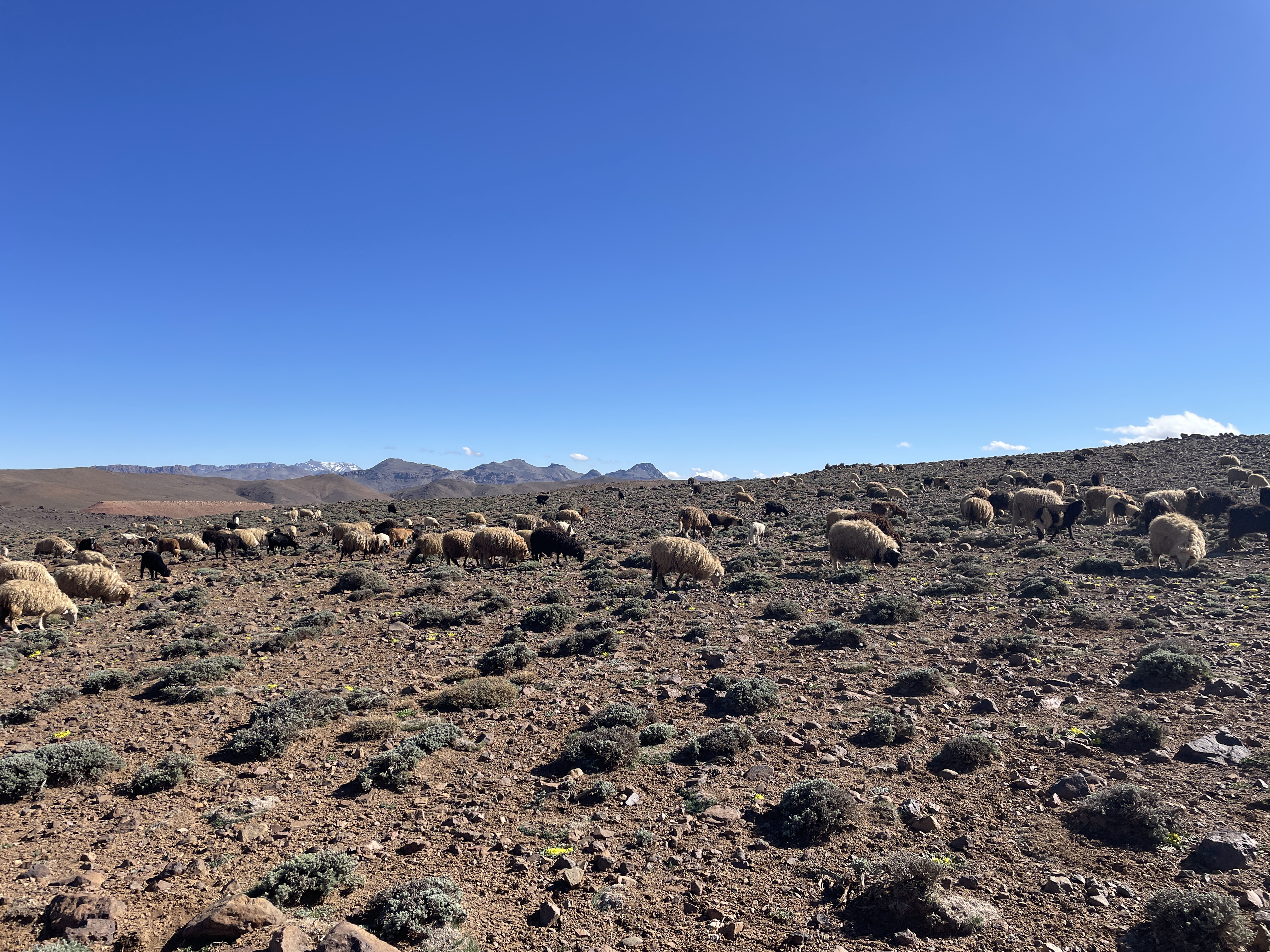
From there, we started along the off-road route mentioned in Chris’ book (Sections J6 and J4) from Agouim through the “three-mast pass” towards Amassine and eventually Anezal. Initially it started off as a wide two-track dirt track comfortable for big bikes, but as we went deeper into the countryside, the road narrowed down to a nice single track, used regularly by local travelers on their motorcycles. We stopped at the famous heart-shaped watering trough and Gokul pulled out his drone. He captured some great video, even though the winds were gusting quite severely. We saw a few nomadic shepherds along the way. There was no traffic there at all, maybe one to two local bikers (on 100cc air-cooled bikes with normal tires) passed us on this 100+ km stretch. It was amazingly peaceful to ride through the desolate wilderness of Morocco, and the weather was perfect—clear skies and not very hot, not too cold.


From Anezal, the road to the highway was paved and a relatively straight shot. We stopped by briefly at this American-styled gas station (not a real functioning gas station, just a movie prop) that was used in the 2007 horror movie “The Hills Have Eyes, 2”.
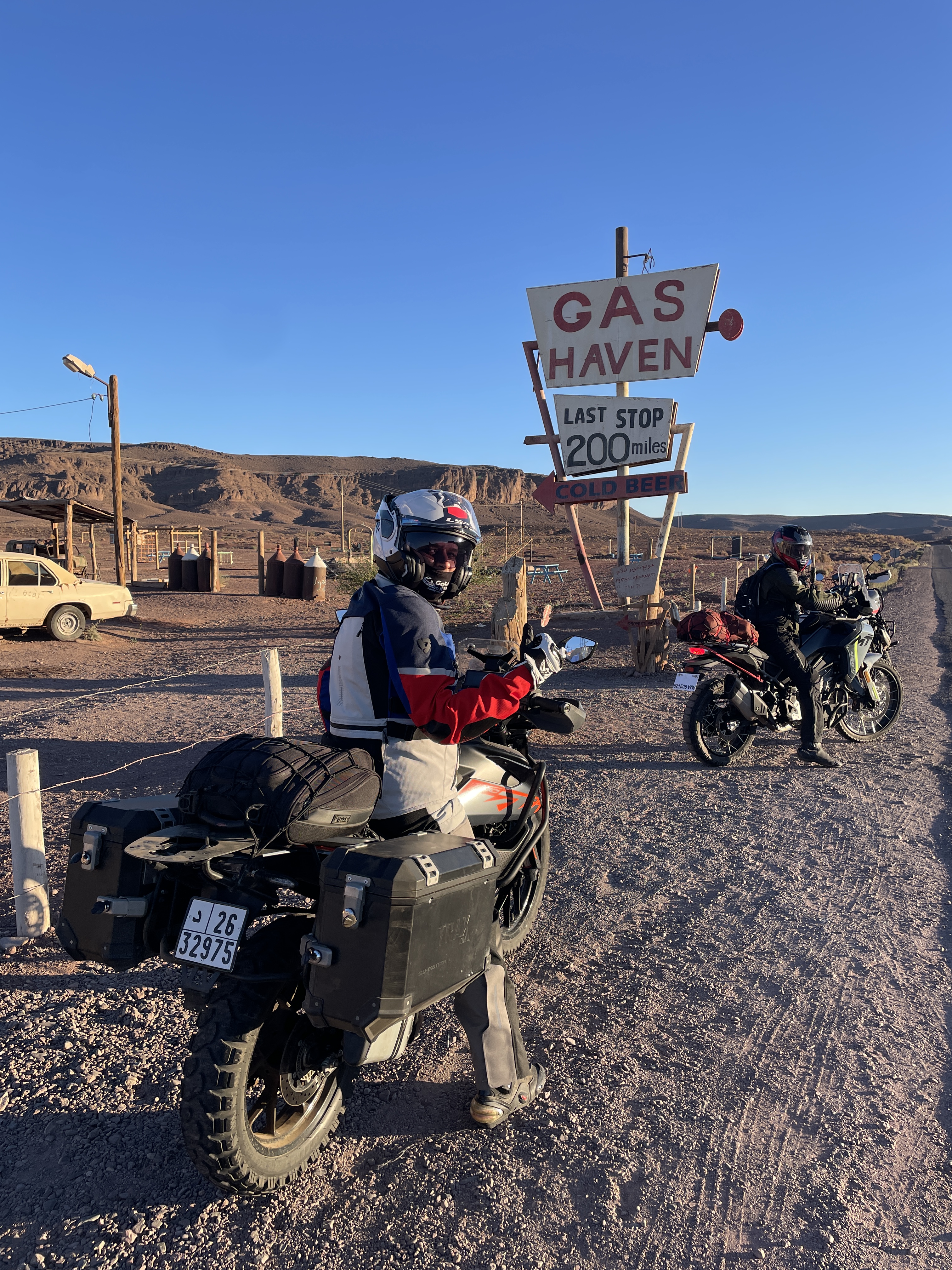
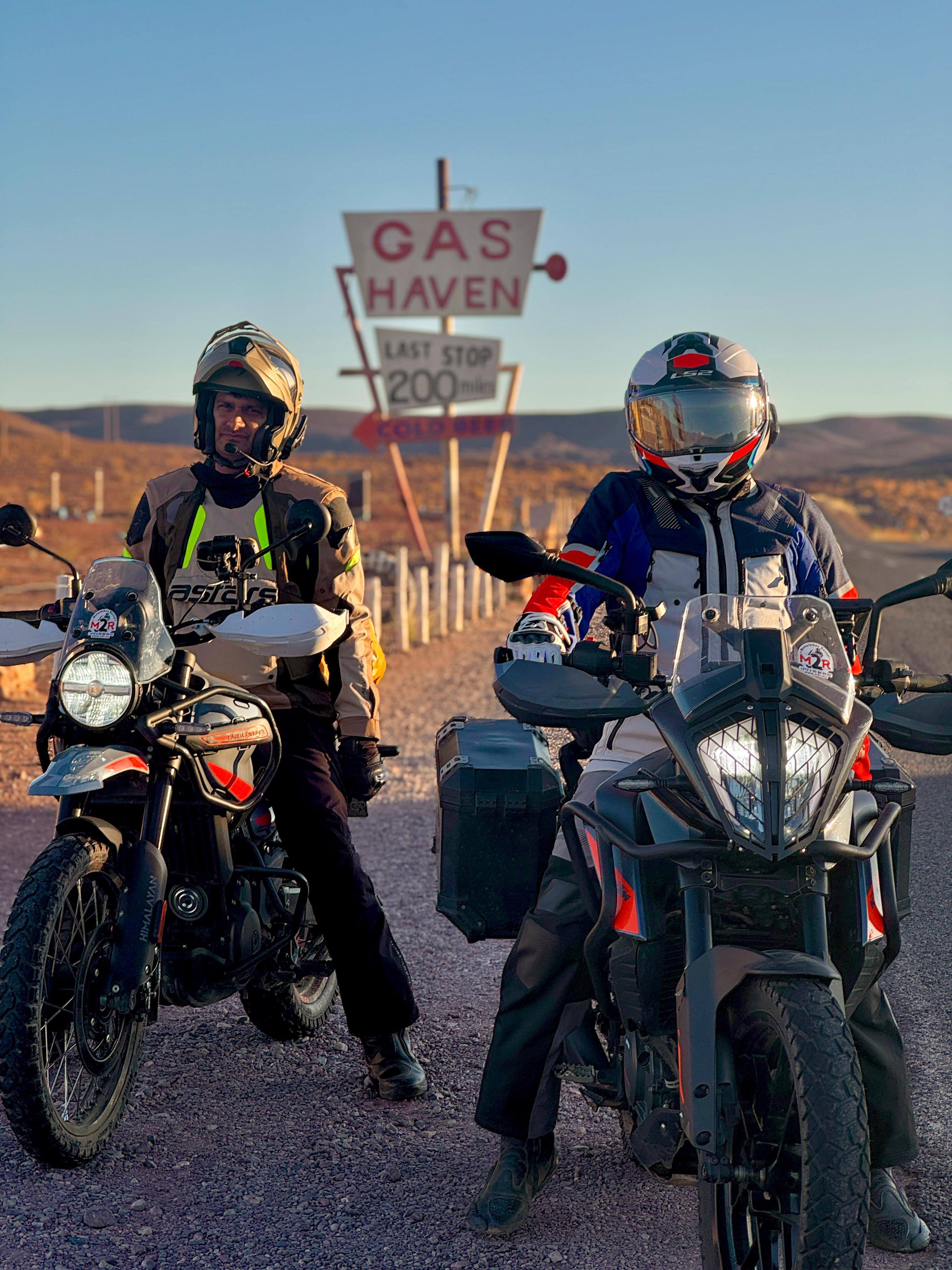
We got back to the main highway near Tizgzaouine and made our way down to Ouarzazate for the night. Towards the end of the day, Shobhit’s bike cut out while he was riding. He had to pull over to the side, and we were with him. Luckily, he cycled the ignition, and the bike started back up. However the check engine light came on, and remained on for the rest of the trip.
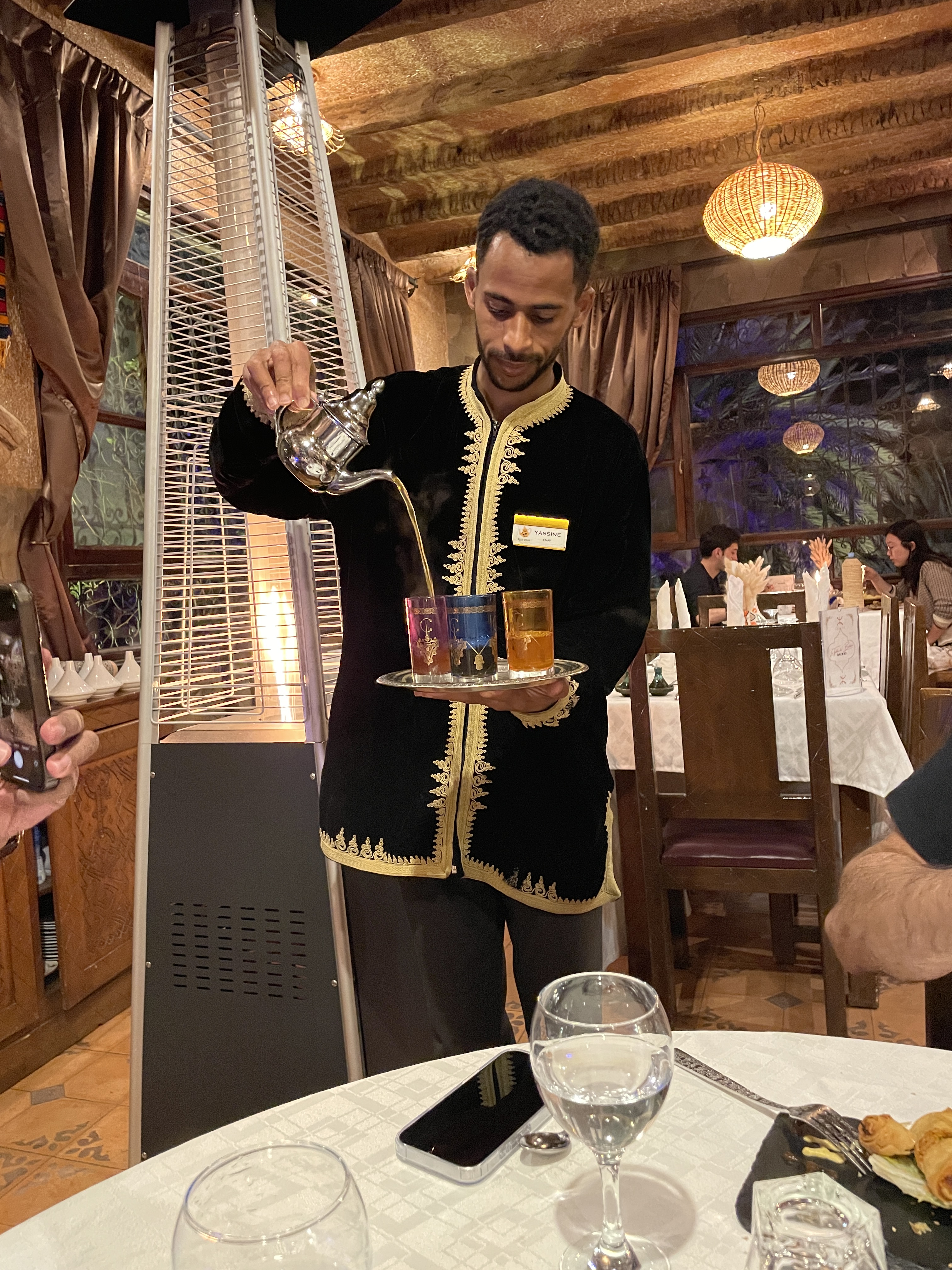
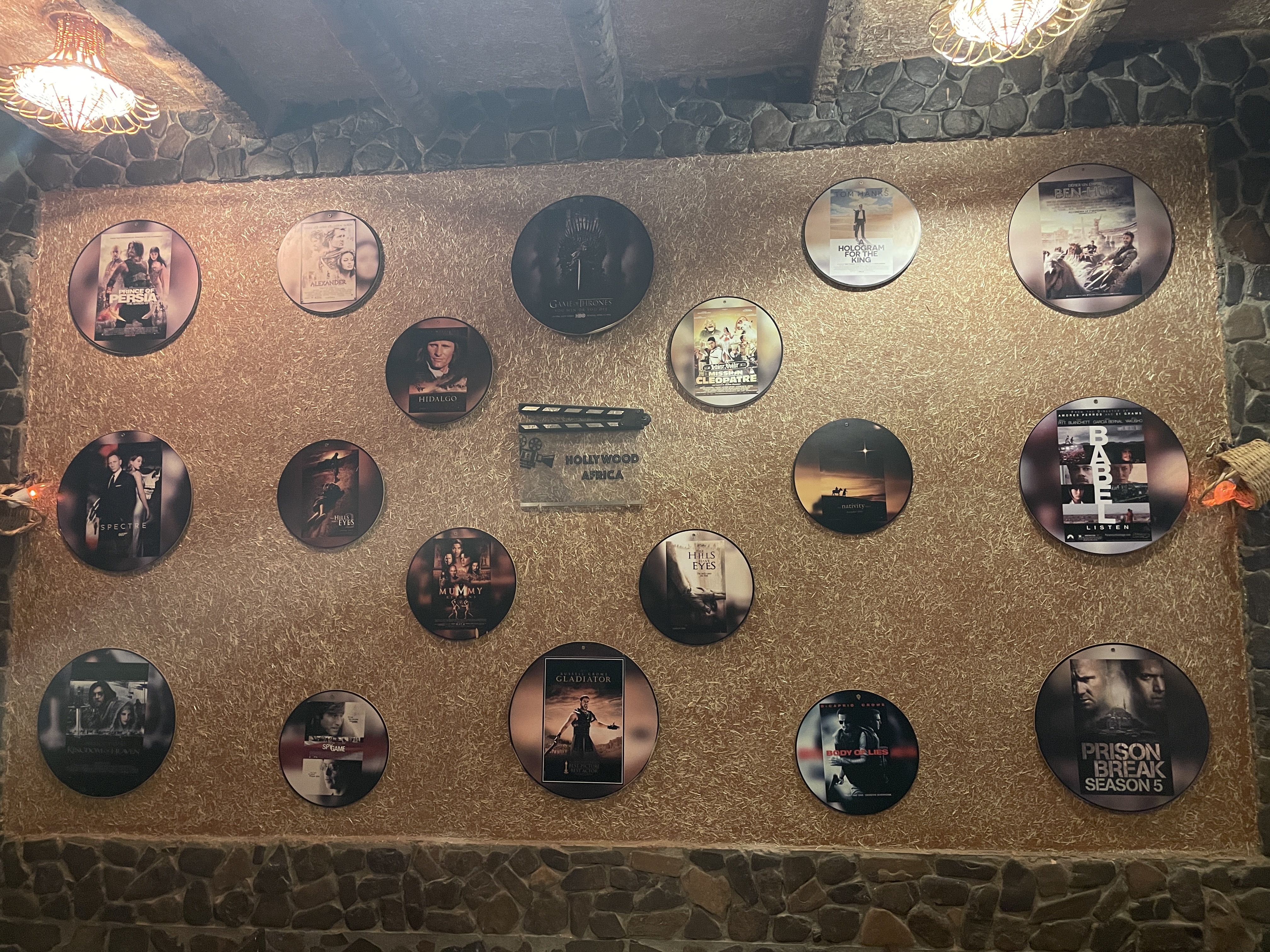
We stayed at a really nice hotel, “Riad Chay & Boutique : Hotel et Restaurant,” where the formal dinner for the night was a nice spread including tajine. The hotel was nicely decorated with plaques of movies shot nearby in Ouarzazate, including Hidalgo, Spectre, The Mummy, Gladiator, and Babel. Hotels in Morocco typically have breakfast included in the reservation, while dinner is extra. We typically opted to eat dinner at the hotel because it was much more convenient after a long day of riding.
Day 2
Breakfast was a berber omelet, a good assortment of breads, and some nice jams, jellies, butter, etc. As we were loading up the bikes, we chatted with a couple from Austria. They were traveling through Morocco in an SUV. The topic of KTM came up and we discussed what a shame it was for KTM to go bankrupt.

On Day 2 we visited three of the most famous gorges in Morocco. First up was the Gorges d’amejgag. We took the highway N10 out of Ouarzazate to the town of Kalaat M’Gouna. This was a long, straight road with very little traffic. It got a bit boring to hold the bike steady at 120kmph, but we made it without any incident. The track changed to dirt after a few km and we crossed a dry river bed as we approached the gorge. The gorge itself was beautiful, with the morning sun hitting it at an angle and brightening the sky. We stopped for pictures and Gokul took out his drone again. He got a few good videos as we rode deeper into the gorge. As we were stopped, we came across a group of British dual-sport riders who had trucked in their bikes from Manchester. This was a common theme—we met many groups of bikers from around the world on this trip.
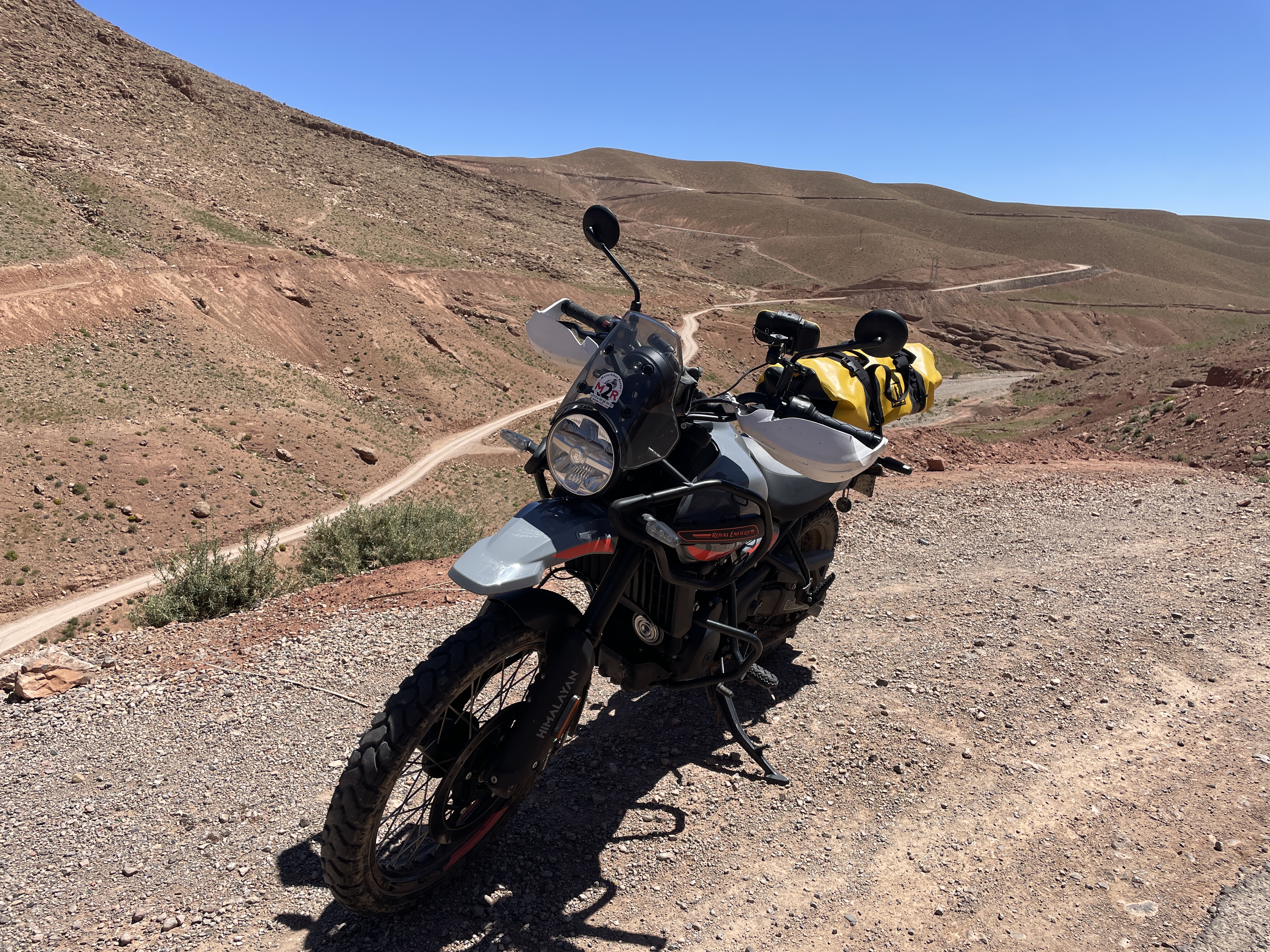
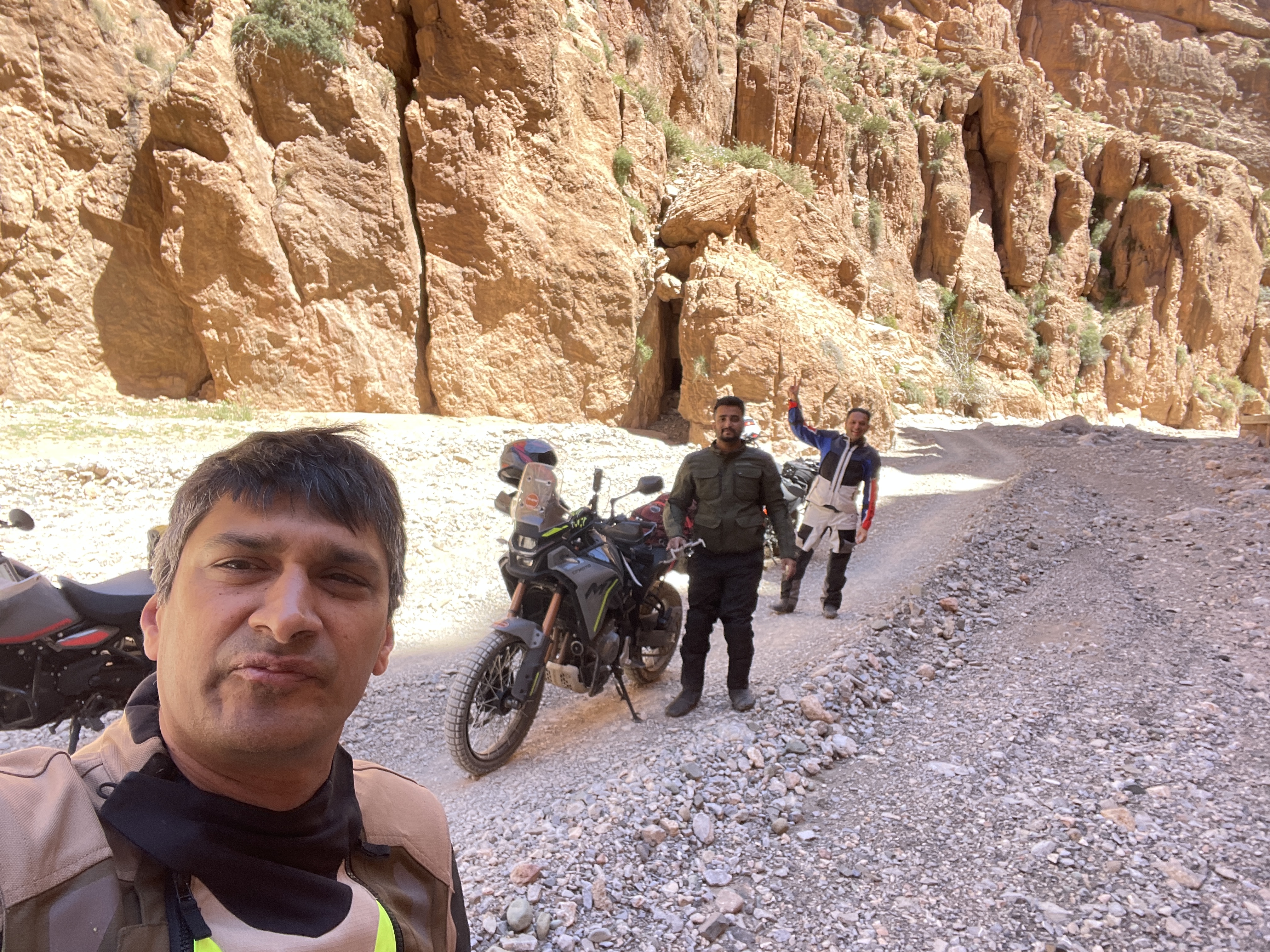

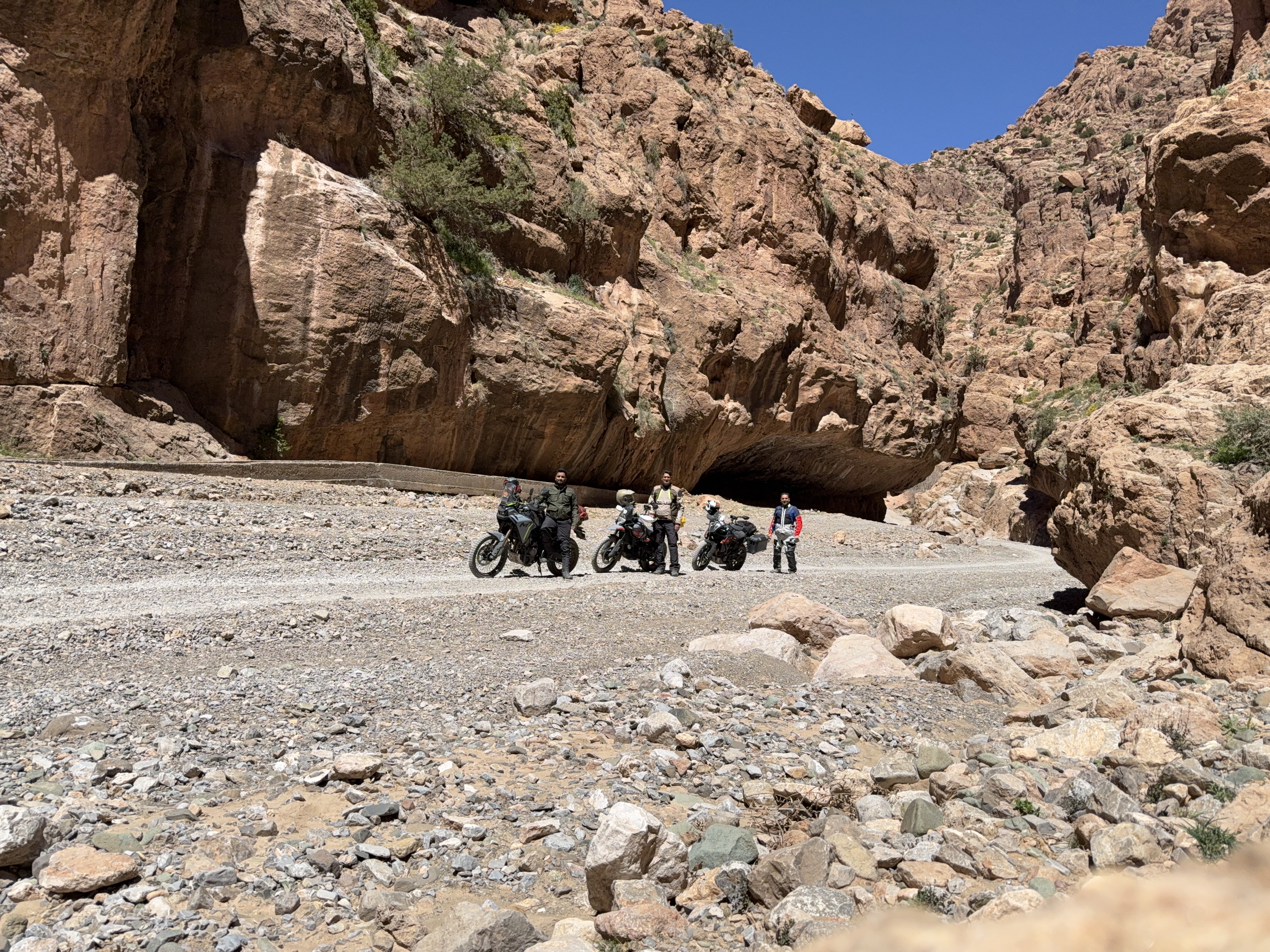

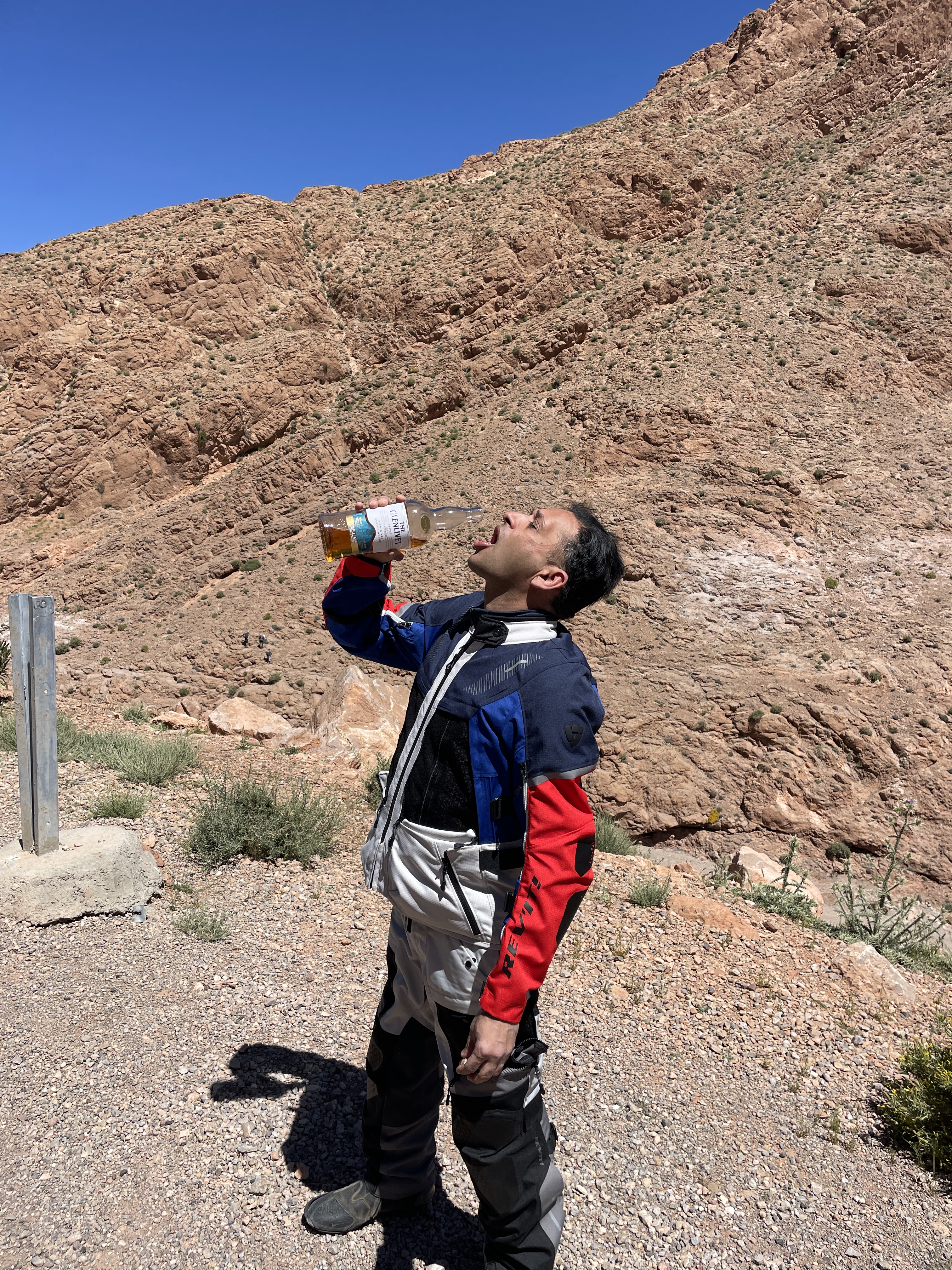
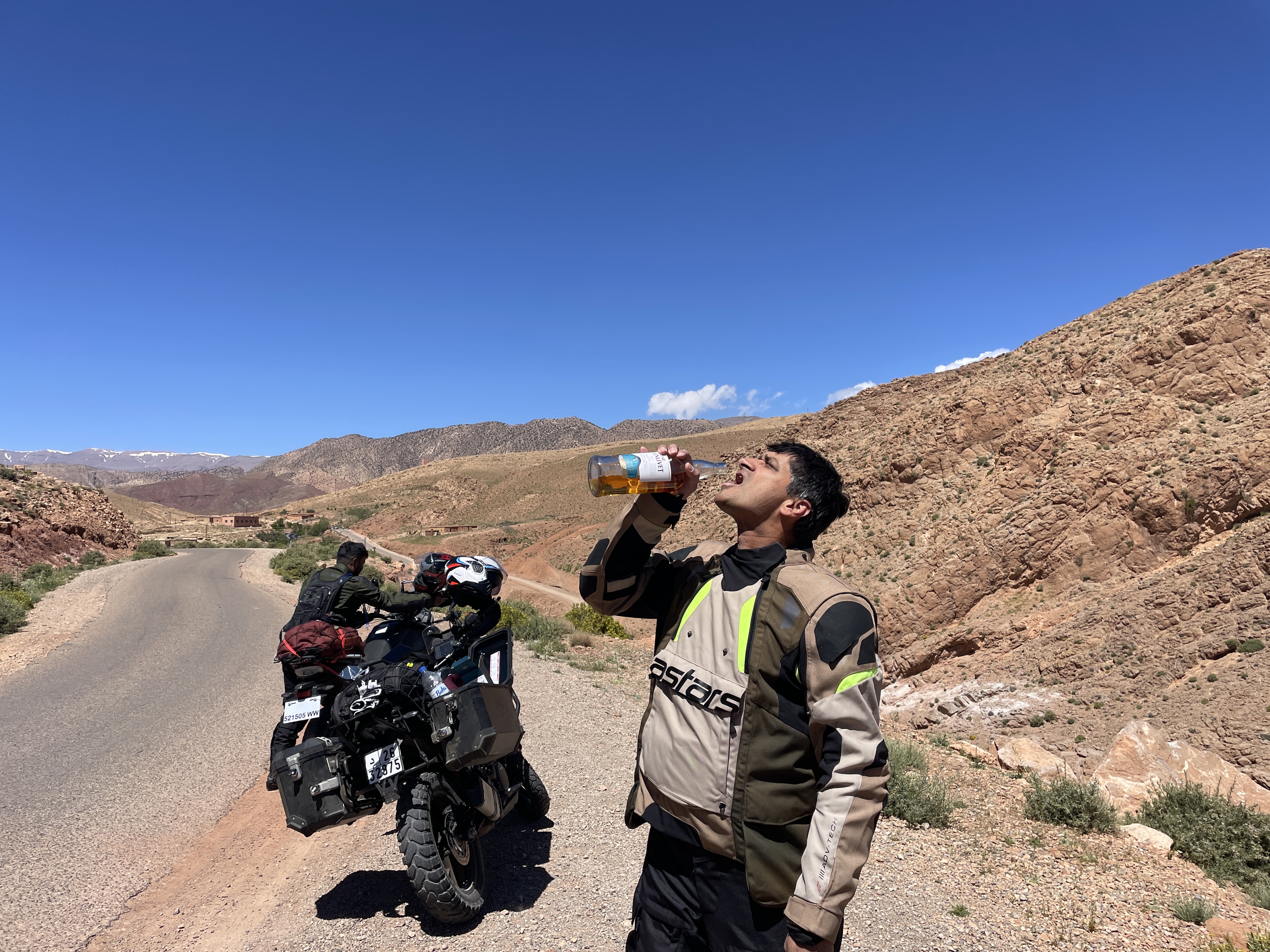
From Amejgag we rode towards Dadès Gorges. We randomly stopped on the side of the road for a mid-morning shot of whisky.

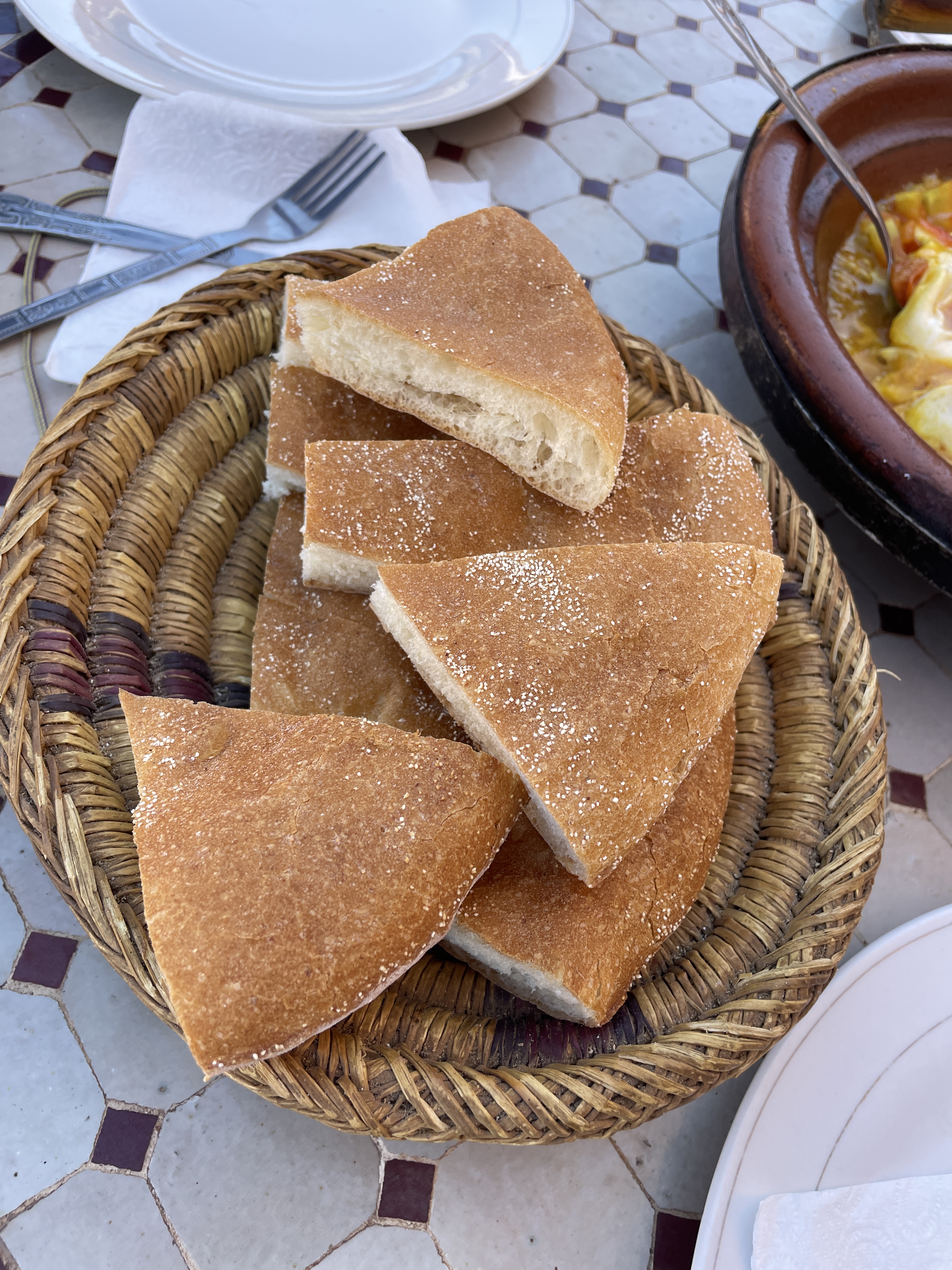
Amejgag to Dades is not very far; we rode across a two-track dirt highway through Bou Tharar. Not very interesting, but it got us to the Dadès for lunch at a roadside restaurant called Ourti Hotel Restaurant.

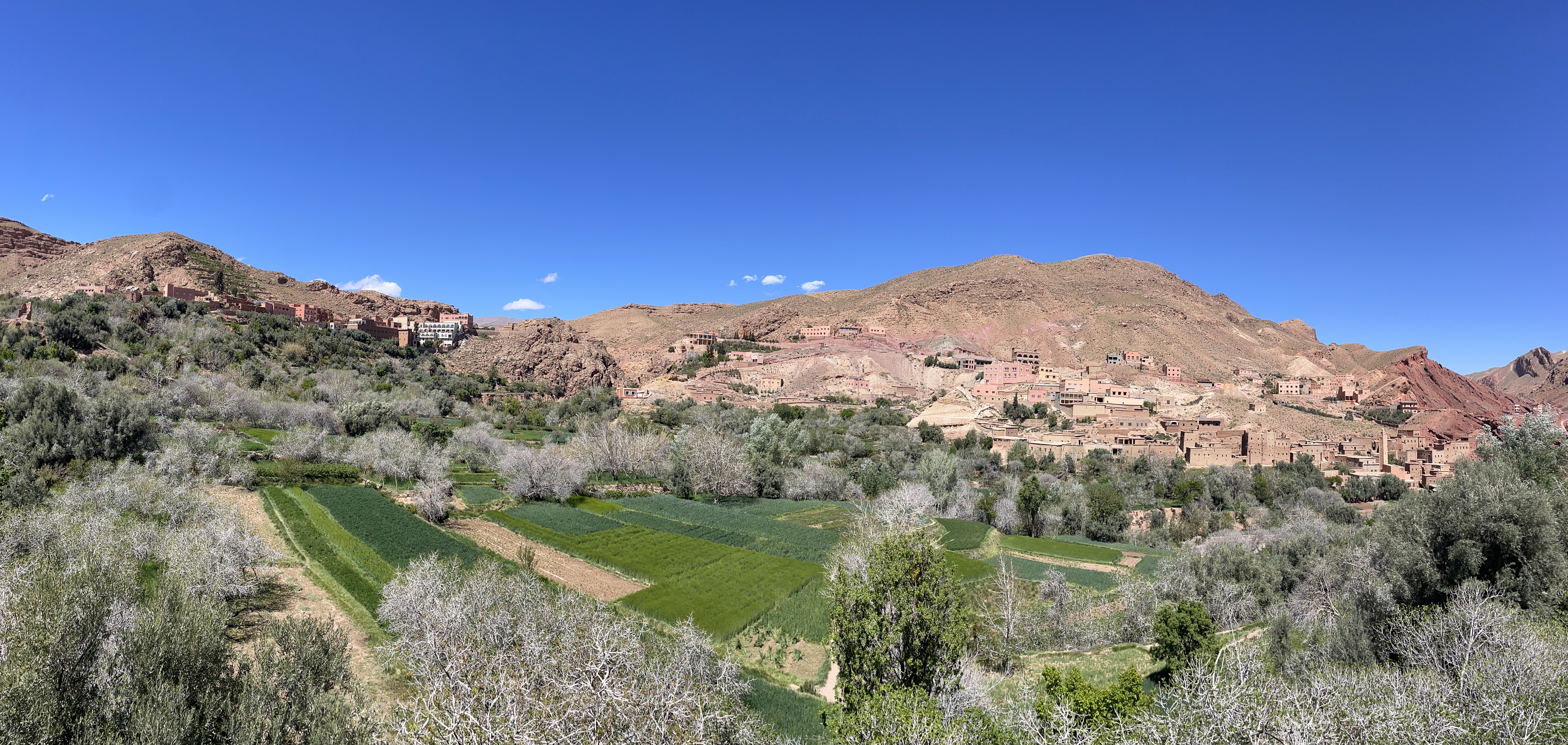
The timezone in Morocco is such that lunchtime is convenient to talk to folks both in the U.S. and in India. I would call Shruti around lunchtime when it would be 7 a.m. in the morning, and I would speak to my parents at the same time, about 7:30 p.m. in India. Most places have WiFi so calling on WhatsApp was easy; I also would just use my data plan as and when needed.
We then took the road up into Dadès Gorges. This is a pretty commercial area, with lots of shops, restaurants, and hotels nearby. The twisty climb up to the iconic viewpoint is nice. And the view from the restaurant up top (Hotel Timzzillite) is phenomenal. We stopped there and took a bunch of pictures. As we were leaving, a bunch of overlanders arrived there in their “rigs.” Maybe a dozen or so Land Rover Defenders, Land Cruisers, and maybe a Ford truck. We chatted with them; they were from England and the guy mentioned his Land Cruiser has traveled over half a million kilometers all over Europe and Africa, without any problems. This reminded me of the typical saying: Toyota owners boast about how many miles they have traveled, while Ferrari owners boast about how few miles they have driven.
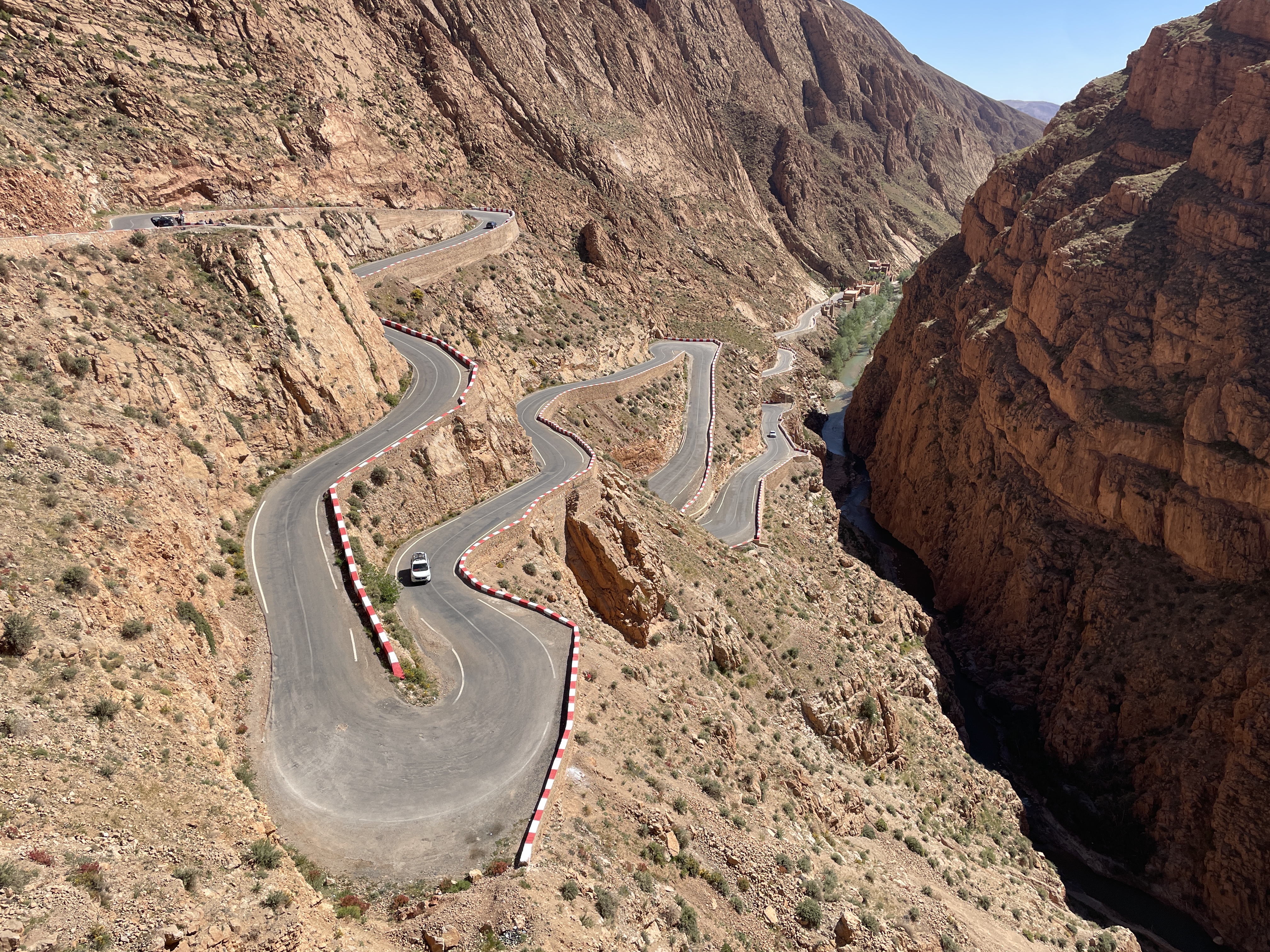
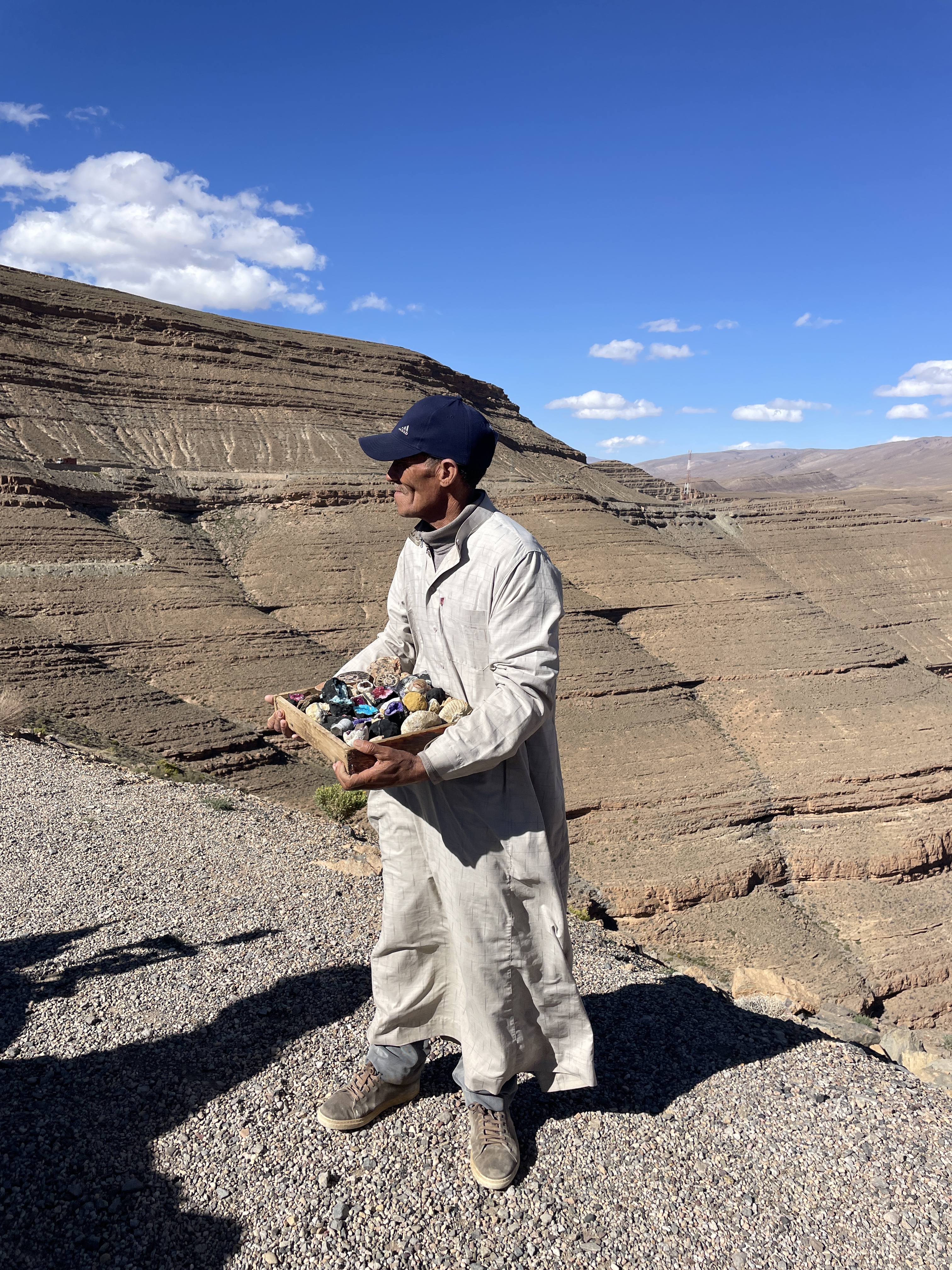
The rest of Dadès was frankly, boring. The scenic part is very short and we took a few pics. The riding is mostly through a commercial area, until you get a bit far out, and that’s when the roads open up. As we climbed up the mountain switchbacks, we came across a few European cyclists who were riding in the area. It is not uncommon to see a roadside vendor holding a tray selling some small knick-knacks on a random switchback in Dadès.
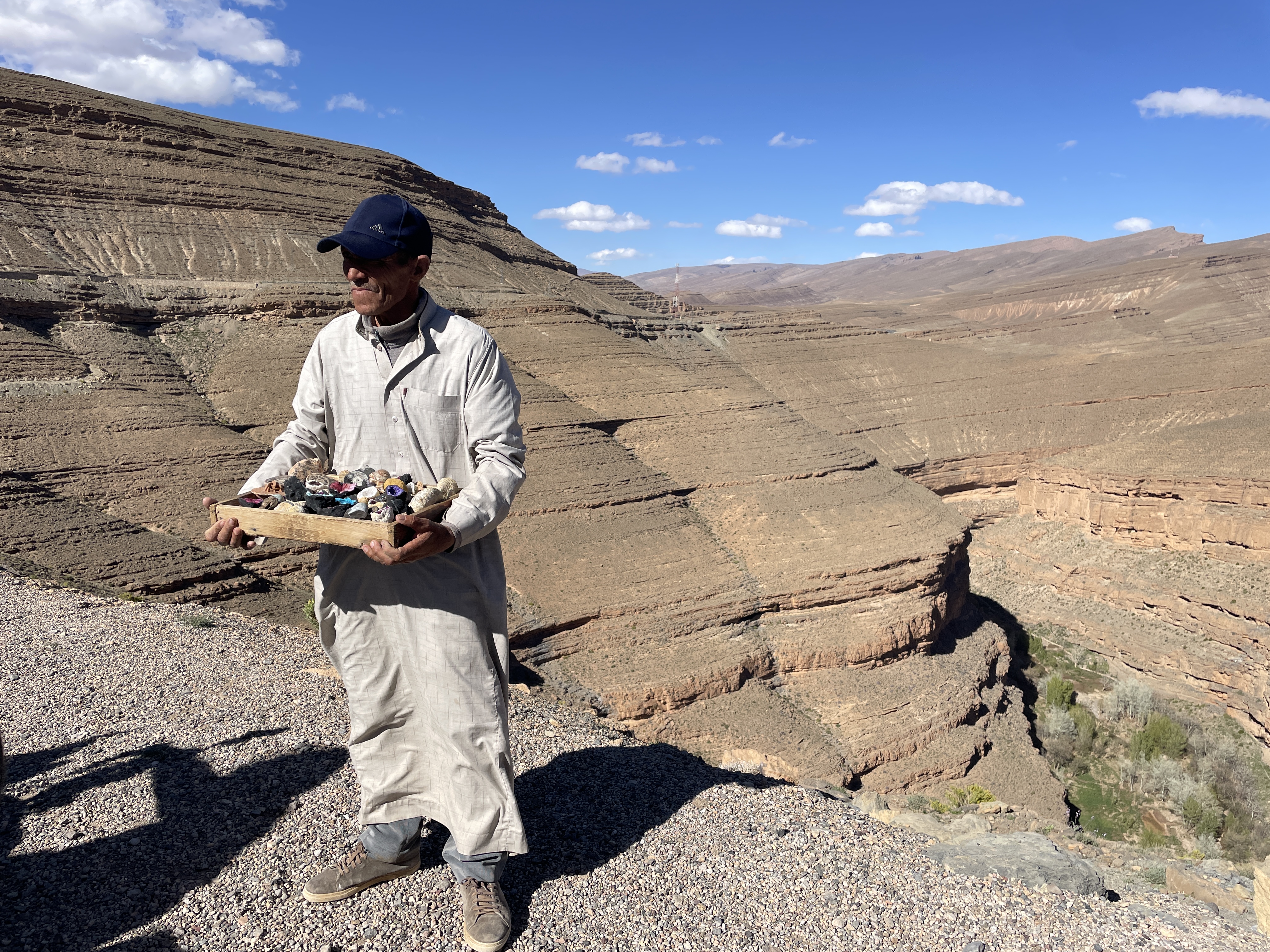
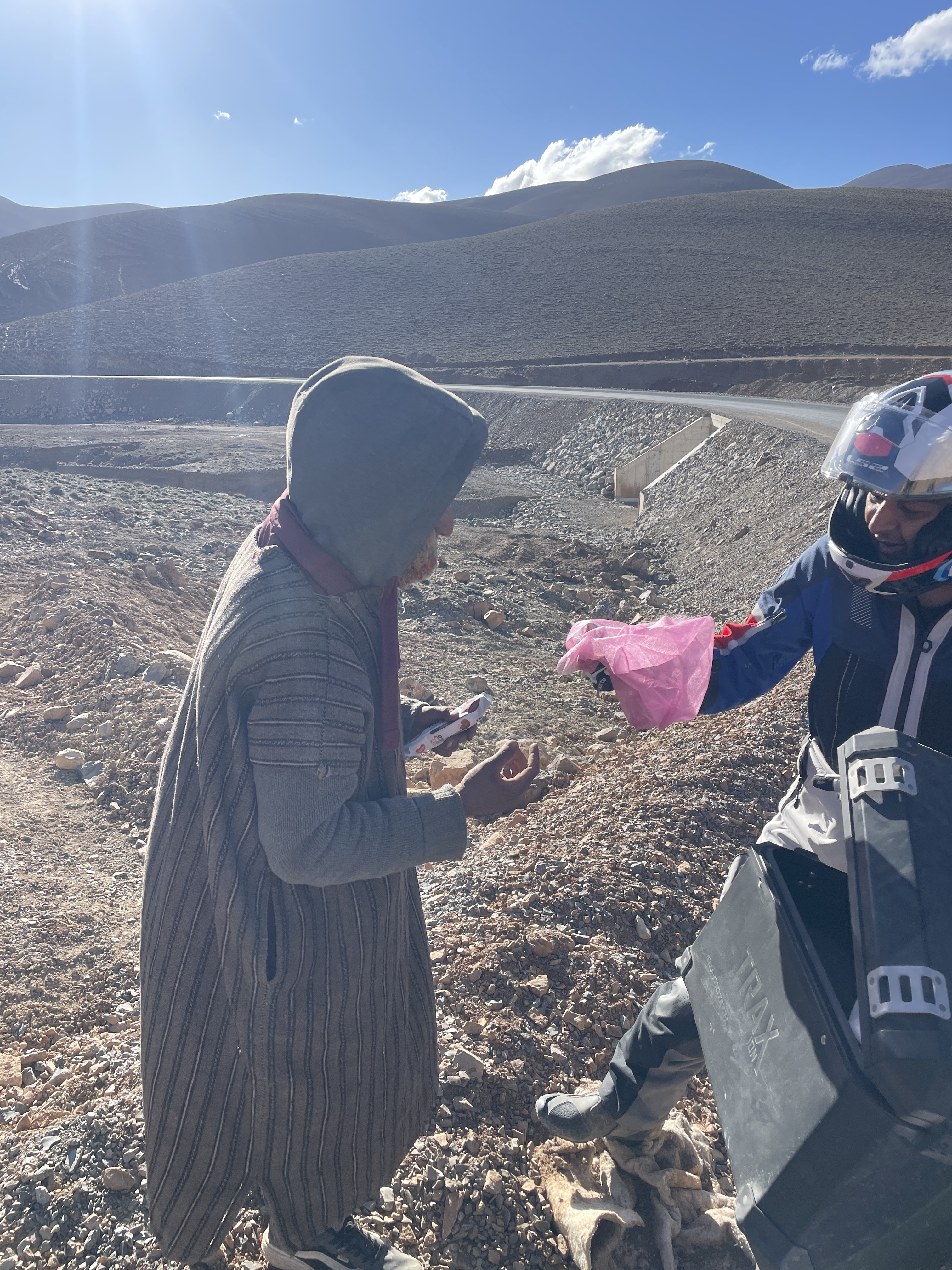
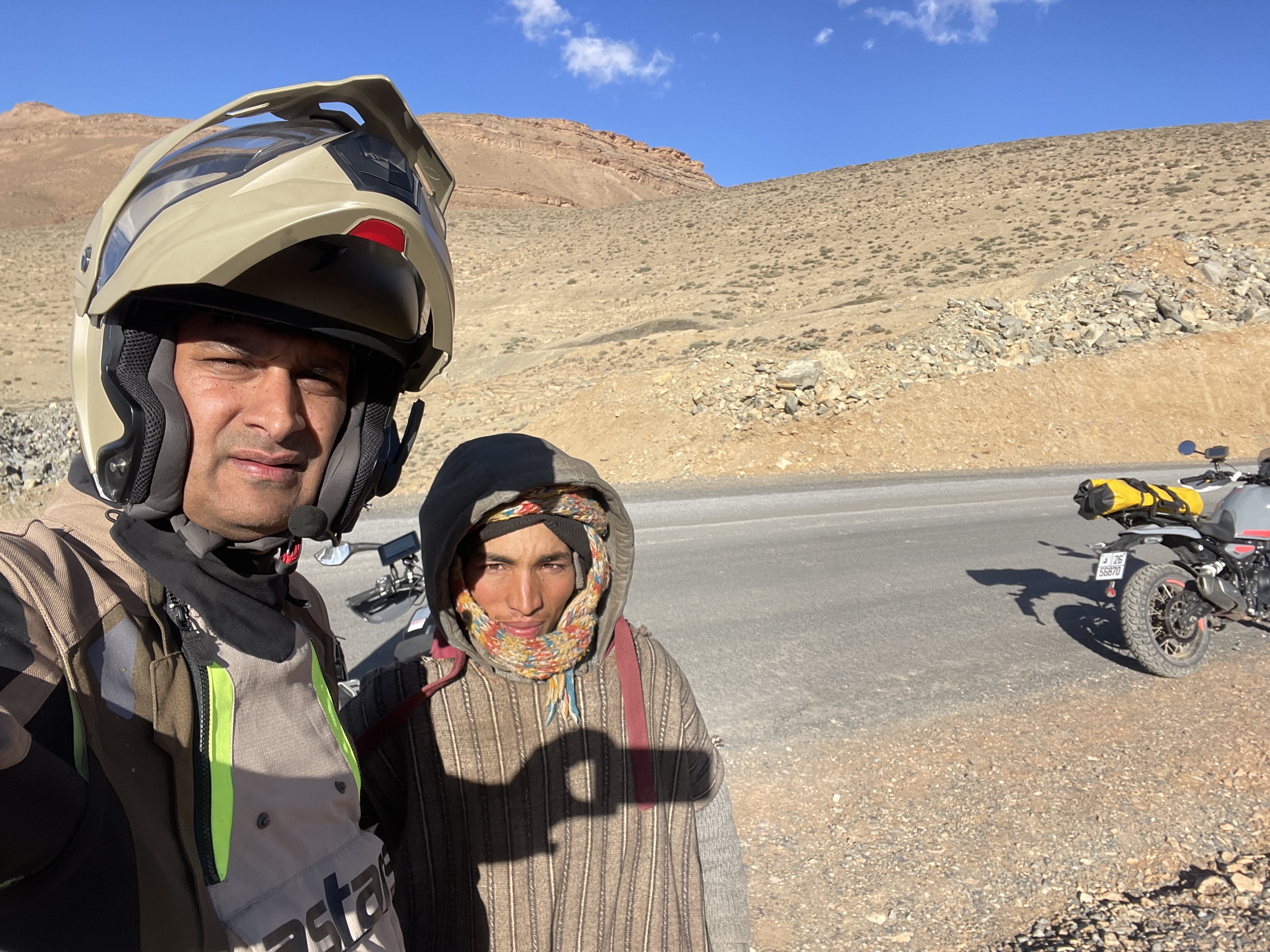
We turned off the main road onto a semi-dirt road towards Todra Gorge. This section of road was under construction. The main road was being built parallel to a river bed and was mostly paved. We wanted to ride on the “old dirt road” which ran through the river bed, so we dropped down an incline towards the sandy river bed. It was fun to ride through the sand for a few kms, but climbing out of the river bed back onto the main road was a little tricky. I found a spot near a bridge where it would work and I was able to make it through. However, Shobhit’s bike got stuck and he needed a little push. Surprisingly, out of nowhere a nomadic shepherd came by and helped us push the bike up a steep incline. As we got to the paved road, we thanked him (“Shukran”) and gave him 40 dirhams ($4) for his help. However, he was persistent in trying to tell us something, and eventually he gestured at his mouth, indicating he was hungry. Shobhit gave him a box of cookies he had picked up in Agouim. The shepherd asked for another, and we gladly obliged.
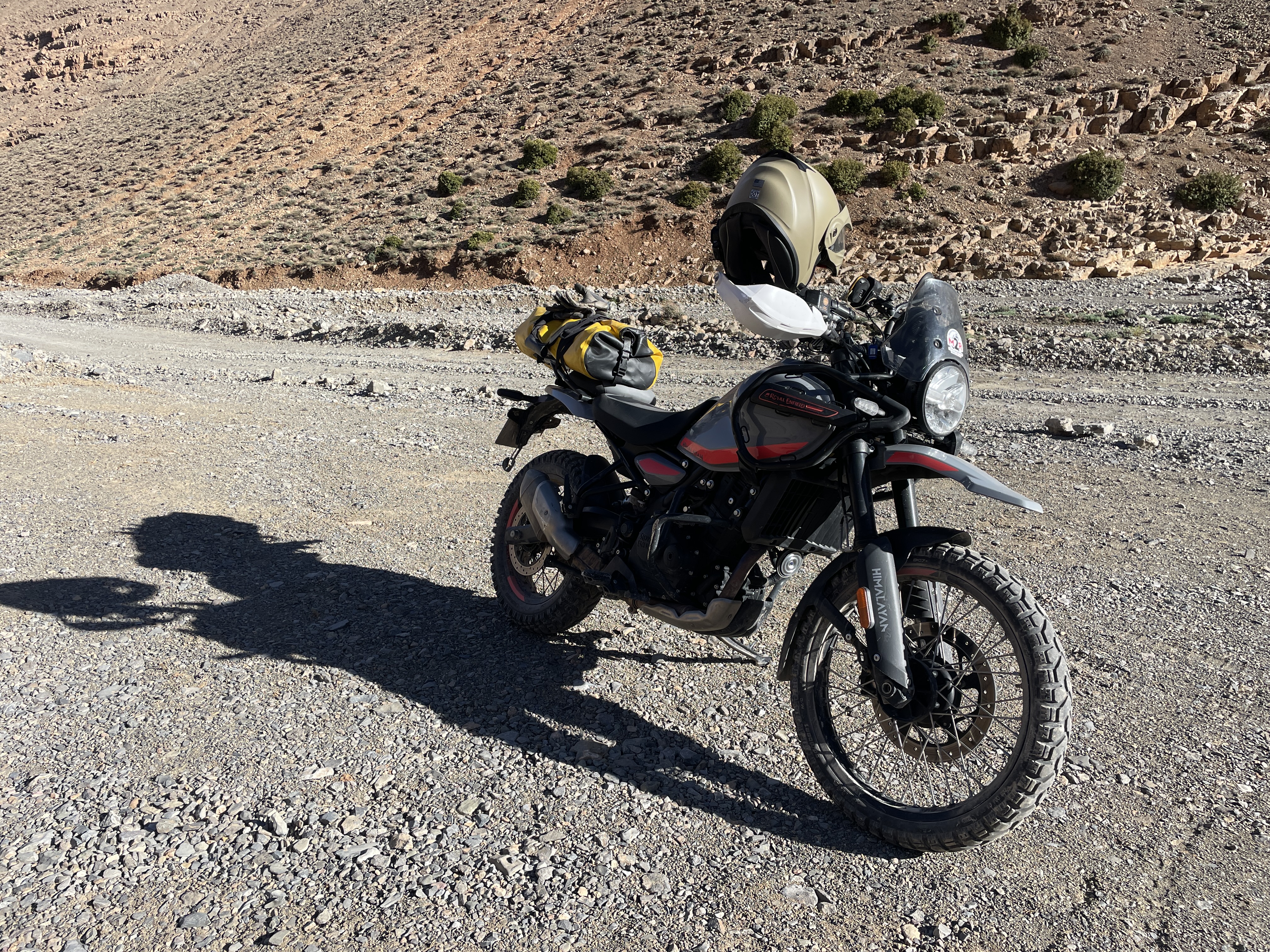
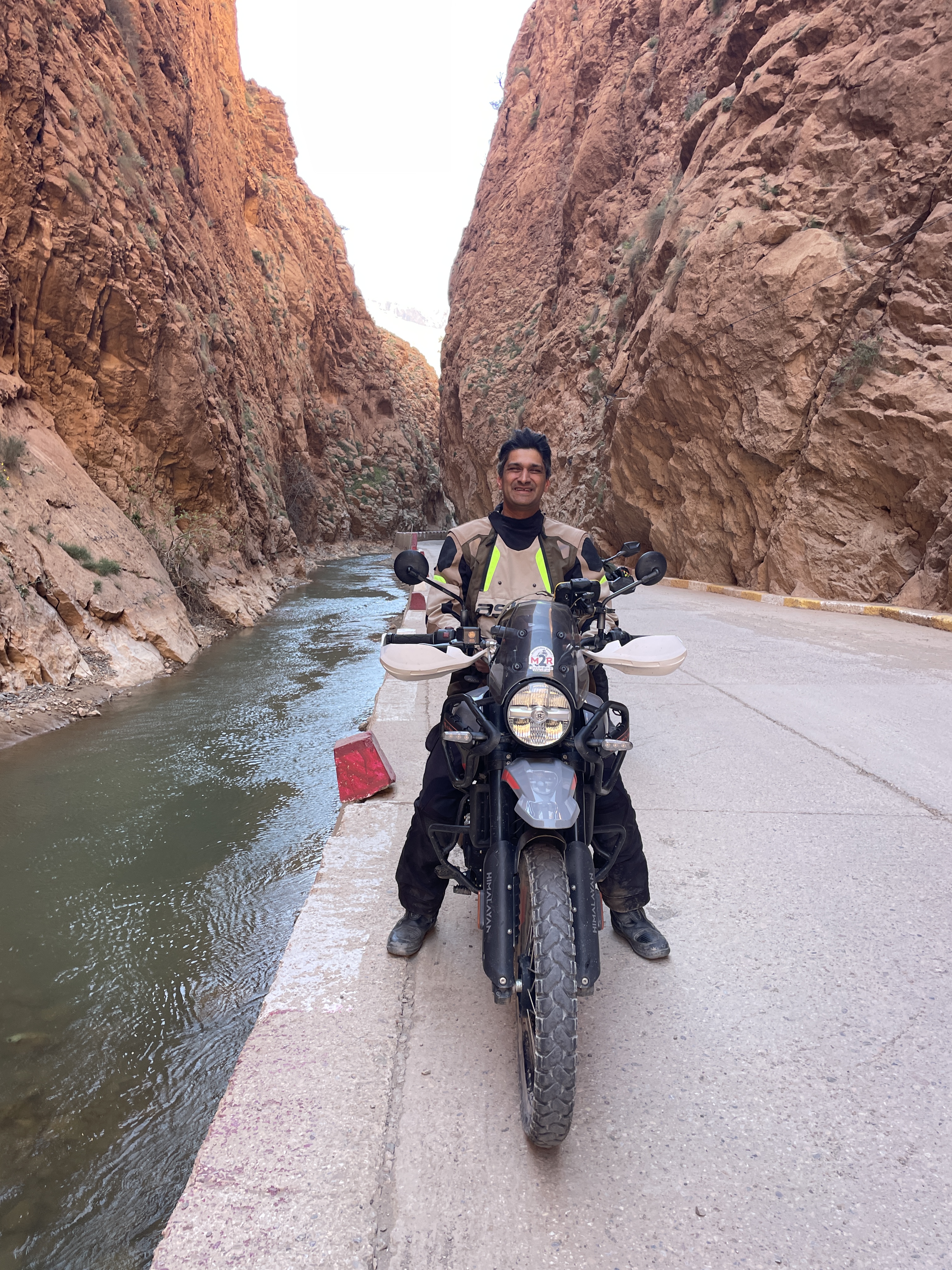
From there we hit Todra Gorge, and I would say this was the most picturesque of the three gorges of the day. Not quite at the level of the Grand Canyon, but it reminded me a lot of Zion in Utah. The gorge is also a decent distance lengthwise so it makes for good riding. We thoroughly enjoyed the ride through the gorge and arrived at our hotel for the night, Riad Marzouk and Restaurant.
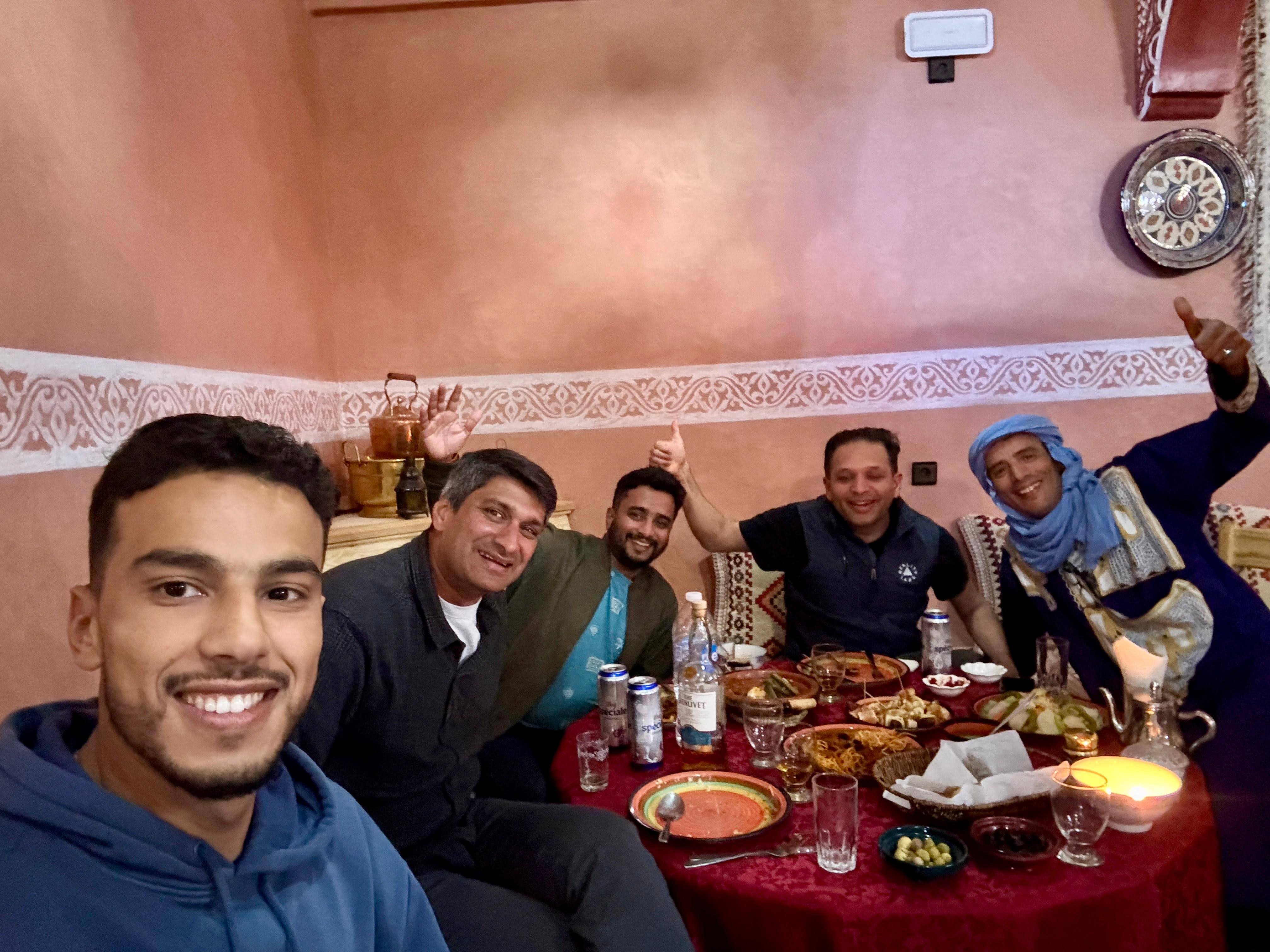
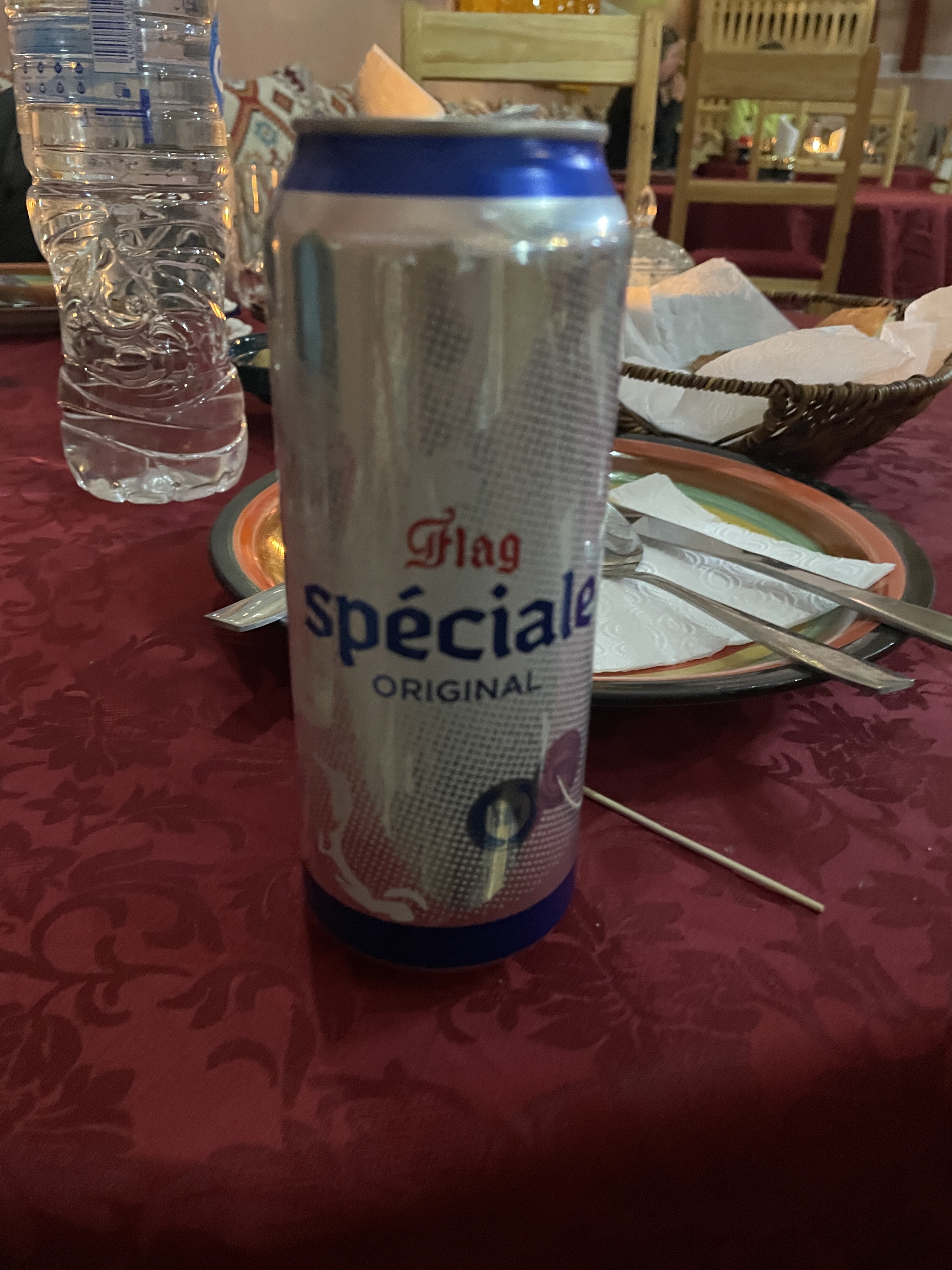
This was a basic place to stay, but the hosts were very warm and friendly. We chatted with the owner of the hotel over dinner. He was a nomadic Berber by descent and had traveled to most countries in Europe and Northern Africa. A dram of single malt was all it took; he was soon laughing along with the rest of us. We discussed Moroccan history and culture, the Berber way of life, and he kept coming back through the night for more pegs of whisky. The hotel was his family business, originally started by his father. His son was at the University in Lyon, France, while his nephew’s wife was the cook at the restaurant. Alcohol is not easily available in Morocco, so we asked the nephew to go to the town of Tinghir and bring us some beer. We had some local Moroccan beer—Flag Spéciale Originale—which was nice and relaxing after a day of riding.
Day 3
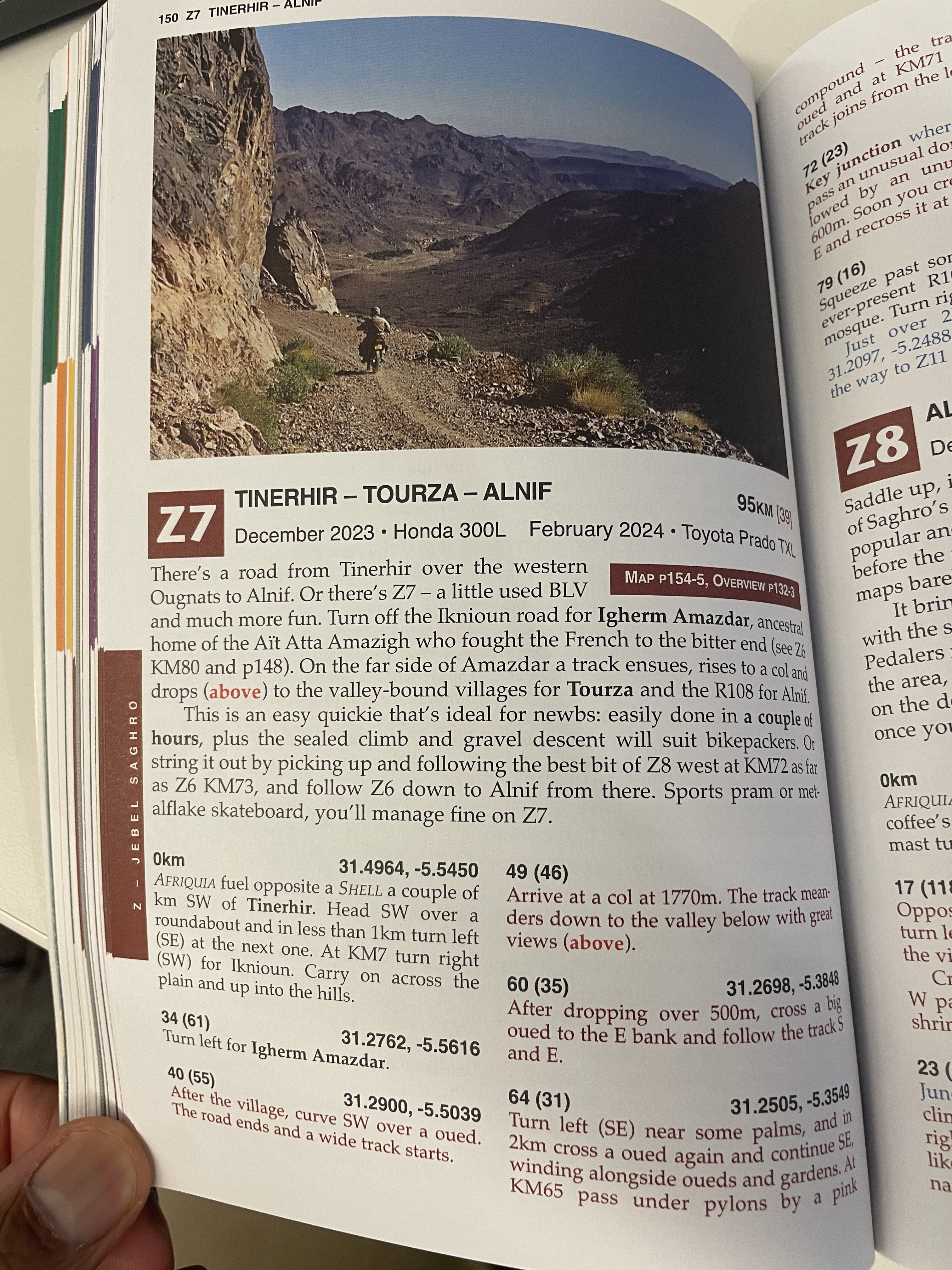
We were up early the next morning and had a simple breakfast at the hotel before heading out. The day started with an off-road track that led us back to the highway. This was the Z7 route mentioned in Chris’s book. According to him, it’s supposed to be an easy ride… but we found it pretty challenging. It was easily on par with Lippincott Road in DV or Mt. Patterson, some of the tougher trails I’ve ridden in California.
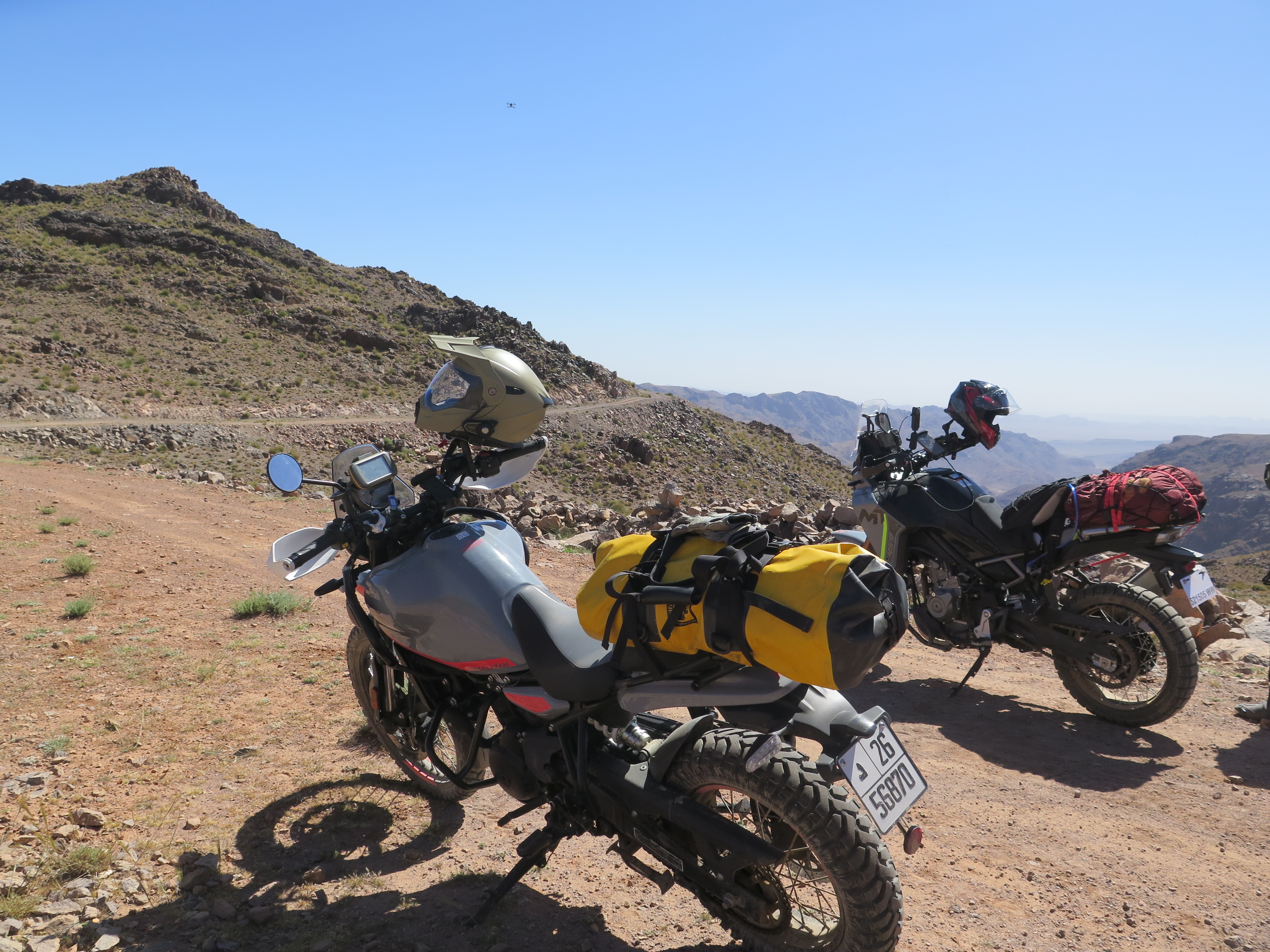
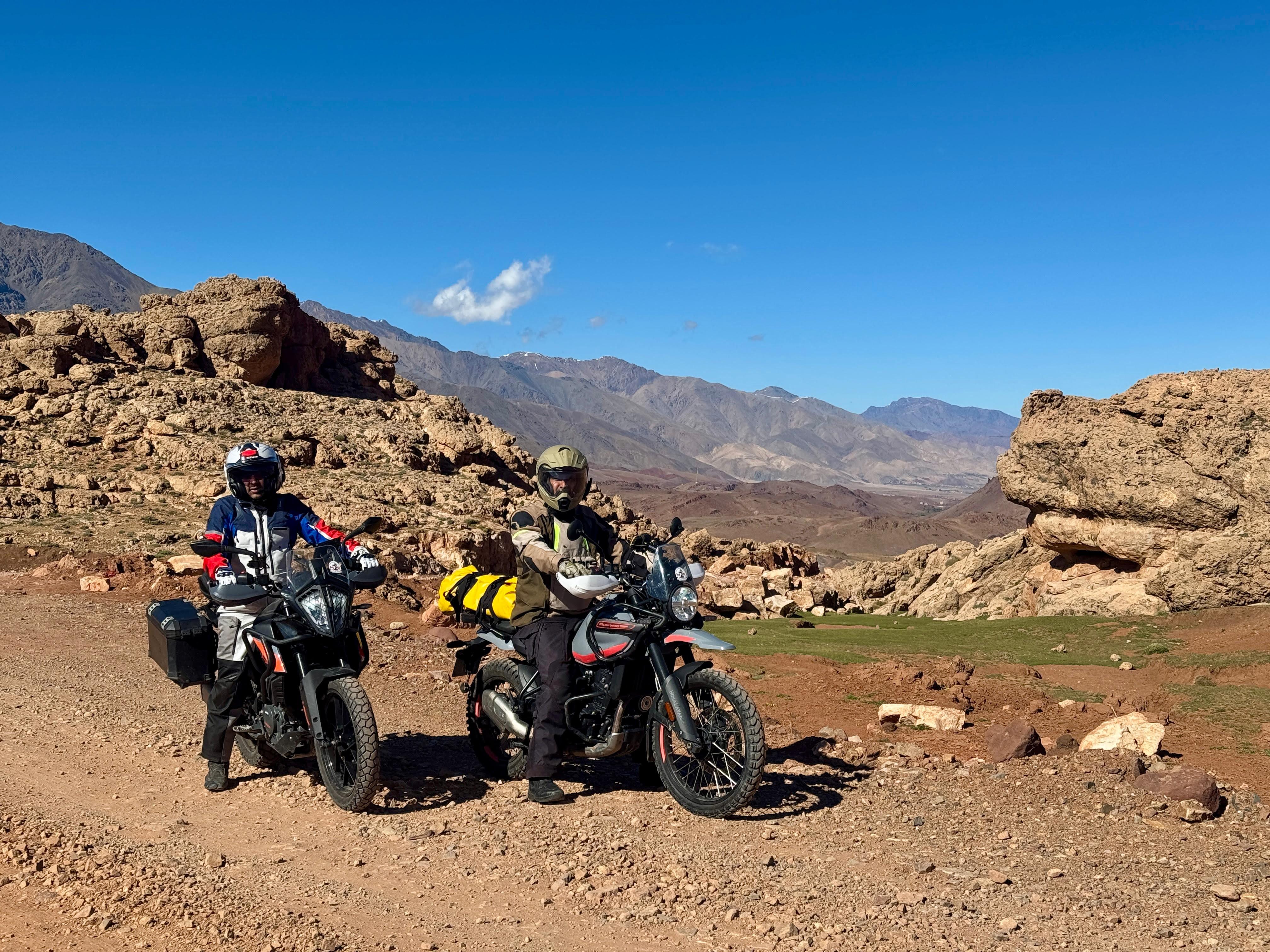
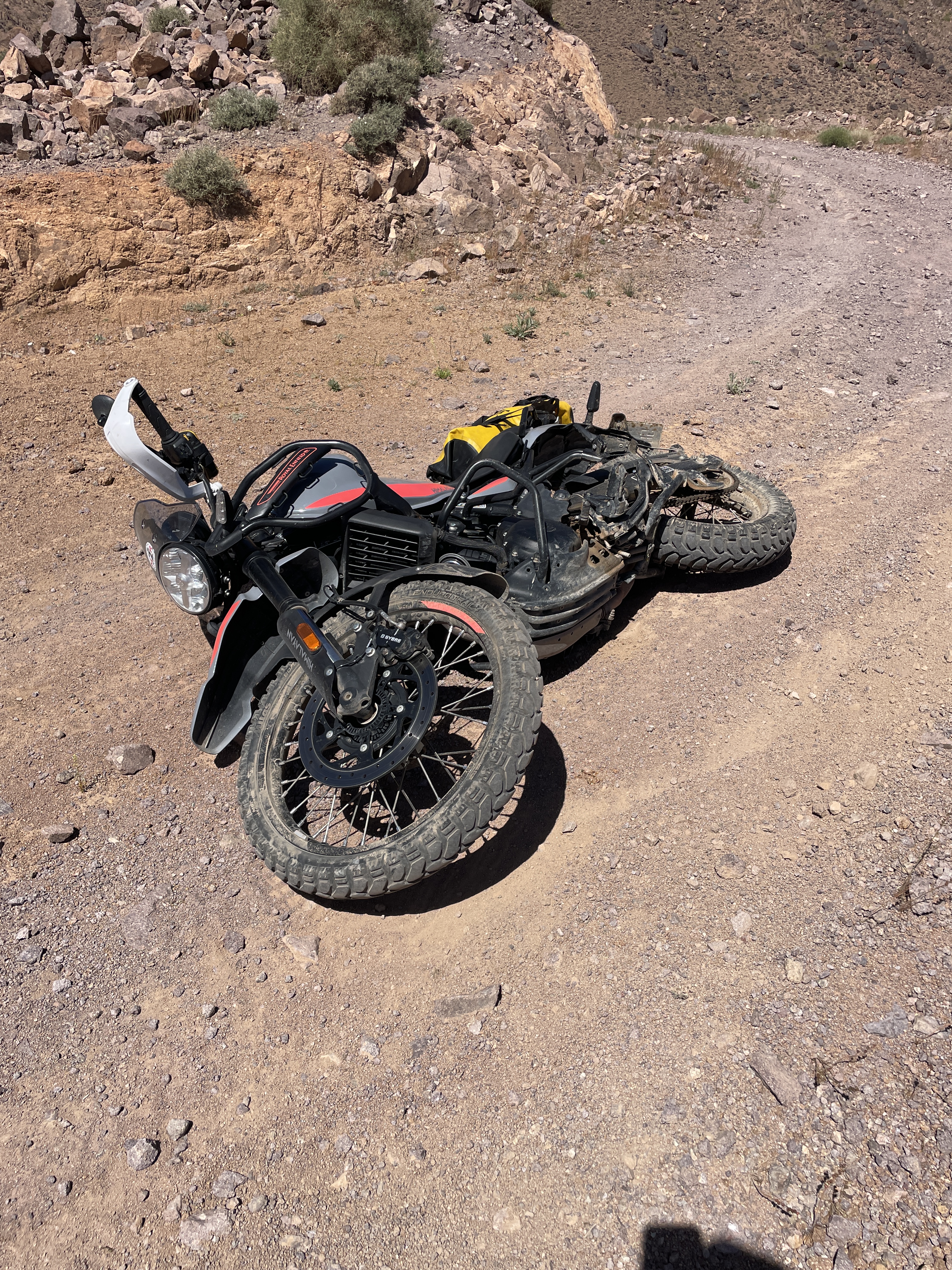
The track was rough, narrow in places, very rocky, with a steep drop-off on one side. I dropped the bike once. Goku flew the drone for a bit and got some great footage of the terrain. The off-road section went on for quite a while, cutting through a few sandy riverbeds along the way. At one point, Goku met a group of kids and handed out some candy.

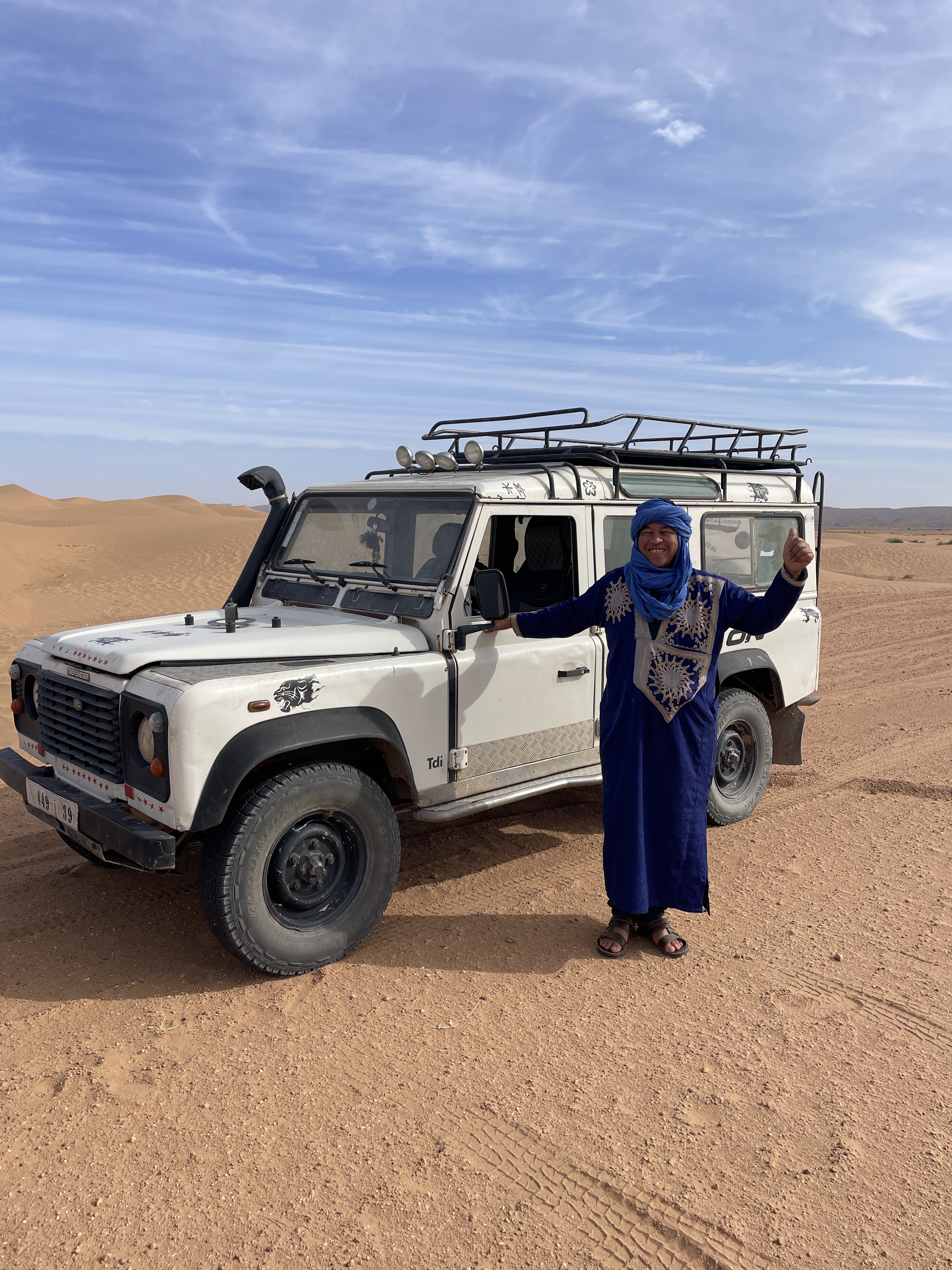
Once we hit the highway, it was a long, straight stretch all the way to the Sahara. We passed through Zagora, where we stopped to refuel and grab some ice cream. The fuel station was literally a “cart” with two medium-sized tanks of gas. Right around there my stomach started acting up. I really needed to use a restroom, but there weren’t any around. Eventually, a gas station shopkeeper let me use a traditional clay toilet at the back of his store. It was small, I had to duck to get in, and there was no flush, just a plastic bucket to pour water down manually. It reminded me of the kind of toilets you find in rural parts of India, like the ones we used when visiting a rural temple in Maharashtra.
Zagora is known as the gateway to the Sahara, and from there we started seeing more and more sand dunes. We eventually reached the town of Tagounite, where we met the driver from our desert camp. From there, it was a short 20-minute ride over a dirt road to the camp (“Mhamid Sahara Camp, Le Chant Du Sable”). The sand got tricky in a few places, but we made it without much trouble.
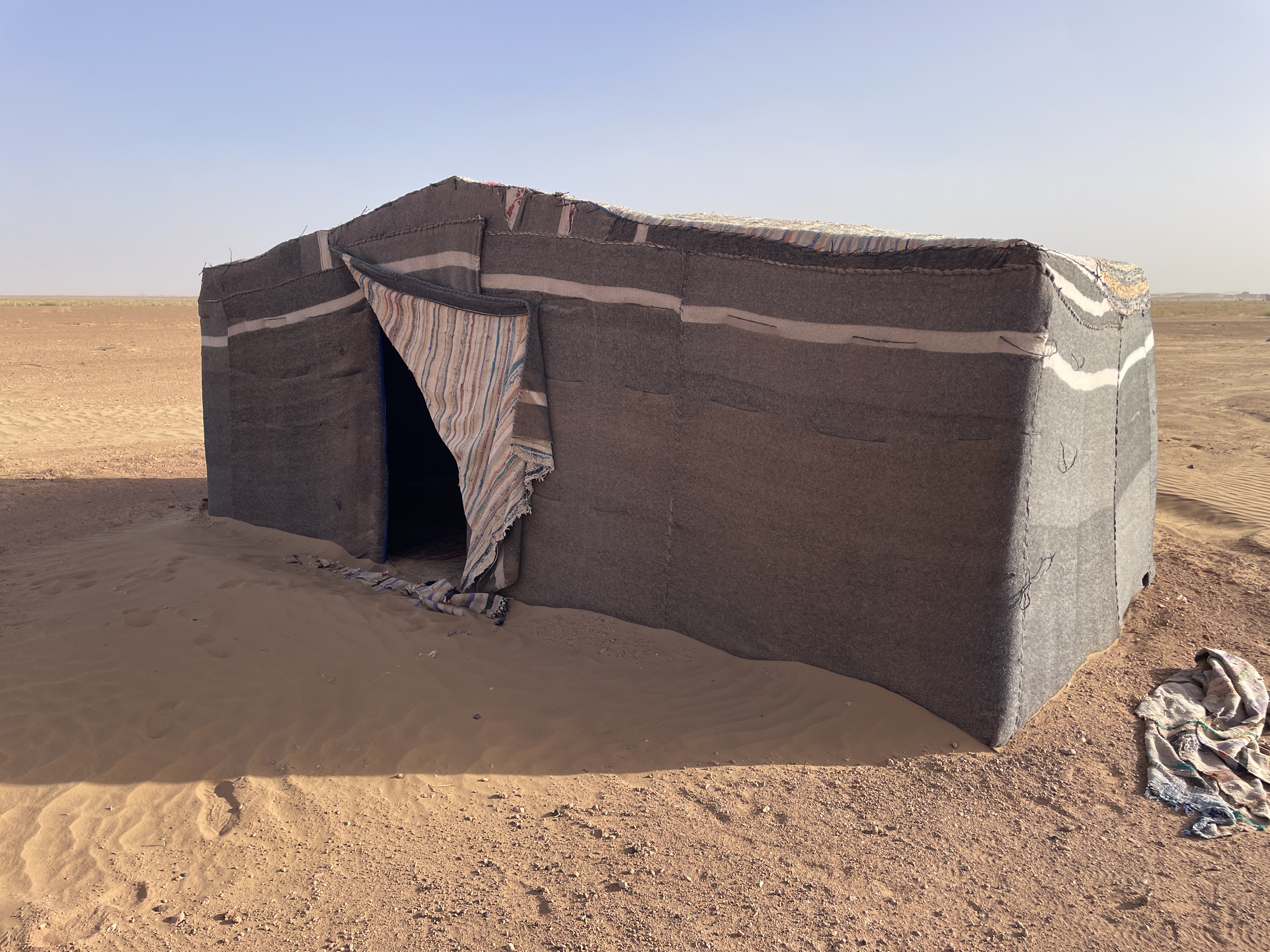
The camp was beautiful… tucked right at the edge of some massive dunes. I took the single room while Gokul and Shobhit shared a double. The rooms were traditional Berber huts made from natural materials, probably mud and straw, though I’d need to look that up. The accommodations were basic, but the setting more than made up for it.
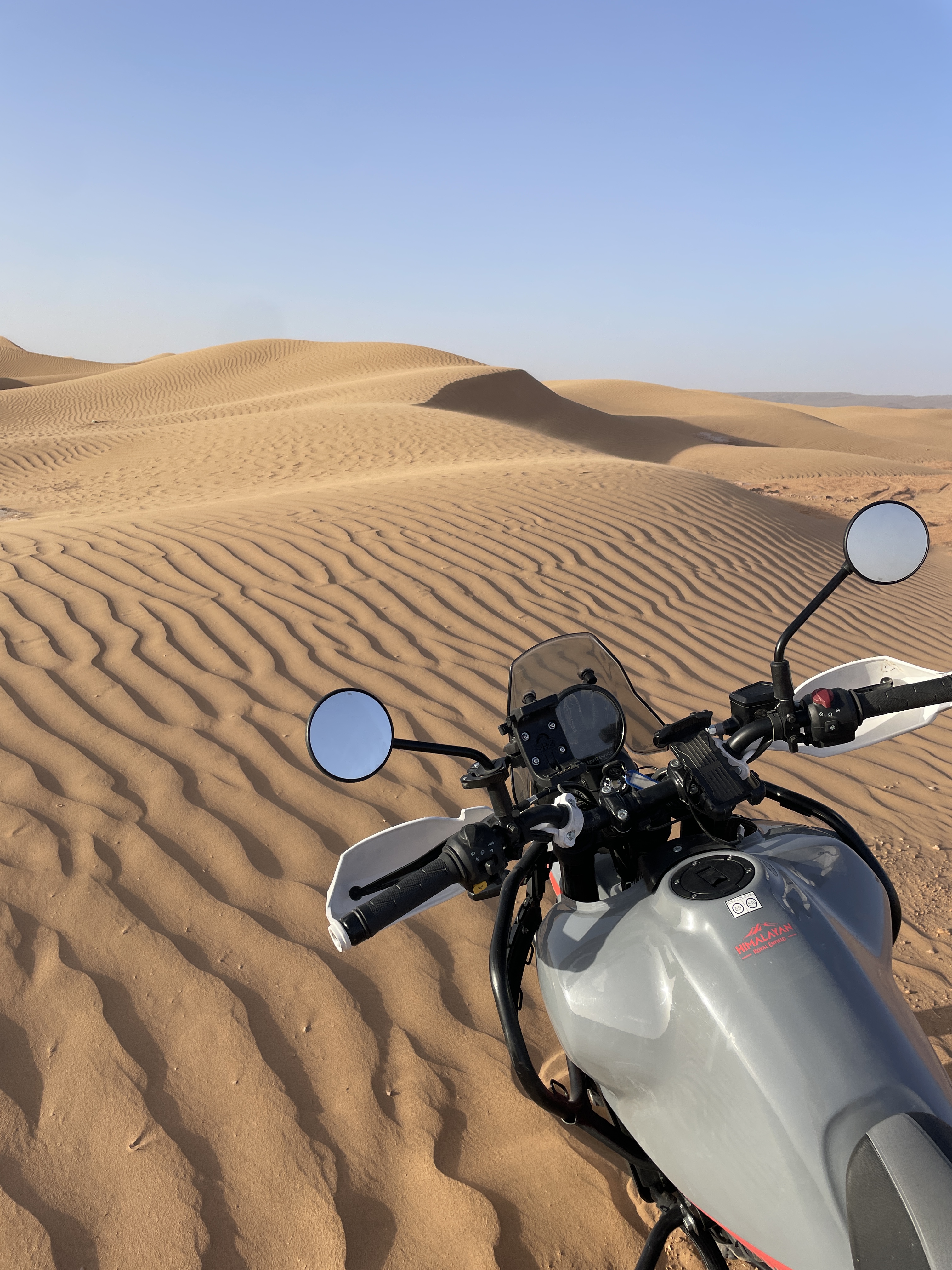
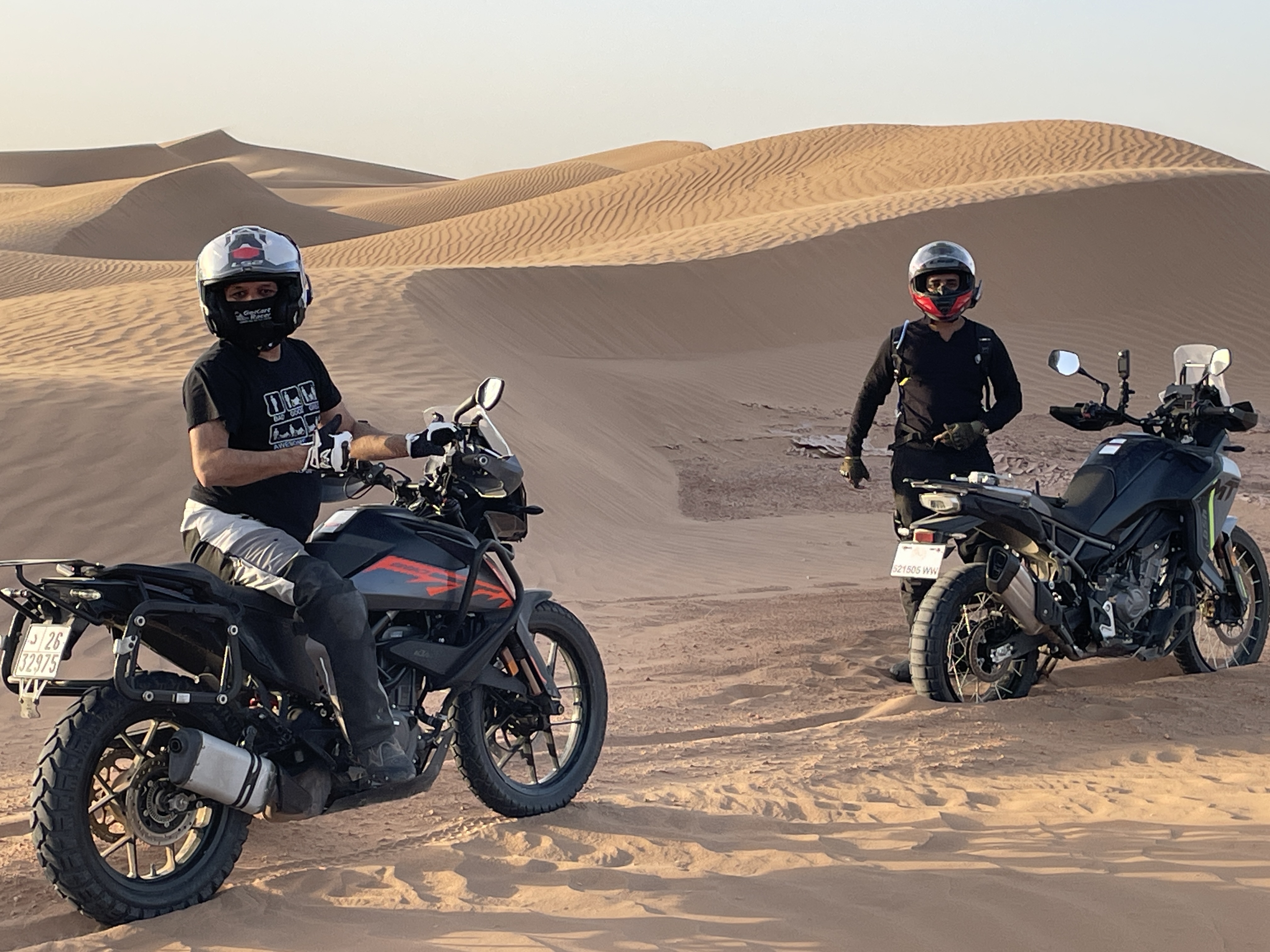
As soon as we got settled, we took the bikes out to ride on the dunes. Shobhit went first and did well, managing to cross a few dunes with ease. I followed, but it was tough… I got stuck a couple of times but eventually made it through. Gokul’s bike didn’t fare as well. It kept stalling on the climbs, probably a mix of low torque, bad tires, and traction control issues. I tried his bike too and found it nearly impossible to get it over the dunes.


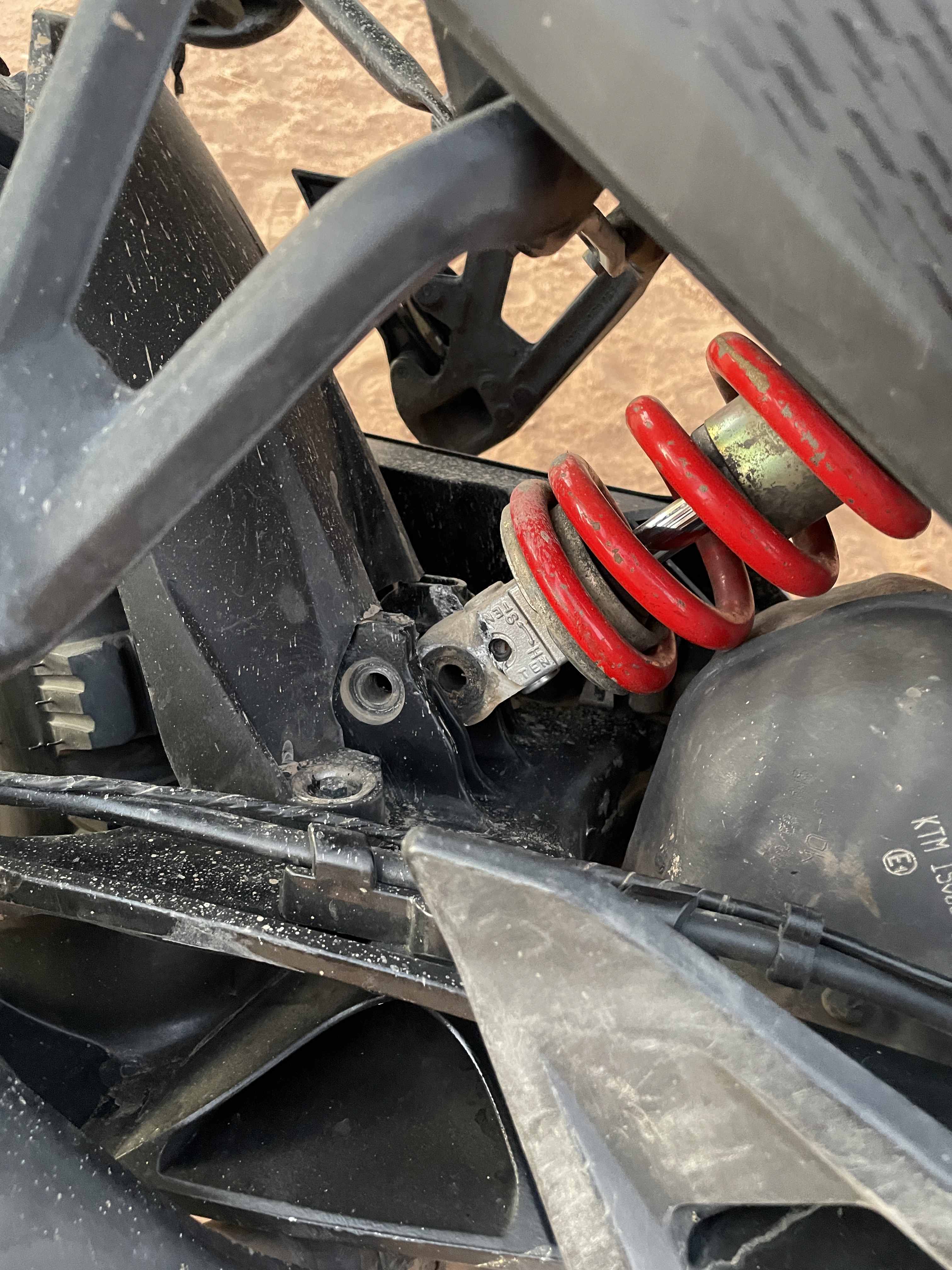
At one point, while helping Shobhit get unstuck from some deep sand, I lifted the rear of his bike. As I set it back down, we heard a strange clank. On closer inspection, we realized the KTM had lost the bolt that connects the rear shock to the swingarm. The shock was just floating loose and knocking against the curved part of the swingarm under the fender. It was a bit of a shock (pun intended). Shobhit stopped riding after that. He later looked through some photos and figured the bolt had probably come loose earlier in the day, maybe even while we were still in the mountains. He’d essentially ridden all those high-speed roads with a dangling rear shock. Thankfully, nothing worse came of it, and we planned to fix it the next day.
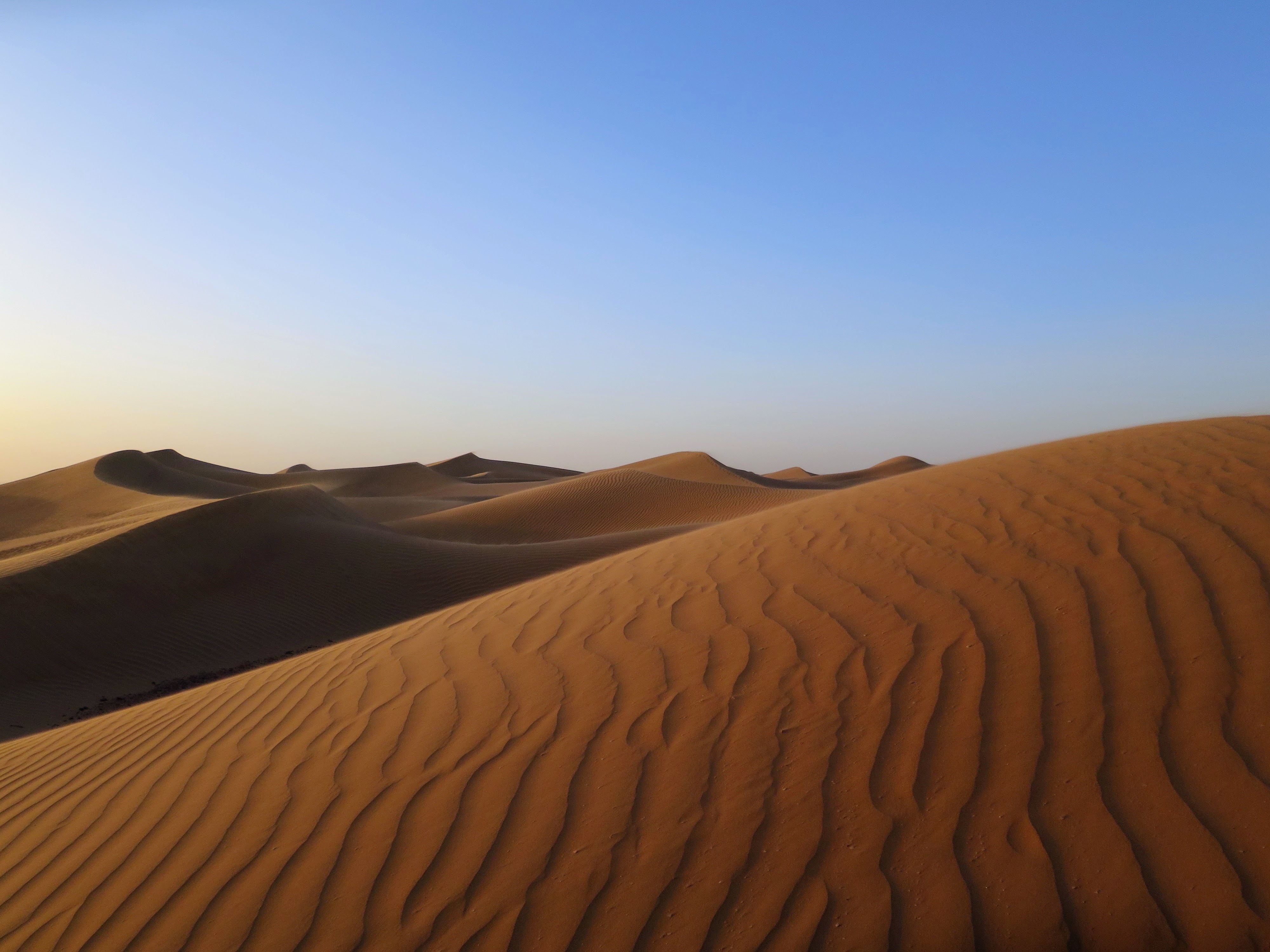
Despite the mechanical scare, we had a great time riding around, taking pictures, and just soaking in the surreal landscape. Shobhit and Gokul also tried sand boarding. As the sun began to set, everything turned golden. There was a peaceful stillness in the air. I found a spot on one of the dunes and sat for a while, a nice quiet moment of reflection and calm. I can still remember that moment; I’m writing this almost three months later.

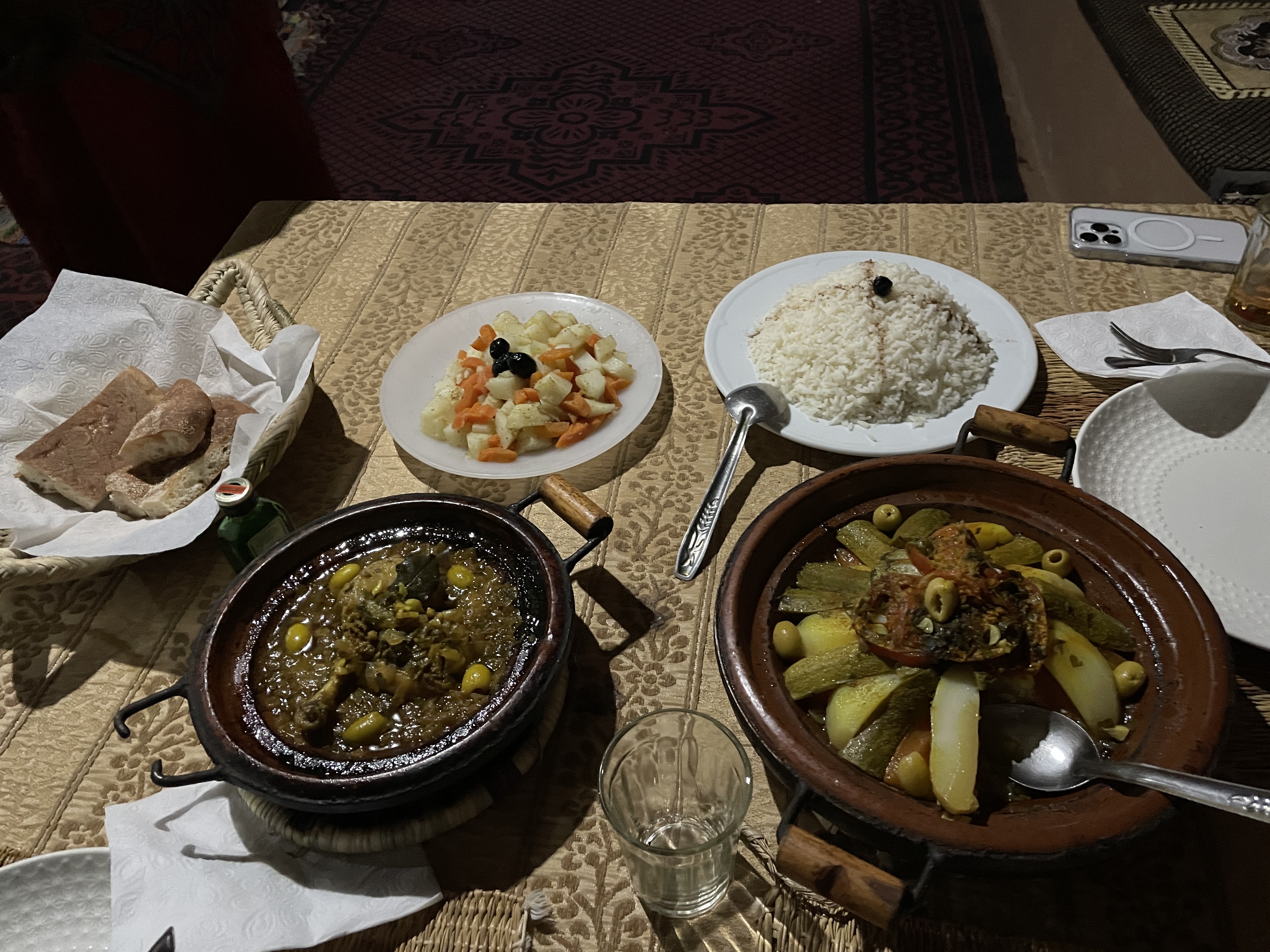
Dinner at the camp that night was fantastic. Another classic Berber meal, but this time with a flavorful soup and rice alongside the tagine. After dinner, we moved to the outdoor deck, where the staff brought out drums and began singing traditional Berber songs. We joined in with some Bollywood numbers too.
Bollywood is huge in Morocco. Everyone knows Shah Rukh Khan and Amitabh Bachchan. Mention India at a gas station and someone will respond with “Salman Khan?” An older man even mentioned Dilip Kumar.
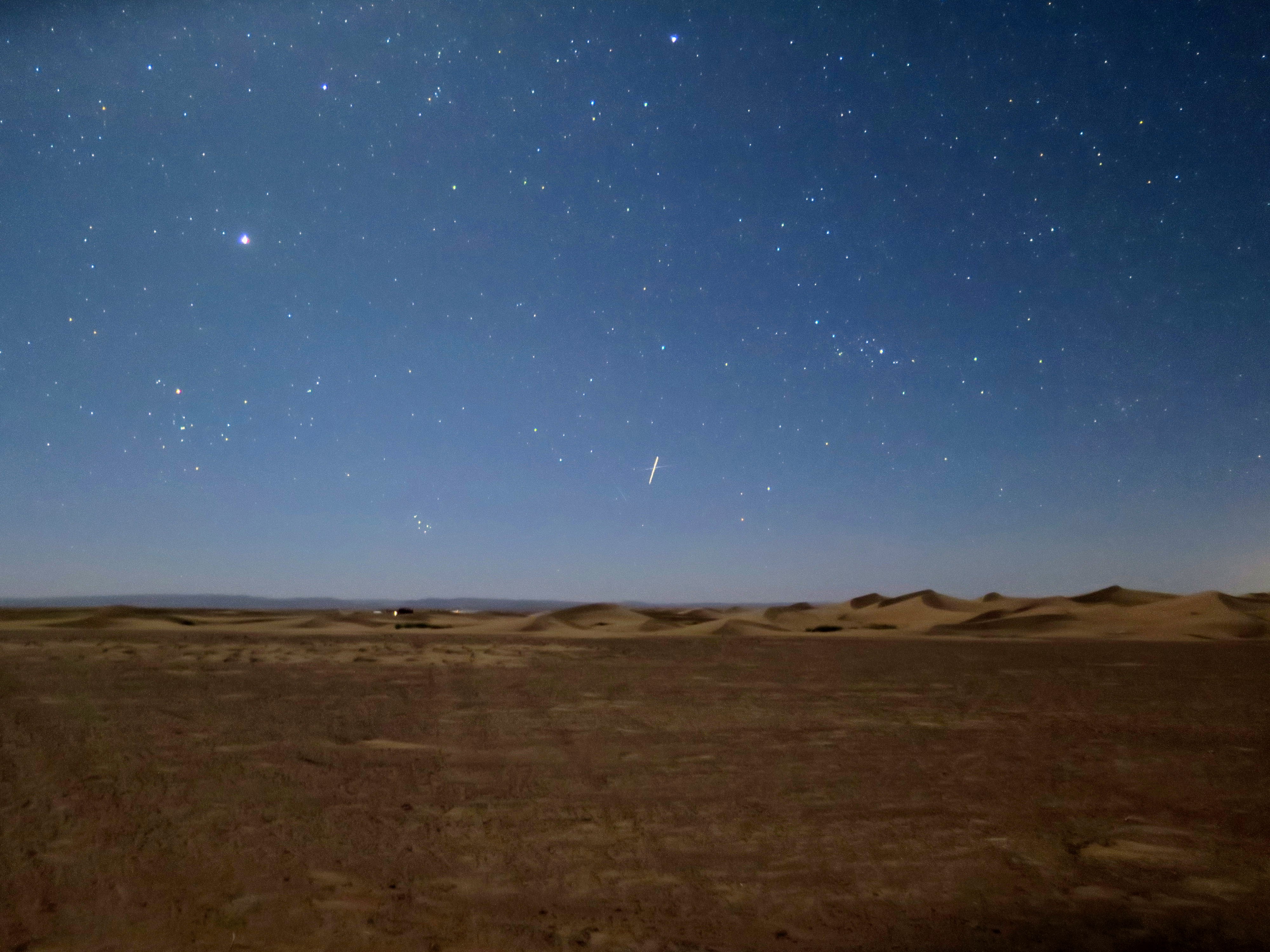
That night, the sky was crystal clear. I set up my camera and took a few long-exposure shots of the stars… millions of them scattered across the sky. It was one of those rare nights that stays with you. Lovely.
Day 4
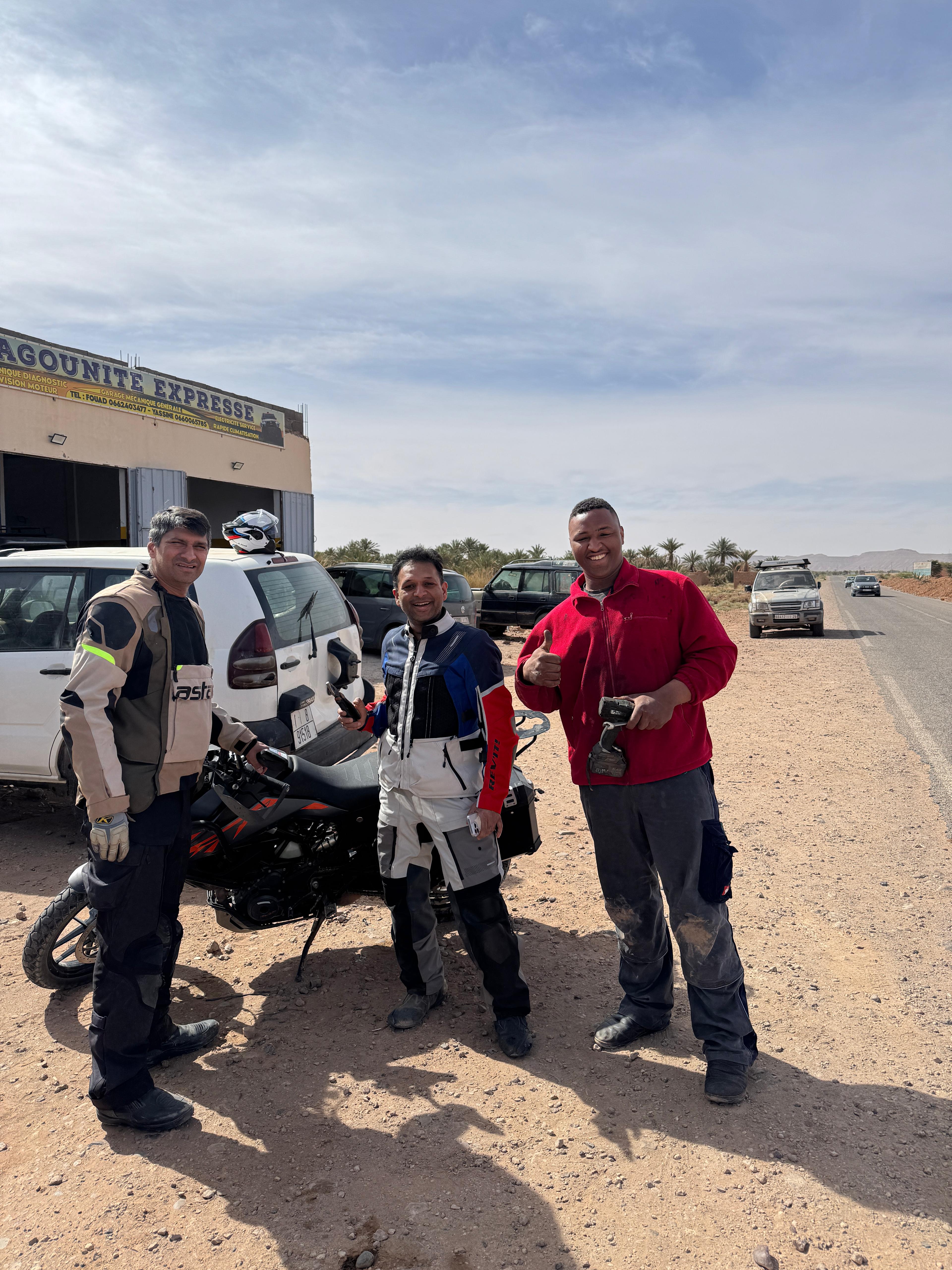
Today was a straight ride from the Mhamid Sahara Camp, Le Chant Du Sable back to Marrakech. We first stopped in Tagounite where a mechanic put in a bolt to hold the shock on the KTM. There were lots of mechanics in the area, because there are lots of overlanders, running those Land Rovers. We got a much higher-quality Land Rover bolt instead of the KTM Bajaj bolt.

We stopped in Zagora along the way, where Goku picked up a couple of rugs. Ironically, he packed them into his checked luggage for the flight from Marrakech to India, but the airline lost the bag. Not sure if he ever got them back.
We had lunch in Ouarzazate, at the top-rated restaurant on Tripadvisor, “The Full Sun.” The food was good, very Westernized, but expensive by Moroccan standards.
We rode through the same twisty roads in the Atlas Mountains again. The Enfield did very well on the tarmac, given that it is mainly a street-oriented, heavy standard. At one point, a truck was trying to overtake another one, both of them going uphill. So both lanes of the two-lane highway were blocked, and Goku and I had to squeeze through on the narrow shoulder. Terrible road manners. I flipped the guy off.
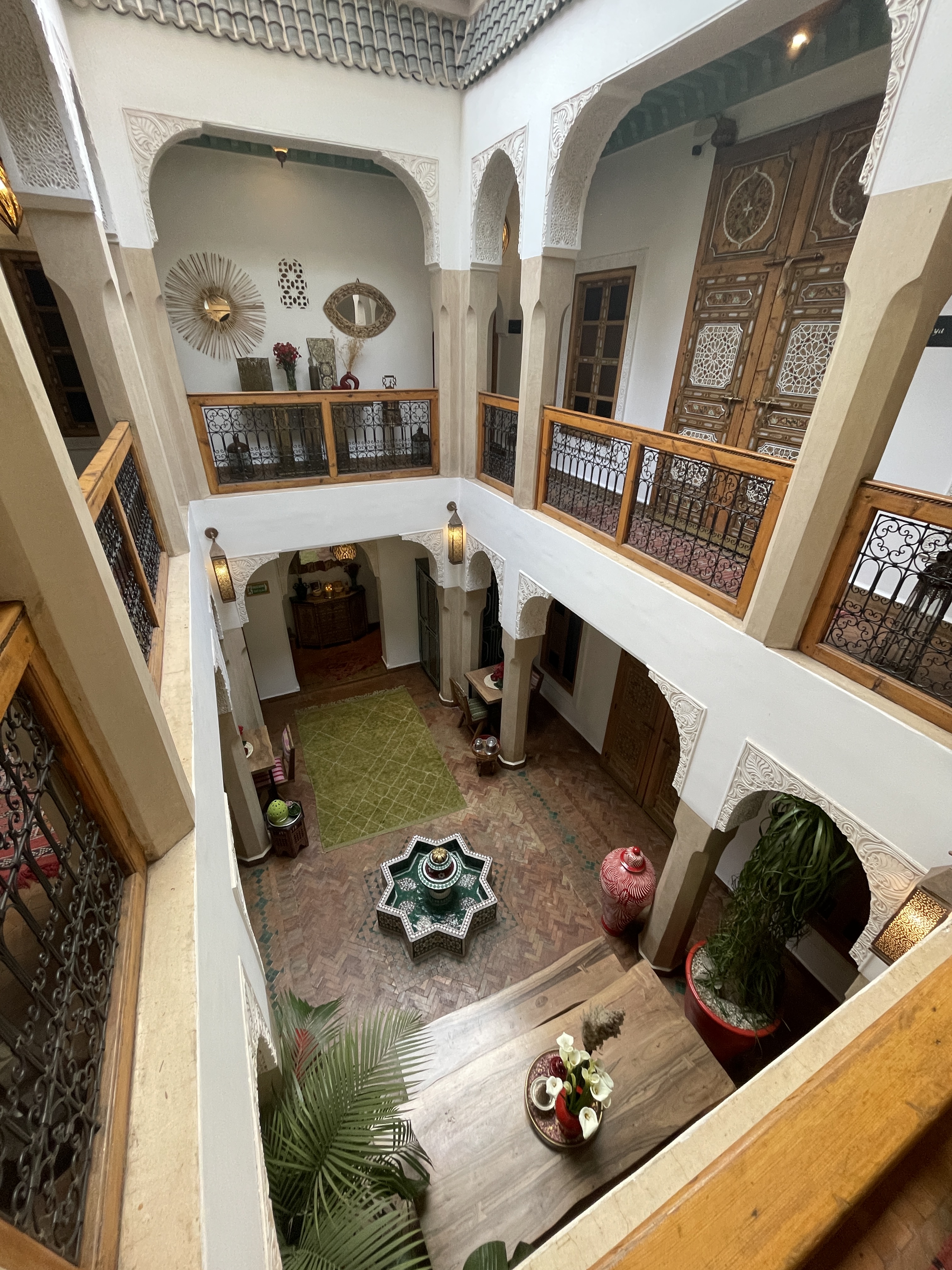
We made it back to Marrakech in time to return the bikes that same day. Then we took a taxi to our hotel, Riad Dar Fanny: a beautiful little riad in the center of the Medina with just seven or eight rooms. Goku did a great job of picking hotels, indeed.
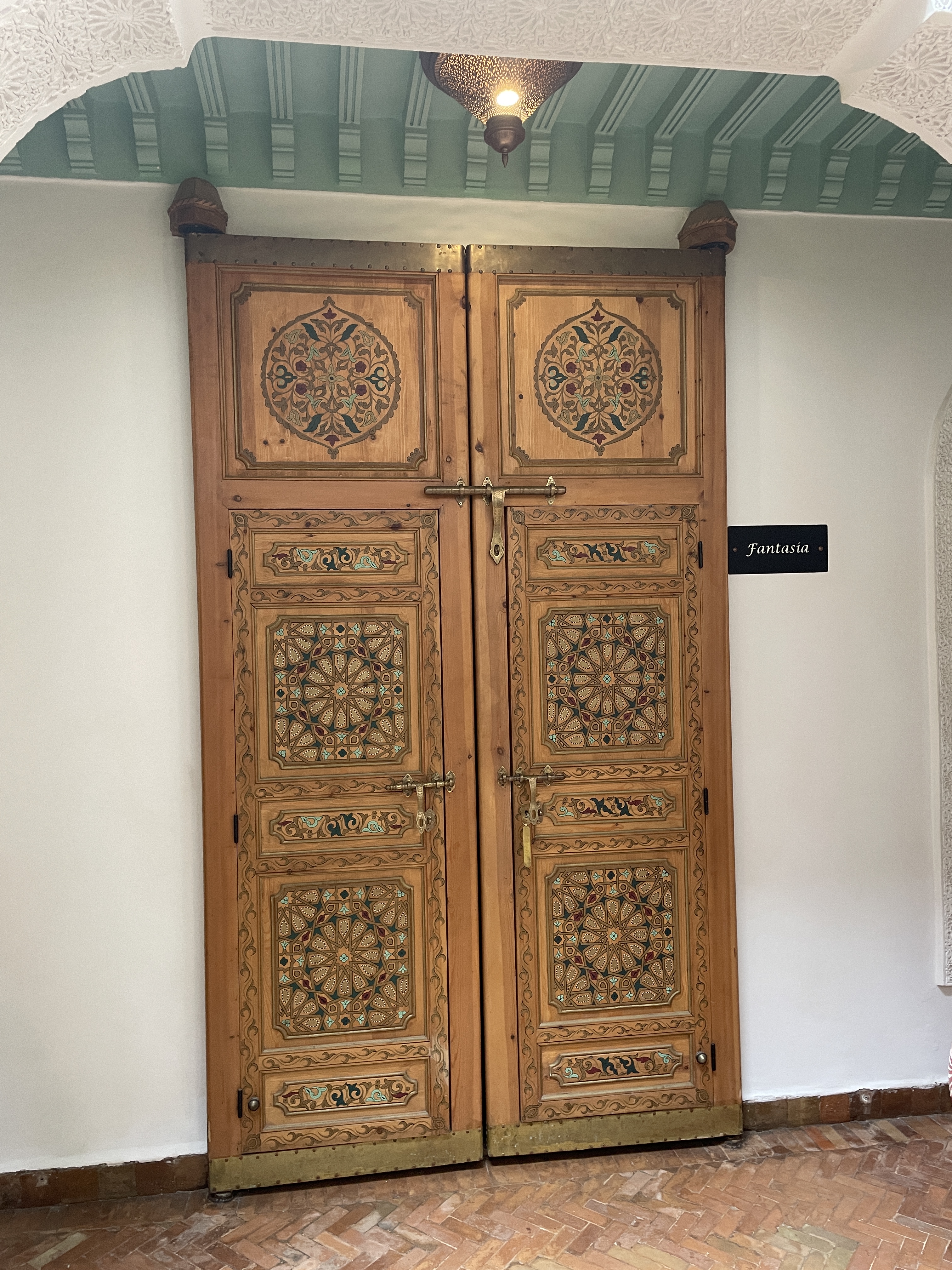
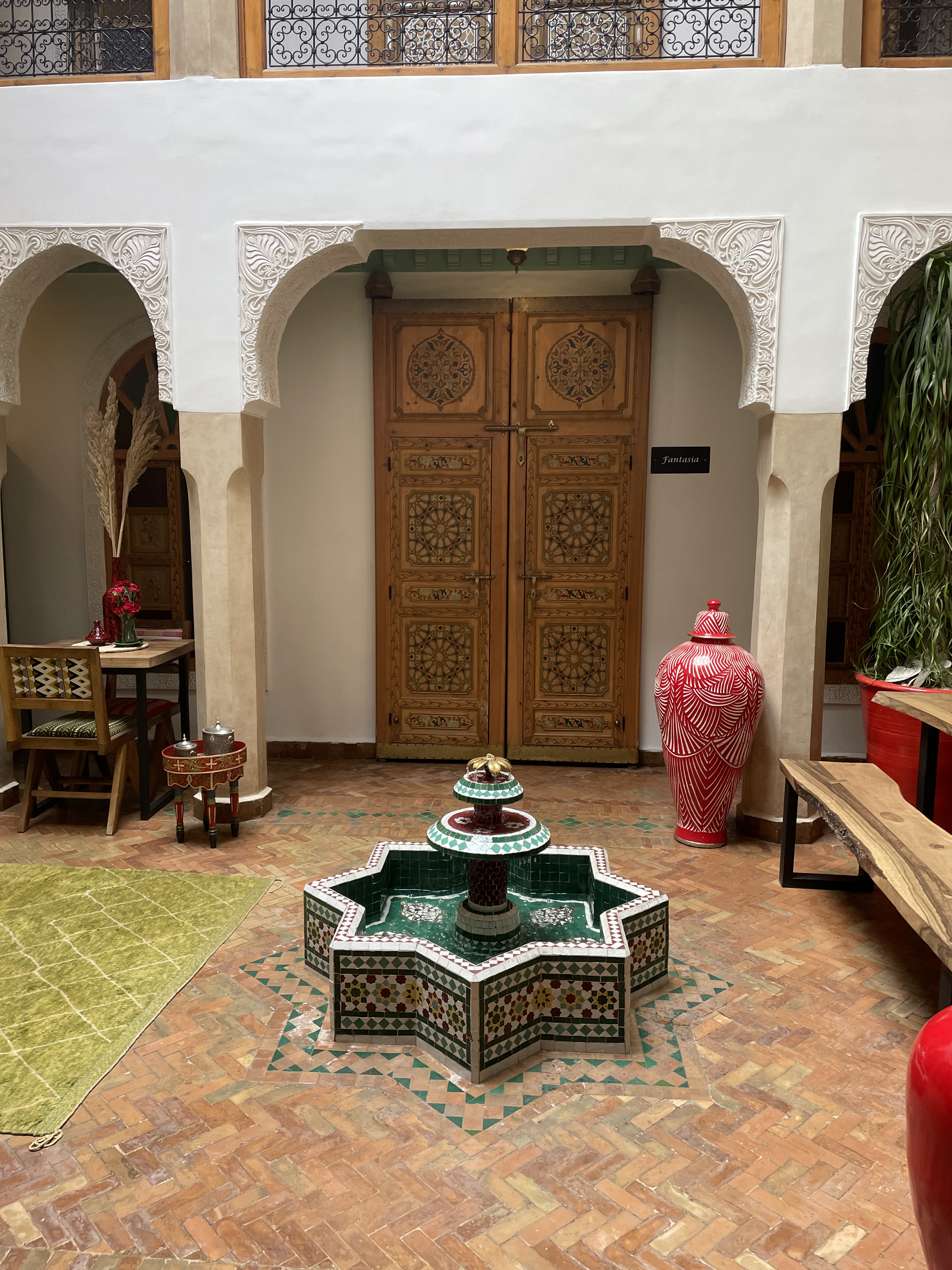
For dinner, Goku found what might be the fanciest restaurant in all of Marrakech: Comptoir Darna. It’s outside the Medina and felt like a completely different world. The crowd was young, stylish, and modern… men in suits, women in dresses, the full party vibe. The drinks and dinner were excellent, and there was live entertainment too. A few belly dancers came around, and one of them even pulled me in to dance with her. We gave them generous tips.
After dinner and a couple of drinks, we decided to find another bar nearby. We ended up at the rooftop bar of the Nobu Hotel. It was a swanky spot with a great view. We had a few more drinks and hung out for a bit.

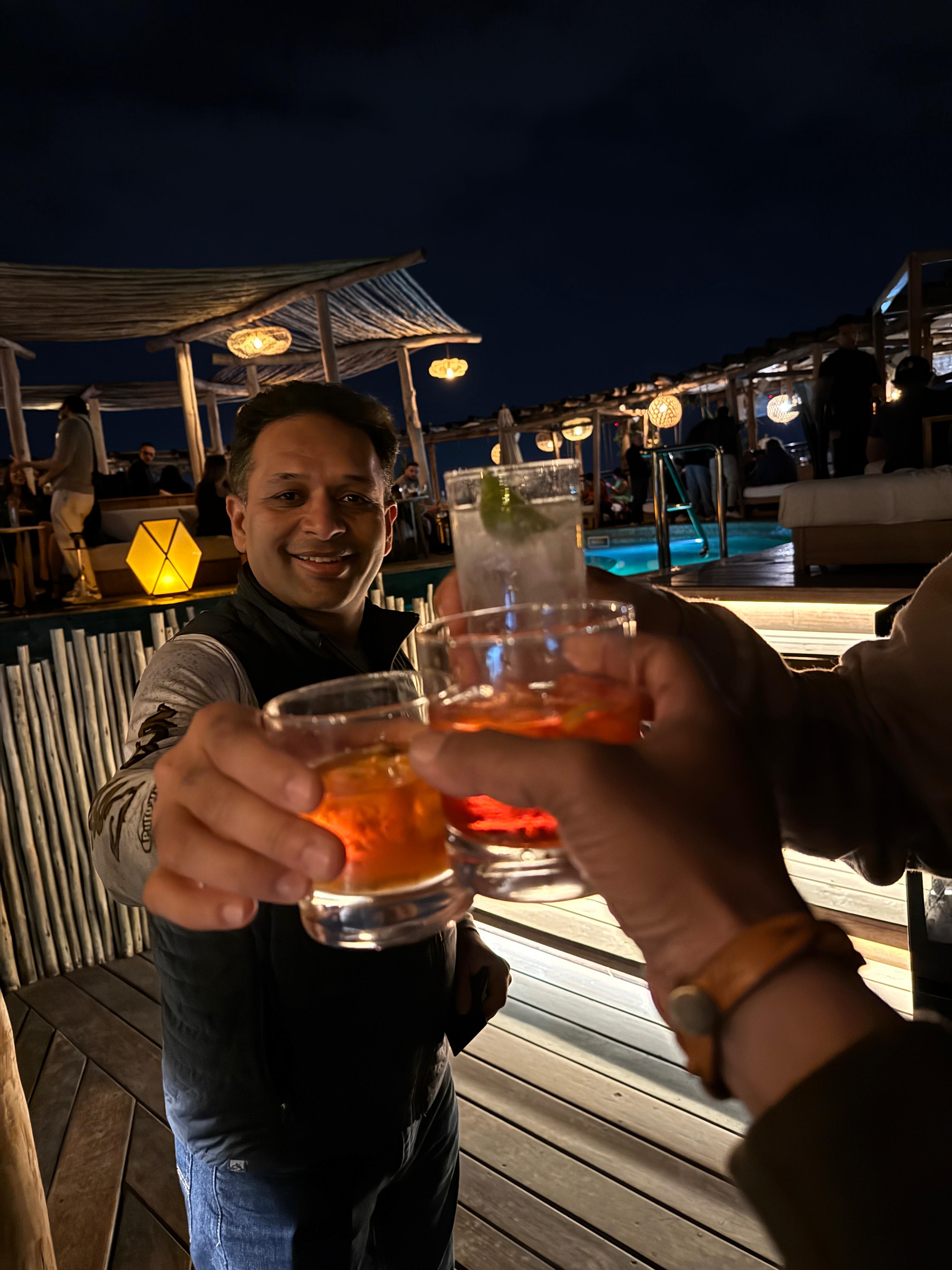
I started chatting with two guys there: one was from Pakistan, whose family ran a hospital in Karachi, and his cousin was from Manchester, where he ran a high-end used car dealership. Good guys, and we had a long, interesting conversation. The Pakistani dude started getting into politics at one point, talking about Modi and India–Pakistan relations. I told him I was just here on vacation, and we wrapped things up on a friendly note.
We took a taxi back to the hotel. The driver was a woman, which is pretty uncommon in Morocco, and she was driving like she was in a Fast & Furious or 007 movie: speeding through the tight, narrow lanes like a pro. Got us back to the hotel in no time.
Day 5
This was the last day of the trip. We slept in and had a slow, relaxed morning. After breakfast, we headed out into the “souk,” a short walk from the hotel, the main market area in the Medina. It reminded me of shopping in Pune: narrow alleys, packed stalls, and the kind of bustling chaos you find in places like Tulsibag or Hong Kong Lane.
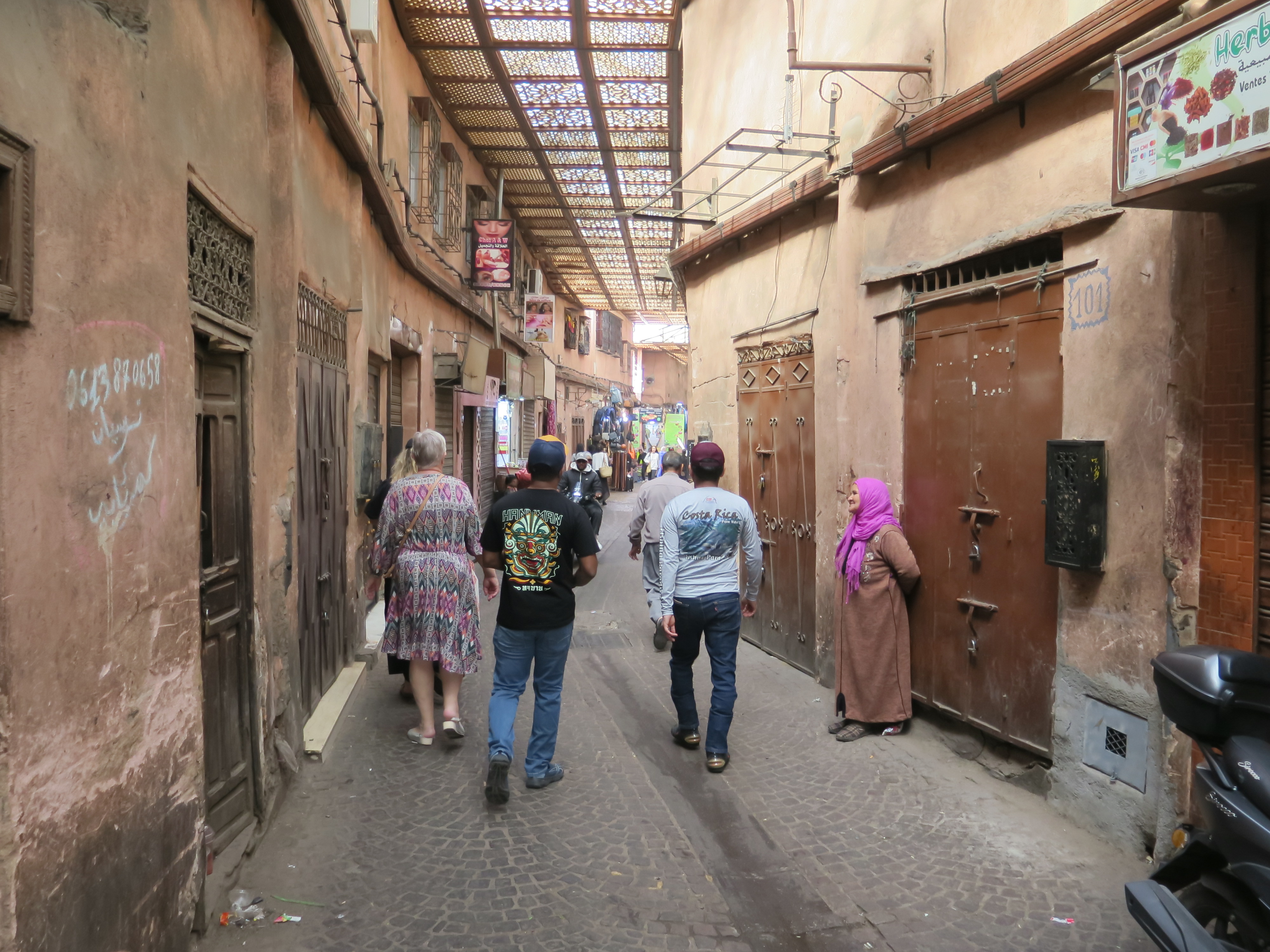

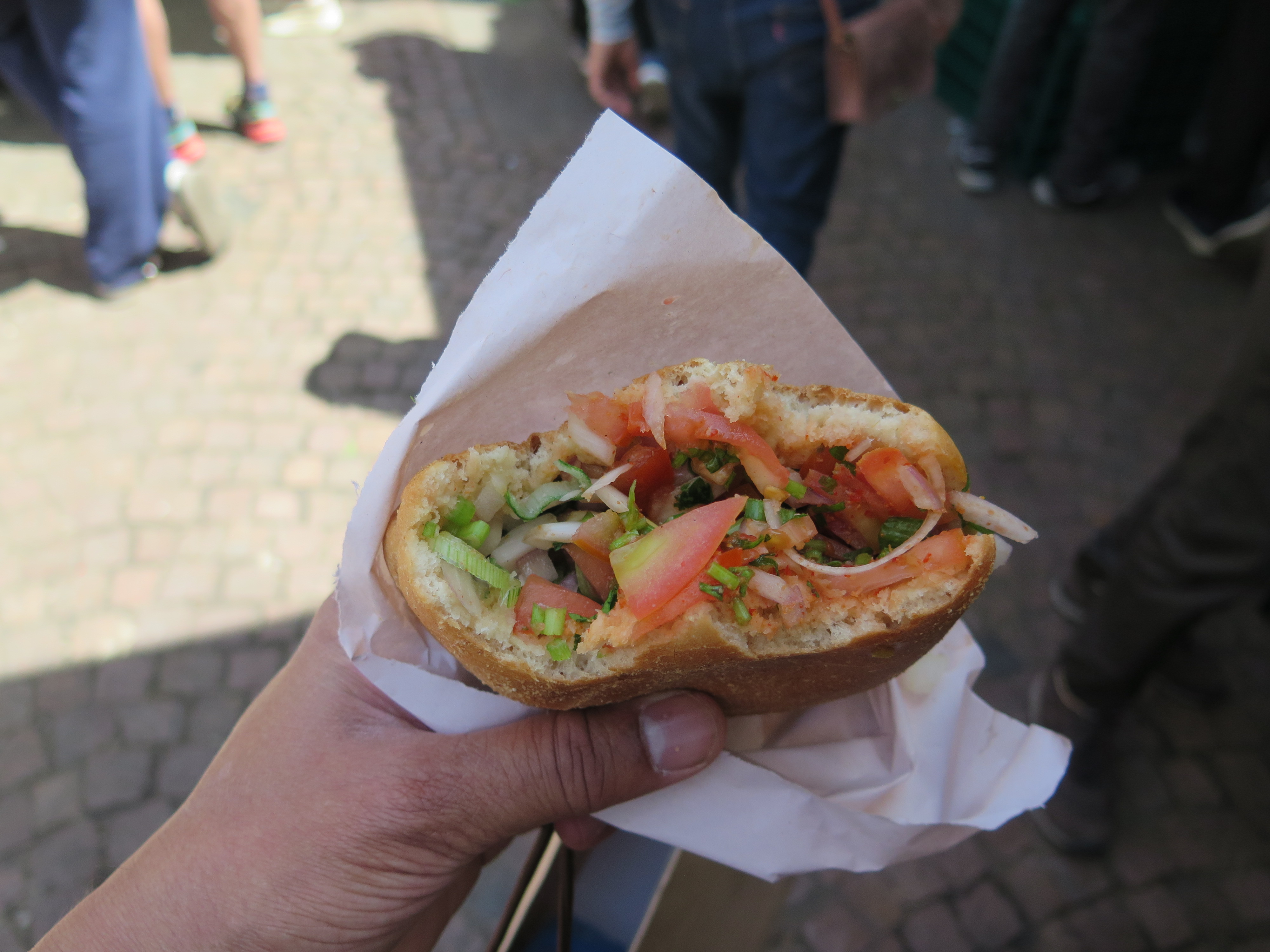
There was a lot of good stuff to browse through and plenty of haggling. I picked up a couple of t-shirts for Valmik, a pair of linen pants for Anushka, and a scarf for Shruti.
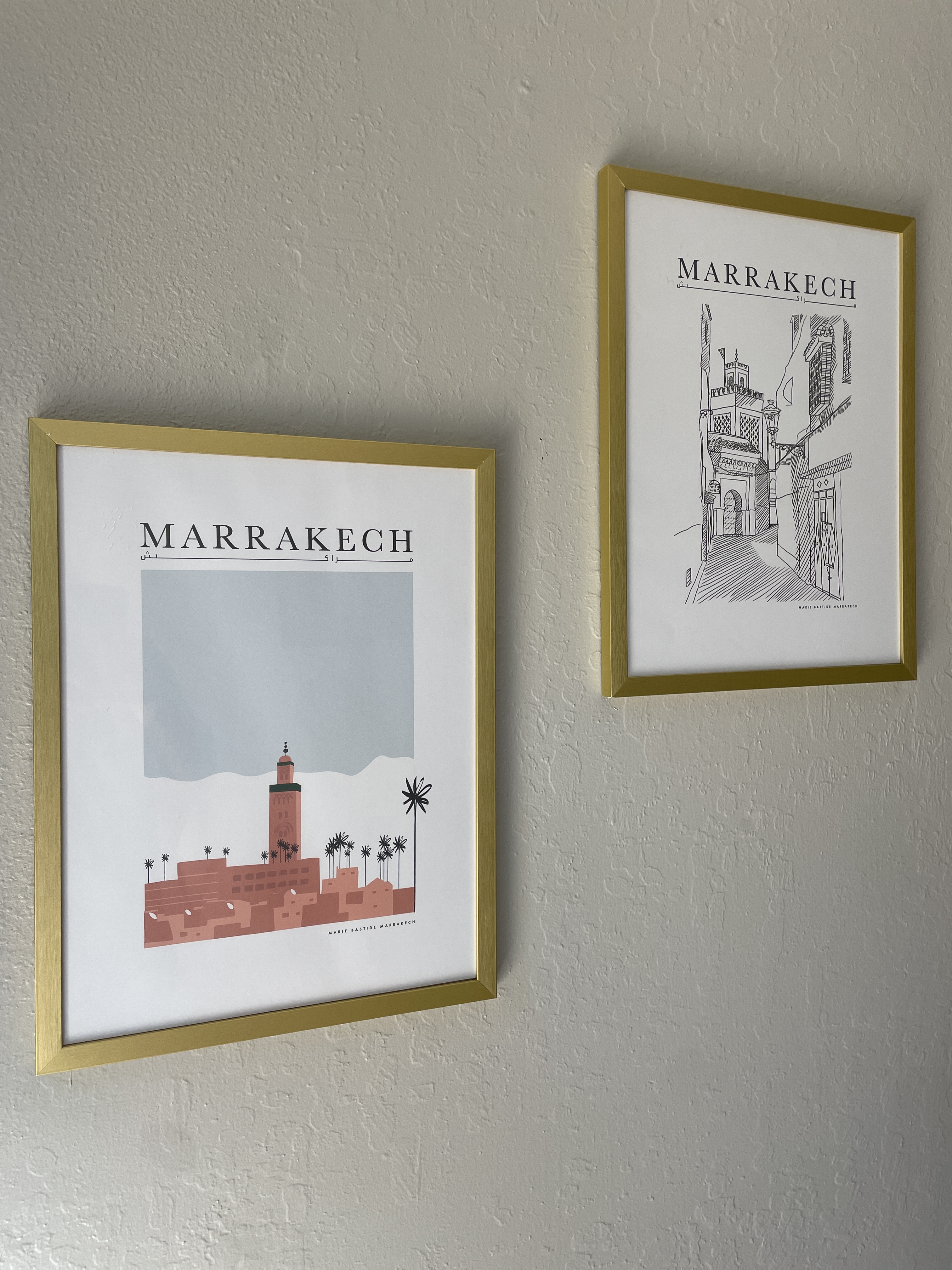
Back at the hotel, I had been admiring some of the artwork displayed in the lobby and common areas. A few pieces really stood out, so I asked the owner about the artist. She pointed me to a nearby gallery that featured her work. The artist’s name was Marie Bastide, a French illustrator known for her clean, minimalist travel prints of cities around the world. I picked up two of her pieces, and they’re now framed and hanging in our living room.
Later that afternoon, we headed to the airport. We had dinner there and boarded our flight to Amsterdam. As we flew over Paris, I glanced out the window and caught a clear view of the Eiffel Tower, so I took a picture.
Our layover in Amsterdam was overnight, so I booked a hotel room at the airport. This was YOTELAIR Amsterdam Schiphol, right on the terminal. The room was about the size of a train compartment: just a bed, a sink, a shower, and a toilet. The front desk gave me some cup noodles, which became dinner. I ate, slept, and caught the final flight back to San Francisco the next morning. That leg of the trip was uneventful, and just like that, I was home.
Overall this was an excellent trip. I feel I missed having Mahesh on this trip, like he was in Ecuador—he brings in a sense of calming randomness to my ambitious goal-oriented riding.
 Sujit Kirpekar